People often say doctors should perform like flight or rescue teams. The comparison sounds flattering. It is also incomplete. Pilots, ship captains, firefighters, coastguards, and rescue teams all work in high-stakes environments. They train hard. They lead under pressure. They make critical decisions with lives at risk. Medicine shares that gravity. But the real-world challenge of clinical medicine is often more complex, less controlled, and more exposed to uncertainties than many people realize.
A flight captain usually works with a well-defined machine, a trained crew, a checklist culture, a structured control system, and a clear mission: Get everyone safely from one place to another. A ship captain faces weather, navigation, cargo, and crew pressures, but still operates within an organized command structure with known equipment and established protocols. Firefighter and coastguard teams move into chaos, but they do so as coordinated units with clear operational roles, protective gear, communication systems, and authority recognized at the scene. Disaster rescue teams enter very dangerous situations, but they train repeatedly for defined tactical missions, work in elite teams, and can abort, contain, or delay action until conditions align. Doctors rarely get this luxury. Doctors cannot usually abort or delay action.
Clinical medicine unfolds in uncertainty, not control. The patient may arrive late, incomplete, confused, intoxicated, frightened, angry, or unable to describe what is wrong. Family members may offer conflicting stories. Test results may be delayed, misleading, or normal in the early phase of a serious illness. Resources may be limited. Staffing may be thin. Beds may be unavailable. Specialists may disagree. The diagnosis may not be a single problem, but rather five interacting problems. A pilot does not usually discover mid-flight that the passengers have changed the aircraft, hidden key data, argued with the cockpit crew, demanded a different route, filmed the captain, and posted accusations online before landing. Doctors often face versions of that from patients, regulators, administrators, and others.
The doctor must assess symptoms, weigh probabilities, exclude danger, manage expectations, explain uncertainty, document everything, respond to emotion, and still make a timely decision. Unlike a flight or rescue team, the doctor often cannot wait for perfect information or stable conditions. Unlike a firefighter, the doctor may not have clear visual proof of the threat. Unlike a ship captain, the doctor may not fully control the crew, the timing, or the environment. Unlike almost all of these professions, the doctor must often negotiate the plan with the very person they are trying to save. That matters. Patients can refuse treatment. They can demand inappropriate treatment. They can conceal substance use, secondary motives, legal aims, or insurance agendas. They can complain to regulators, sue, record encounters, and launch online reputational attacks. A bad outcome may later be judged in the calm light of hindsight by people who never stood inside the uncertainty of the original moment.
Real physician voices, twice a week
Free, and one click to unsubscribe.
This is not meant to diminish the work of flight pilots, ship captains, firefighters, coast guards, or rescue teams. Their work is extraordinary. This is to say that medicine deserves equal respect for the unique kind of danger it deals with. The doctor’s battlefield is ambiguity. The doctor’s enemy is not only disease, but delay, distortion, human emotion, system failure, and imperfect information. That is the real-world challenge of clinical medicine. It demands courage without certainty, action without full control, and accountability without the protection of hindsight.
Olumuyiwa Bamgbade is an accomplished health care leader with a strong focus on value-based health care delivery. A specialist physician with extensive training across Nigeria, the United Kingdom, the United States, and South Korea, Dr. Bamgbade brings a global perspective to clinical practice and health systems innovation.
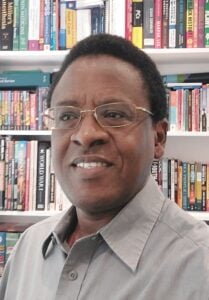
He serves as an adjunct professor at academic institutions across Africa, Europe, and North America and has published 45 peer-reviewed scientific papers in PubMed-indexed journals. His global research collaborations span more than 20 countries, including Nigeria, Australia, Iran, Mozambique, Rwanda, Kenya, Armenia, South Africa, the U.K., China, Ethiopia, and the U.S.
Dr. Bamgbade is the director of Salem Pain Clinic in Surrey, British Columbia, Canada—a specialist and research-focused clinic. His work at the clinic centers on pain management, health equity, injury rehabilitation, neuropathy, insomnia, societal safety, substance misuse, medical sociology, public health, medicolegal science, and perioperative care.