There comes a point in medicine when knowledge, effort, and goodwill are no longer enough to explain why someone keeps going.
Most people enter medical training with a purpose so obvious it barely needs words. Suffering exists. Skill can help. The work matters.
Then training tests that belief. The test rarely comes as one dramatic moment. It comes through accumulation: criticism without context, responsibility before confidence, long hours, grief carried quietly, and performance judged publicly. We call the result burnout, cynicism, or lack of resilience. Too often, those words imply that the problem sits inside the trainee rather than in the experience of caring deeply under relentless pressure.
Most trainees are not indifferent. They are exhausted because they care.
Medical education teaches physiology, pharmacology, diagnosis, and procedures with rigor. It is less deliberate about teaching physicians how to carry the emotional and moral weight of real lives. That weight does not vanish. It settles somewhere inside the clinician and shapes identity over time.
Real physician voices, twice a week
Free, and one click to unsubscribe.
I remember a patient who was profoundly ill and largely alone. Much of the medical detail has faded. What remains is the encounter. Cure was no longer the primary task. Presence had become the treatment. The patient did not ask about credentials, productivity, or resilience. The question, spoken or unspoken, was whether someone would stay.
So I stayed.
Moments like that are rarely listed as educational objectives. They do not appear on dashboards. They are not easily measured. Yet they form physicians as surely as any rotation, lecture, or exam.
When physicians lose the time or permission to be present, the system does not eliminate the need, it reallocates it. Others step in, and often do so capably. But something essential is at risk when responsibility and relationship no longer reside in the same place. We should be honest about what that shift represents. It is not that physicians care less. It is that the structure of care increasingly separates responsibility from relationship.
And yet, in my experience, patients still look to the physician as the center of the team. Not only for technical decisions, but for something deeper, the integration of those decisions into a coherent understanding of what is happening and what matters. That expectation has not changed, even as the system around it has. The physician remains the point where judgment, accountability, and trust converge. Clinical decisions flow through that role. Financial structures are built around it. And when uncertainty deepens, it is still the physician patients turn to for clarity.
Trainees witness these moments. They stand at the bedside, do what is asked, and then are often left alone to decide what the experience means. Some find their way. Others conclude that the heaviness they feel is a personal weakness. That conclusion is dangerous. The emotional burden of medicine is not evidence of failure. It is often evidence that the physician has not yet become numb.
There is a danger in overemphasizing meaning without acknowledging structure. Meaning can sustain a physician, but it can also be exploited. When systems rely on purpose to absorb inefficiency, fragmentation, and excess demand, they are not supporting clinicians, they are consuming them.
What sustains a healer is not resilience as it is commonly sold, the ability to absorb more strain without complaint. What sustains a healer is meaning: the ability to understand why the suffering matters, why presence matters, and why the work still deserves one’s humanity.
Medical education cannot manufacture meaning. But it can protect the conditions in which meaning survives, and systems of care must do the same. That requires preserving time for presence, aligning responsibility with relationship, and recognizing that purpose cannot be used as a substitute for thoughtful design.
The goal is not to remain untouched. The goal is to be changed in ways that deepen rather than diminish your humanity.
If we expect physicians to endure the demands of medicine, we must teach more than diagnosis and treatment. We must also be honest about the systems in which they work, and the limits of what meaning alone can sustain. We must help them recognize and protect the sources of meaning that allow them to remain present. For their patients. And for themselves.
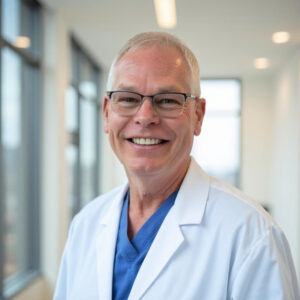
Gus W. Krucke is board-certified in internal medicine and emergency medicine and certified as a hospice medical director. After decades in academic medicine and physician education in Texas, he now serves as core faculty in internal medicine at Northeast Georgia Health System in Gainesville, Georgia. He is also medical director of Omega House HIV/AIDS Hospice in Houston, Texas.
Dr. Krucke writes on physician identity, moral courage, medical education, the corporatization of health care, and the preservation of professional judgment in modern medicine. His essays explore the tension between metrics and meaning, the human consequences of diffuse accountability, and the enduring importance of bedside presence, integrity, and fortitude in patient care.
His scholarly work includes publications in MedEdPublish, Proceedings of Baylor University Medical Center, Texas Heart Institute Journal, World Journal of AIDS, Consultant, The Breast Journal, The American Journal of Emergency Medicine, and Critical Care Medicine. His writing and research have addressed scholarly productivity in residency education, complex infectious disease cases, HIV-related dermatologic disease, diagnostic challenges, migraine treatment, critical care monitoring, and the central role of the individual patient in medical education. More information is available through Krucke’s Medicine, Doximity, LinkedIn, and X.