If you have spent any time with the current generation of artificial intelligence (AI)-assisted documentation tools, you have probably noticed something that is difficult to articulate but impossible to ignore. The notes they produce are correct, grammatically, structurally, and medically, and yet they feel wrong. They read like a summary written by someone who has read every clinical textbook ever published but has never stood at a bedside at 2 a.m. trying to decide whether a patient is sick enough to stay in the intensive care unit or stable enough to step down. The prose is clean. The logic is sequential. And somehow, the patient has disappeared from it entirely.
This is not an accident. It is a design problem, and it runs deeper than any single product or platform.
The hidden cost of artificial intelligence documentation
A national survey published earlier this year put a number to something every clinician already knows. Ninety-two percent of clinicians say their first responsibility before diagnosing is to listen. Nearly nine in 10 have identified a critical condition based solely on what they heard without imaging, labs, or algorithms. And yet 73 percent cite time pressure as the primary obstacle to doing exactly that. More than half point to rising patient volumes. The survey was about stethoscopes, but its finding applies to everything in the clinical environment: the conditions required to practice medicine are being systematically eroded. Not by artificial intelligence. By the systems we built around it.
Real physician voices, twice a week
Free, and one click to unsubscribe.
The tools currently available to clinicians for note generation and documentation assistance were, with very few exceptions, designed by software engineers and trained on medical literature. That literature, including research papers, clinical guidelines, textbook chapters, and coding manuals, is an extraordinary repository of medical knowledge. It is also a profoundly poor model for clinical communication.
Research papers are written to persuade. Guidelines are written to standardize. Textbooks are written to teach. None of them are written the way a clinician thinks at the point of care, because that thinking is not linear, not exhaustive, and not designed for an audience of reviewers. It is designed for one purpose: to capture what is happening with this patient, right now, and communicate it clearly to the next person who needs to act.
The disconnect in clinical communication
The gap between what these tools produce and what clinicians actually need becomes even clearer when you look at who they were built for. Most AI documentation products on the market today were designed with one user in mind: the physician. Specifically, the physician as a billing unit, someone whose note needs to justify a level of service, demonstrate medical decision-making complexity, and survive an audit. That is a legitimate need. It is also an incomplete one.
The clinical environment is not a solo performance. It is an ensemble of physicians, nurses, advanced practice providers, medical assistants, nutritionists, physical and occupational therapists, speech pathologists, social workers, and pharmacists. Each of whom contributes to the patient’s care and each of whom has documentation responsibilities that matter.
- When a dietitian writes a nutrition assessment that no one can easily find or act on, that is a system failure.
- When a nurse’s observation about a patient’s overnight deterioration is buried in a flowsheet that the consulting physician never sees, that is a communication failure.
- When the speech therapist’s swallowing evaluation sits in a separate module that the hospitalist has to specifically navigate to, that is a design failure.
There is a direct line between these failures and the listening crisis that survey describes. A physician who spends nearly two hours on documentation for every hour of direct patient care is not choosing documentation over listening. They are trapped in a system that made that choice for them. The AI documentation tool that was supposed to help did not give that time back. It automated the act of filling a chart without addressing the reason the chart became so burdensome in the first place. It made notes longer. It did not make them clearer. It made documentation faster. It did not make it better. And it left the physician staring at a screen during the minutes that should have belonged to the patient.
Redesigning artificial intelligence for patient care
The tools built to help with documentation have largely replicated the hierarchy of the systems they were meant to improve. Physician-facing. Billing-oriented. Designed by people who understand data architecture and natural language processing far better than they understand what it feels like to be responsible for a patient. I do not say that as a criticism of the engineers who built them; they were solving the problem they were given. The problem they were given was too narrow.
What the clinical environment actually needs is something designed from the inside out, built around the way clinicians are taught to think, the way care teams actually communicate, and the way notes function not just as records but as handoffs, as reasoning made visible, and as the thread that connects every person who touches a patient across a shift, a stay, or a year of chronic disease management. A tool that handles the documentation burden so the clinician can do the thing the documentation was always supposed to support: listen.
That tool does not yet exist in any form that resembles what I have just described. But it should. And the people best positioned to build it are not the ones who know the most about machine learning. They are the ones who have spent 30 years using, and working around, every system that came before it.
Brian Hudes is a board-certified gastroenterologist and hepatologist with more than thirty years of clinical experience and a recipient of his specialty board’s thirty-year certification award. He built and ran a private gastroenterology practice for twenty years, then spent more than a decade in hospital-based gastroenterology, most recently as chief of gastroenterology and medical director of GI and endoscopy at a 550-bed Level I trauma center in Pensacola, Florida. He is an assistant professor of medicine at Florida State University College of Medicine.
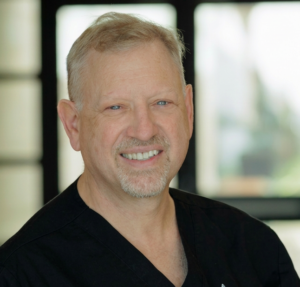
Those two halves of a career shape the way he writes about medicine and clinical technology. Outpatient practice and hospital-based care fail their clinicians differently, and many systems are designed without a meaningful understanding of both environments.
Dr. Hudes has been building clinical software alongside his medical practice for decades. In 1995, during his gastroenterology fellowship, he co-developed one of the first Windows-based endoscopy reporting systems in the United States. He is now founder and chief executive officer of AiMOS Systems Corporation, where he is developing an AI-native clinical platform for outpatient and hospital-based care. AiMOS has been accepted into NVIDIA’s Inception program.
He writes about the architecture of clinical information, administrative cost growth, physician workforce shortages, board certification policy, and the widening gap between what clinicians need and what the health care technology industry builds. He also publishes The Renaissance Physician, an independent publication examining medicine, technology, physician workforce, and the structure of modern clinical practice.