I still remember the heavy silence of the psychiatric unit during the peak of COVID-19. No family visitors, no group therapy, just the low hum of monitors and the crushing weight of isolation. One of my patients had survived a suicide attempt after losing his wife and daughter in a car accident. His grief filled the room like something physical.
As a registered nurse, my role was clear: manage crises, deliver medications, and ensure safety. But in the quiet gaps between rounds, I did the only thing I could offer: I listened. I would sit with him for 30 minutes or just five, becoming a witness to his pain. Week after week, these small moments accumulated. Then one day he looked at me and said something I will never forget: he wanted to go back to the gym. He had decided to give life one more chance.
The limits of nursing and the desire to design the plan
In that moment, I felt the profound power of nursing: the ability to hold space for someone when the world has fallen apart. Yet I also felt its limits. He began asking questions I was not equipped to answer fully. Why was his body reacting this way? What was the physiological roadmap ahead? What were the real options for his future? I could advocate, comfort, and explain the plan in front of me, but I could not design it. I had mastered the “how” of care, but I hungered for the “why.”
Real physician voices, twice a week
Free, and one click to unsubscribe.
That friction is what drives many nurses toward medical school. It is not a simple step up the ladder. It is a deliberate pivot to gain a new set of tools. I have learned how to stabilize a patient in crisis, how to fight for their comfort, and how to sit in silence when words fail. But I no longer want to only carry out the plan. I want to help create it.
Bridging the gap in oncology care
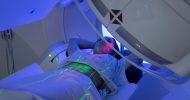
That is why I am pursuing a career in oncology. Cancer care demands both worlds: the diagnostic precision and scientific depth of a physician, paired with the deep empathy that comes from years at the bedside. Oncology sits at the raw intersection of curative intent and palliative truth. My nursing experience is not a detour; it is the foundation.
It taught me that patients are never just a room number or a diagnosis code. They are stories. Stories that require both rigorous clinical reasoning and the willingness to sit quietly for 30 minutes when medicine alone is not enough.
My transition from a registered nurse to a medical doctor is not a rejection of nursing. It is an evolution. The loneliest days of the pandemic showed me that medical science without human connection feels hollow. The science matters deeply, but so does the person receiving it.
As I prepare for the Medical College Admission Test (MCAT) and look ahead to medical training (including my upcoming experiences hopefully connected to the University of Miami), I carry that patient’s story with me. I am becoming a physician so that the next time someone asks, “Why is this happening to me?” I can offer both honest answers grounded in science and the compassion to stay present when the answers are hard. The bedside taught me how to listen. Medicine will teach me how to lead with both knowledge and heart.
Max Jared Bajer is a nurse.