While excellent guides exist for research topic discovery or planning, and finding suitable journals for publication, a short practical checklist to help trainees determine if a project proposal is a great fit is useful (see the checklist below). Here, I outline items to consider before you commit to a project and provide my take on two main categories of topics: 1) those where a single NO generally should lead to a hard stop on doing a project and 2) those where YES’s are usually best, but some NOs are OK. However, each project must be weighed individually and there is no fool-proof or one-size-fits-all formula. Overall, this should be viewed as a starting point and opinion.
For the hard-stop considerations (the major category below), above all you must ask if it is the right time for a project and do the potential benefits outweigh the opportunity costs. If you already have several projects, are strapped for time, and are private practice-bound, another research project might be ill-advised. Similarly, a project should be aligned with your long-term goals, including future training goals like fellowship, career plans, personal passion, or simply understanding how to perform the relevant type of research.
You should conduct a literature search to determine if the project addresses a literature gap before you agree to it. If prior work has been done, you should provide a new angle or more robust data. While replication is important, the truth is that studies without new findings are harder to publish. Additionally, the topic should be meaningful and clinically relevant; there is a place for research on topics without a known use yet, but as a trainee these are not your best bet.
Finding a good fit research mentor is also critical, although how to do so is a separate topic. Outside of dedicated research programs, most trainees will benefit most from retrospective, contained projects rather than high-risk/high-reward, prospective, translational studies.
Real physician voices, twice a week
Free, and one click to unsubscribe.
For the second category (the minor category below), the fewer barriers the better. Shovel-ready projects are often desirable, but not mandatory. Helpful, publishable topics often leverage your institutional expertise, which may be experts in a sub-field, patient population, technology, or unique collaborative resources. At any given moment, certain topics gain disproportionate traction and, right or wrong, are probably more likely to be published and cited.
The opportunity to take over a partially finished project is common. This can be either a red or green flag (difficult project vs. work already done for you), so you must do your research. You must wonder if the project is going smoothly, why didn’t the last person finish? Sometimes they just drop the ball, had too much on their plate, and then finish the program, but other times the project had challenges and is now in a messy state.
Finally, trainees should usually pursue first-author projects. These are usually better career-developing experiences and carry much more weight, especially early in a career. Moreover, recent proliferation of lower quality publications with large numbers of middle-author trainees is a recognized problem.
Twenty-item checklist to determine project suitability for trainees
Major category: hard stop if no
- Should you add a project at this time?
- Is the research mentor a good fit?
- Is the topic aligned with your greater goals?
- Is the project feasible (reasonable number of patients/studies available for you, usually retrospective, training-level appropriate tasks)?
- Is the topic clinically relevant?
- Is there a literature gap?
Minor category: More yes’s are usually better
- Is the expected author order determined?
- Is there a shovel-ready IRB?
- If funding is needed, is it secured?
- Is there a shovel-ready database of information?
- Will the results be informative whether positive or negative?
- Is the expected timeframe to completion reasonable?
- Does the topic leverage an institutional advantage?
- Are there well-thought-out specific aims, whether descriptive or hypothesis driven?
- Is it a hot topic?
- Is the topic reasonably focused?
- Are there potential offshoot projects?
- If it is a partially finished handover project, did the departing trainee leave it in shambles or quit because there are challenges?
- If a chart review, is the necessary data consistently reported in the notes?
- If the project is interdisciplinary, do potential collaborators agree it’s a good idea?
Vance Lehman is a professor of neuroradiology at Mayo Clinic and chief of neuroradiology education. His work spans clinical practice, medical education, research, and academic leadership. Dr. Lehman’s clinical practice focuses on advanced imaging techniques and nonvascular interventional neuroradiology, including MRI-guided focused ultrasound and laser interstitial thermal therapy of the brain.
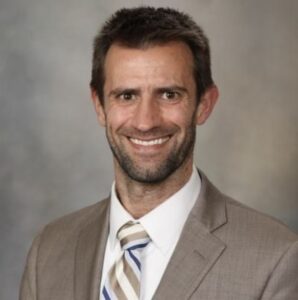
He is the author of Mastering the Hidden Curriculum: Unlocking Success in Medical Education and founder of the educational resource Medical Hidden Curriculum, which explores the informal systems and professional dynamics that shape medical training and career development.
Dr. Lehman has authored more than 120 peer-reviewed publications indexed on PubMed. His research and teaching focus on neuroradiology, medical education, and helping trainees navigate the hidden curriculum of academic medicine. Professional updates are available on LinkedIn.