
The day I met my own system from the wrong side of the bed
I’ve spent a career on the clinician side of the bed: explaining procedures, reassuring families, and signing orders that were supposed to make pain tolerable and recovery humane. Then I had shoulder surgery in Florida.
I went in with a regional block, a plan, and the quiet confidence of someone with a high pain tolerance. Physical therapists have told me for years that they can feel my muscle guarding before I ever show it on my face.
In Peoria years earlier, I’d had the gold standard of post-operative pain control: a patient-controlled analgesia (PCA) pump. Press the button, get a carefully metered dose, stay ahead of the pain. My wife had the same after her CABG in Seattle. It wasn’t luxury; it was evidence-based medicine.
Real physician voices, twice a week
Free, and one click to unsubscribe.
In Florida, the button was gone.
The regional block wore off in about twelve hours. My metabolism treated it like a snack. If my fat metabolism worked that efficiently, I’d be thin. Instead of a PCA, I had a nurse call button, and a body that had just shifted from “manageable discomfort” to “three doses of IV morphine before I could unclench my jaw.”
Living inside a policy reaction
Florida didn’t make that decision in a vacuum. The state had lived through a very public opioid saga: a charismatic broadcaster with a national audience, a very visible addiction, and a cultural reckoning that played out in headlines and hearings. Later, he received the highest civilian honor in the country, an award many of us had once associated with moral courage and quiet service. The medal felt different that day.
The political climate that followed was predictable: pain clinics raided, prescribing patterns scrutinized, and hospital protocols rewritten with a single overriding priority. Avoid anything that might look like “easy opioids.” Somewhere in that process, PCA pumps became collateral damage.
So when my block wore off, I didn’t press a morphine button. I pressed the nurse call button. Often.
The nurses were excellent: skilled, kind, and clearly aware that I wasn’t someone who cried wolf. Physical therapists can feel my muscle guarding before I wince; my pain tolerance is high enough that when I say, “This is bad,” it’s bad. But the system they worked in required a human gatekeeper for every dose. No button. No autonomy. Just a series of small negotiations in the middle of a storm.
The quiet physiology no policy can see
On paper, I was a routine shoulder case with a regional block and standard orders. In reality, I was a fast metabolizer with a high pain tolerance in a state that had overcorrected.
The block faded quickly. The pain did not.
There’s a particular kind of post-operative pain that doesn’t shout. It clamps. It tightens the jaw, shortens sentences, and turns breathing into a conscious task. Nurses see it in the way you grip the bed rail. PTs feel it in the way your muscles resist before you do. It doesn’t care about politics, scandals, or medals. It cares about receptors and half-lives.
A PCA pump is designed for that reality. It trusts the patient within safe limits. It acknowledges that pain is dynamic, not scheduled. When you remove it, you don’t just change a device; you change the choreography of suffering.
The pain that wasn’t from the surgery at all
The irony of my recovery was that the shoulder itself (the incision, the titanium and cobalt-chromium alloy components, the reconstructed joint) remained almost eerily calm. Denervation is a strange blessing: The very structures that had been cut, replaced, and rebuilt were quiet, almost polite.
The real pain came from somewhere else entirely. During the operation, my arm had been torqued into an unnatural position so the surgeon could access the scapula. It’s a necessary maneuver, but it’s one the body remembers. For more than a week after surgery, that positioning haunted me. Not sharp pain, more like a deep, insistent ache that radiated through the elbow, forearm, and the stabilizing muscles that had been stretched, compressed, and held in angles no human would choose voluntarily.
It’s the kind of pain that doesn’t show up in the operative report. It doesn’t get coded. It doesn’t get mentioned in the discharge instructions. But it’s real, and it’s often worse than the surgical site itself.
When the regional block wore off early (my metabolism treating it like a light appetizer), the pain from that torqued positioning surged first. The shoulder stayed quiet. The soft tissue did not. And because Florida had eliminated PCA pumps in the wake of a very public opioid scandal, I found myself pressing the nurse call button repeatedly while the part of my arm that hadn’t even been operated on was the part screaming the loudest.
The human cost of symbolic decisions
The irony is hard to miss. A man with a national microphone and a very public addiction becomes the face of a crisis. Policy hardens. Awards are given. Speeches are made. Somewhere else, a clinician-turned-patient lies in a Florida recovery room pressing a call button because the morphine button has been removed “for safety.”
It’s the same mindset that drives a two-ton limousine over uncured liner just to see the color in person. A photograph would have been enough. But the gesture, the performance, matters more than the underlying material.
In medicine, those gestures become protocols. They look decisive. They photograph well. They reassure the public that something is being done. But they rarely account for the quiet physiology of the patient whose block wears off too soon, whose pain tolerance masks severity, whose recovery depends on timely, flexible relief.
What I wish we’d remember
I’m not arguing for a return to the wild west of prescribing. I’ve seen what opioids can do to families. I’ve watched lives unravel. Guardrails are necessary. But I am arguing for nuance.
- PCA pumps are not indulgence; they are controlled autonomy.
- Fast metabolizers and stoic patients exist, and they suffer more in rigid systems.
- Nurses should not have to be the sole gatekeepers of every dose in the middle of a pain storm.
- Policy born from scandal should be revisited in the calm that follows.
When clinicians become patients, we see the seams. We feel the lag between policy and physiology. We learn, sometimes the hard way, that pain is not just a number on a scale; it’s a relationship between a body, a brain, and a system that either trusts us or doesn’t.
My shoulder will heal. The memory of pressing that call button, waiting for relief that used to be in my own hands, will stay longer.
If we’re serious about patient-centered care, we need to be just as serious about patient-centered pain control. Not because it’s comfortable, but because it’s humane, and because no medal, no speech, and no scandal should have more influence over our protocols than the lived reality of the people lying in our beds.
Ronald L. Lindsay is a retired developmental-behavioral pediatrician whose career spanned military medicine, academic leadership, and national advocacy for dignity-centered neurodevelopmental care. His NIH-funded work with the RUPP Autism Network helped define evidence-based approaches to autism and related developmental disorders.
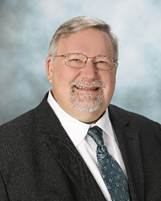
He directed the LEND Program at The Ohio State University and founded JBLM CARES, a $10 million autism resource center for military families. His writing spans clinical scholarship and long-form fiction. He is the author of The Mercy Directive and the six-novel Cassandra series, a completed political and medical fiction saga tracing the rise of the Cassandra system from its origins to its national and international legacy. His forthcoming memoir, The Quiet Architect, examines how conscience and structure collide in modern medicine.
He shares updates on LinkedIn.