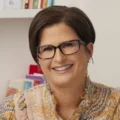












After practicing psychiatry in the Portland area for more than thirty-five years, my sister-in-law, Marcia Kahn, knew that something was amiss. She had increasing difficulty remembering events in her daily life. “Why did I decide to visit my kitchen?” “Have I taken those pills this morning?” She often snuggled beneath the covers of her bed at the end of a day, only to realize she had failed to deal with several of her priorities. Her family grew concerned. She began to send herself up to ten emails per day with reminders about tasks she wanted to complete. She recognized that she was more forgetful and ascribed the change to an expected component of the aging process. Marcia ambivalently elected to retire. She had cared for many patients afflicted with memory loss and witnessed its progression. Even as new medications for Alzheimer’s disease emerge, they come with risk, expense, and limited benefit. Marcia felt that she had already maximized critical variables like diet and exercise to optimize her own health.
After her retirement from psychiatry and as COVID was threatening the world order, Marcia’s son, Sam, was starting a business to prepare tax returns. Marcia suggested to him that she could help design and oversee the infrastructure for this enterprise. She had some experience managing a small office building owned with her husband. Sam’s business would demand the acquisition of new skills. Marcia was unsure if she could master the necessary software. In addition, she would need to take a bookkeeping class. But any fears she might harbor regarding mastering fresh tasks were trumped by a mother’s desire to help her son succeed. Supporting Sam was the impetus for her to forgo retirement. But accounting and scheduling require skills that could easily frustrate someone whose memory was misbehaving.
To her surprise, new duties ushered in new purpose, confidence, and enhanced memory. This did not come instantly. It took six months before she could tackle software with a bit of swagger and without relying on her son for guidance. Rather than functioning as a physician who chastised herself for forgetting her goals as each day concluded, she gradually realized that she was juggling twenty daily responsibilities. No problem for the newly minted multi-tasker. Her identity changed from medical expert to business novice.
Marcia was so successful as a business manager that Sam soon found a second role for her. He had invested in a bar, the River Pool and Sports Bar, located on a street with arguably the city’s highest crime rate. Could his mother take on another job?
Real physician voices, twice a week
Free, and one click to unsubscribe.
Employee turnover, felonies or misdemeanors both nearby and within the restaurant itself, as well as food quality and selection were challenges. Renewed purpose surmounted new hurdles. And with renewed purpose, memory did not worsen. In fact, Marcia regained the ability to manage many executive brain functions simultaneously. Imagine someone at age 70 deciding to learn downhill skiing, scuba diving, or skydiving. Most septuagenarians would not attempt skills like this. But those who do accept such a challenge and succeed can achieve a new identity.
Marcia made innovations at the bar, including a monthly display of local art. The paintings have brought a new clientele. The novelty has earned the admiration of other area merchants who have been astounded that featuring art in a neighborhood widely regarded as skid row would be a success. Marcia herself purchased one of the paintings and secured it to her sedan’s roof to bring it home. On the freeway, the painting jettisoned from its perch. Marcia’s search to relocate it made the local TV news, a marketing coup for the bar. The painting now possesses a unique story to accompany its provenance.
Marcia is extremely busy but has not sacrificed her pickleball contests or her walks in Forest Park, a wooded refuge within Portland and six times the size of New York’s Central Park.
The brain was once considered incapable of repairing itself. The brain can form new synapses even after age 70. Angiogenesis and cells including astrocytes, microglia, and stem cells repair damage in the brain. The brain is more like a muscle that improves with exercise in contrast to an aging car that only continues to deteriorate once it starts to rust.
While Marcia’s story is heartening, it is not unique. Take my friend, Bob, a San Diego physician who was still practicing medicine in his seventies until a stroke suddenly rendered him aphasic. Bob lay on a gurney in the emergency room knowing that he urgently needed a clot-busting drug to restore the blood flow to a vital part of his nervous system. The best that he could manage was to point to his watch, a gesture that baffled his doctors. But his wife understood perfectly what Bob was trying to convey. Bob received the medication to restore perfusion to the brain just in the nick of time. It took a year of speech therapy for Bob to be able to return to his practice. Very few of his patients could detect how the stroke had changed the cadence of his speech.
And if confidence, perseverance, and novelty can improve the function of our brains, the converse is true as well. An internist shared with me the story of a patient who elected a test to determine her risk for Alzheimer’s disease. At that time, she had no evidence for dementia. When the imperfect test results returned and showed that she was at high risk, her memory deteriorated abruptly. Presumably, the combination of anxiety and loss of confidence had a devastating effect. Identity and self-perception can be key. Marcia saw herself as a mother and was willing to accept being a novice. Bob needed desperately to maintain his self-image as a health care provider. And our patient believed she was destined for dementia, which became a self-fulfilling prophecy.
Why did Marcia lose memory only to find that memory was not lost; it was merely in hibernation? Marcia’s immediate family includes many physicians, one of whom is a prominent neurologist. All the experts and Marcia herself are pleasantly surprised by the seeming reversal of aging.
We live in an era obsessed with longevity. Trendy and often costly suggestions include rapamycin, injecting peptides, or monitoring the microbiome through samples of toilet water. Diet, exercise, sleep, not smoking, reducing stress, as well as support from friends and family are keys to a long life. It is easy to forget that for some, a passion, a hobby, or a new responsibility can provide purpose and slow or even reverse the aging process.
James T. Rosenbaum is a rheumatologist.
Your KevinMD author page is one of the top results for your name. Turn it into a premium profile, publish in 1 to 3 days, and get a guaranteed podcast slot.