As an aspiring doctor who has worked with many different patients across New York City, I’m primed to think of health care delivery as the following: Note the symptoms, diagnose the condition, treat and hope for recovery.
Once, I met a little girl who changed my thinking entirely. She was nine, dressed in neon pink shoes with a matching backpack. Unlike most girls her age, she had a prosthetic eye, implanted following the progression of her retinoblastoma. I handed her the occluder in order to take her visual acuity before she stopped me. She cupped her hand to her mouth like she was about to reveal a secret privy to just the both of us. “Guess what? I’m bionic. My eye gives me superpowers.”
Since then, I’ve been on a journey of reflection. One in which I have come to understand that not all patients view their conditions as something requiring treatment. In fact, there are individuals who view their illness as so central to their identity that it becomes an empowering component. There was another young woman, in her twenties, who came to the low-vision clinic where I was working. She was diagnosed with congenital glaucoma and had small, slit-like pupils that could not be dilated. Her vision was at best 20/200 and despite advancements in lens technology, it would be difficult for her to enjoy a baseball game without struggling to see the players. And yet, her eye condition was something she took pride in.
“Oh yeah, haha I can’t see, and I know it. But honestly, I wouldn’t have it any other way.”
Real physician voices, twice a week
Free, and one click to unsubscribe.
This perspective extends beyond the patients I’ve encountered. In fact, supermodel Winnie Harlow wears her vitiligo with pride. Harlow asks a very relevant question: “Why is there a stigma around being different when we’re all different?”
When we think about the numerous advancements in therapies that have been made in the last few decades, it seems that we are chasing the eradication of “difference.” When I annotate a medical image or check biomarker levels, I often write “WNL.” Within normal limits. Why? Because difference could connote something else. Left unchecked, it could lead to illness or be a sign of pathology. And to some extent, it is not an unreasonable goal to prioritize preventative medicine. One day exome sequencing will enable us to identify an individual’s risk of developing a serious disease. And hopefully, base pair editing technology will enable us to treat it. However, as our ability to identify and treat biological “differences” expands, I wonder whether we risk conflating difference itself with something that should be fixed.
In the wake of all this science, it’s important to keep something else in mind. Falling “sick,” or grappling with a condition, is also an inherently human element. For some individuals, a diagnosis becomes intertwined with identity. It may not be a hurdle to overcome, but instead a thing to embrace. Patients are the keepers of their illness. They are the ones who assign meaning to it. As providers, we must ask ourselves an important question: How do we practice medicine in a capacity that preserves patient power? Ultimately, it is we who must understand what patients expect of medicine.
At times I catch myself wondering whether our current clinical model should better include the idea of “seeing” the patient for who they are and not what they have. We always talk about humanistic care, but its definition is broad enough where implementation can often be lost to ambiguity. I once talked to a palliative care physician who emphasized the importance of observation in medicine. He argued that before laying a hand on the patient, one must deeply observe the patient. See them as they want to be seen and understand them as they want to be understood. Traditional medicine has wired our brains to seek alternative and adjuvant therapies, to arm ourselves with an arsenal of tools in the event that one therapy fails. Medicine is, however, not a binary. A clinical “success” does not need to be defined by the preservation of an organ, or a life, or a supposed return to normalcy. Perhaps there is beauty in embracing what is.
Such an understanding of patient care is not always at the forefront of a busy hospital or clinic when chart notes need to be written and the waiting room is full of patients. But I must say as a young technician in my 20s, I am deeply inspired and humbled by the perspectives of those I serve. Patients are the ones who inherently teach us how to deliver a high quality of care. They guide our hand when it is time for treatment and inform our understanding of what it means to be deeply human. It’s high time we listen to them and see the world through their eyes.
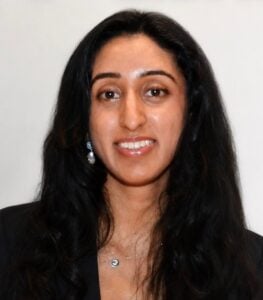
Ananya Raghavan is an ophthalmic technician in New York who is applying to medical school. A graduate of Columbia University, she has also worked in a cancer hospital.