










She was only one week old, asleep for three hours, when she suddenly stopped breathing. Four seconds felt like an eternity, and her parents were struck with a fear they’d never known. It was likely nothing serious. A little spit-up, or a newborn’s gag reflex doing its job. She was back to normal in moments: pissed, pink, and perfect. A word of reassurance from a pediatrician would have gone a long way. No pediatrician was in the room. So, they did what we all do now. They looked it up. One rabbit hole led to the next, and by 1 a.m., they had found a smart sock. A sock that promised to watch her oxygen when they couldn’t and to sound the alarm before the worst could happen. By 2 a.m. they’d read enough reviews warning of inconsistent results to distrust it. What pushed them on was the flashback of her helpless face, and the immense duty to protect her. And there was no one there to say the only thing they needed to hear: It’s OK. She’s going to be OK. You can go to sleep.
As a pediatrician, I’ve been on the receiving end of this story more times than I can count. As a father of two girls, I’ve lived it myself. I’ve come to understand that in the age of information, the paradox every parent now lives inside is this: to have more information than any generation before us, and to trust almost none of it. Vaccine hesitancy is the rational behavior of a generation of parents that have been flooded with too much information while longing for someone to trust. This article is aimed at understanding the mechanisms that brought us to these present-day discussions on vaccine hesitancy. Thinking critically and gaining insight is the key to acquiring wisdom. None of this happened at once. It was an accumulation of six overlapping events over a quarter of a century. This sequence of events is what melted down the previous paradigm, and each subsequent event molded, shaped, and hardened the parent of today.
Let’s begin with the success of vaccines. Vaccinations were so successful that they quietly removed the visceral reason to get them. The risk that now remains visible is the shot, not the disease. However, a pediatrician practicing before these vaccines will tell you that a febrile infant meant a spinal tap, because Haemophilus influenzae type b (Hib) and Streptococcus pneumoniae were live possibilities every time. The present generation has rarely been asked to sit quietly in an exam room while their infant had a needle inserted into the spine to evaluate for the presence of these pathogens. Twenty thousand invasive Hib cases a year, most of them in babies under one, and now essentially zero. Compounding this vacuum is a common human risk psychology: omission bias. Omission bias is the concept that harm by inaction is more acceptable than harm caused by action, even if the outcome is the same or worse. Some parents are reluctant to vaccinate due to known risks of harmful side effects while also recognizing the risk that their child could die from the disease the vaccination is preventing. Parents also tend to overvalue the possibility of side effects caused by vaccines because the vaccine damages their child’s health. They feel at fault and believe they are responsible for hurting their own child because they consented to the vaccine. This tends to push parents towards inaction when the threat is abstract. In this modern era, the absence of disease provides a false sense of security and our own cognitive bias supports it.
As these diseases were quieting, the information age began to boom. The first ten years of the new century took large, slow, home computers and placed them in a pocket and supercharged them. Simultaneously, social media apps were gaining popularity and customization. Developing algorithms rewarded attention, which embraced shock, fear, and powerful emotional responses. The stream reinforced itself, and because algorithms recommend more of what you’ve already engaged, a parent with one worry got pulled into communities where that worry is validated over and over. Repetition disguised itself as consensus, and the concern started to feel widespread and credible simply because it was seen repeatedly. A niche view felt like mainstream from inside the echo chamber. Ultimately, a shared source of information had now been replaced by a self-confirming feedback loop.
Real physician voices, twice a week
Free, and one click to unsubscribe.
As if an information boom wasn’t enough, a pandemic happened. It changed how we lived. Even more, it changed how we viewed health authorities. As we trudged through months of apprehension, we experienced shifting guidance on masking, distancing, isolation protocol, and revised counts of death. This was amplified by the presence of a novel mRNA vaccine. Even those who complied came out the other side more skeptical of the next recommendation. The agencies that had spent decades as the default answer stopped being where a conversation ended and became where it broke down.
This was exacerbated by rapidly changing political parties. Executive branch changes amplified polarization and positioned the American people against one another. Conversations on any health topic were now deeply embedded in a political stance. What’s more, divergence on vaccination schedules between the Centers for Disease Control and Prevention (CDC) and the American Academy of Pediatrics (AAP) left parents with more questions than answers. When referees look split, “the official recommendation” stops feeling like settled fact and starts feeling like a political position. The perception that the expert consensus was stable and above politics was now dissolved.
All the while, the main players of primary care had shrinking availability to absorb the doubt. Primary care providers, like family practice physicians and pediatricians, are the designated locations for these deep and emotionally charged topics. Visits at the doctor’s office evaluate growth, development, anticipatory guidance, behavioral issues, chronic medical issues, medication management, nutrition, vaccinations, acute medical issues, and perform a physical exam in a 10- or 15-minute time slot. Lower reimbursement rates combined with rising costs of lab tests and vaccines put the pediatrician right in the middle of a losing business deal. It would be ideal to spend 30 minutes with families, but that would not allow many businesses to continue operations. Extended vaccination discussions still happen in my office, but this pushes back patient wait times. For others, shorter discussions on vaccinations have left families feeling like it may not be as important as it is. Out of convenience, some families choose urgent care facilities when problems arise. These facilities often have rapidly changing clinicians. Less continuity of care means less of the trusted relationship that used to quietly resolve fear before it hardened. The trusted human intermediary with time to listen has now faded.
Another piece had faded as well. Vaccination used to be understood partly as a social contract. Herd immunity was a collective good that helped protect the classroom, the newborn that couldn’t be vaccinated yet, or the immunocompromised child. Herd immunity is when enough people in a geographical area have immunity against a certain germ that stops it from spreading easily. This is not permanent, though, and if enough people do not have protection, outside sources of the disease can reinfect entire areas. Measles is the test case, because it is the most contagious of them and needs about 95 percent coverage to stay contained. Kindergarten coverage nationally is now 92.4 percent. In November 2026, the country lost the measles elimination status it had held since 2000. The anti-establishment notion of common-sense everyday people versus elite experts isn’t only about vaccination, but includes it. Now, the entire issue has been reframed as an individual medical freedom or parental right decision. The reframing quietly deletes the “I’m doing it for my neighbor” logic and makes it purely a private risk calculation. The sense that this is a shared responsibility, and not just a personal preference, has been removed.
None of these six is decisive alone. They have been stacked and compressed into twenty years, one parenting generation. They didn’t just add doubt; they dismantled every structure that used to make the decision easy: the visible threat of circulating disease, a consistent source of information, trusted public health institutions and expert committees, political peacetime, the dependable doctor, and the shared sense of duty. A parent hesitating today is not irrational or careless. They are responding rationally to an environment that has quietly removed every guardrail a parent a generation ago took for granted. Let’s title this phenomenon Generational Drift.
I used to think my job was to hand parents information. They have the information, the studies, the forums, the strangers’ stories, and it’s all one search away. I have watched a parent nod along to every study I cited and then decline anyway. I finally understood that I had answered a question they weren’t asking. They weren’t asking whether the data was good. They were analyzing what I was saying versus the copious amount of information they had gathered. All this within the context of the last twenty years of experience. In my 15-minute window, I lost. What works is slower and less satisfying than being right. It’s the second visit. It’s remembering the name of the older sibling. It’s saying “I don’t know” when I don’t. It’s earning, over years, the trust that forms between a patient and their doctor.
The goal is not to disregard or shame hesitant parents. It’s to help us all see the environment we’re deciding inside of, so we can decide more clearly. Let’s reframe the useful question from “Is this shot safe?” and add “Who am I actually trusting, and why?” We all want the same thing: healthy and happy children. Parents are frightened, they are alone with it, and they are making the only decision that feels like protection. Rebuilding starts small and human. It begins in the office with a doctor and a patient. It revolves around a shared love for children. What I want for your daughter or son is the same for mine: an uneventful childhood. Nothing dramatic. No story worth telling. Just piles (or a digital folder) of wonderful photographs, twenty years from now, of everyone who was supposed to be in them.
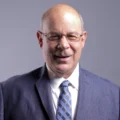
Jonathan Holmes is a pediatrician.
Your KevinMD author page is one of the top results for your name. Turn it into a premium profile, publish in 1 to 3 days, and get a guaranteed podcast slot.