Physicians writing on KevinMD about the life of the profession: the work itself, the exhaustion, what women physicians are paid and asked to carry, the losses the profession has been slow to name, and who decides how physicians work. Five maintained records draw on this archive: Physician burnout: what physicians say, in their own words, Primary care: what physicians say, in their own words, Women in medicine: what women physicians say, in their own words,, Physician suicide: what physicians say, in their own words, and Physicians and administrators: what physicians say about who runs medicine, in their own words.
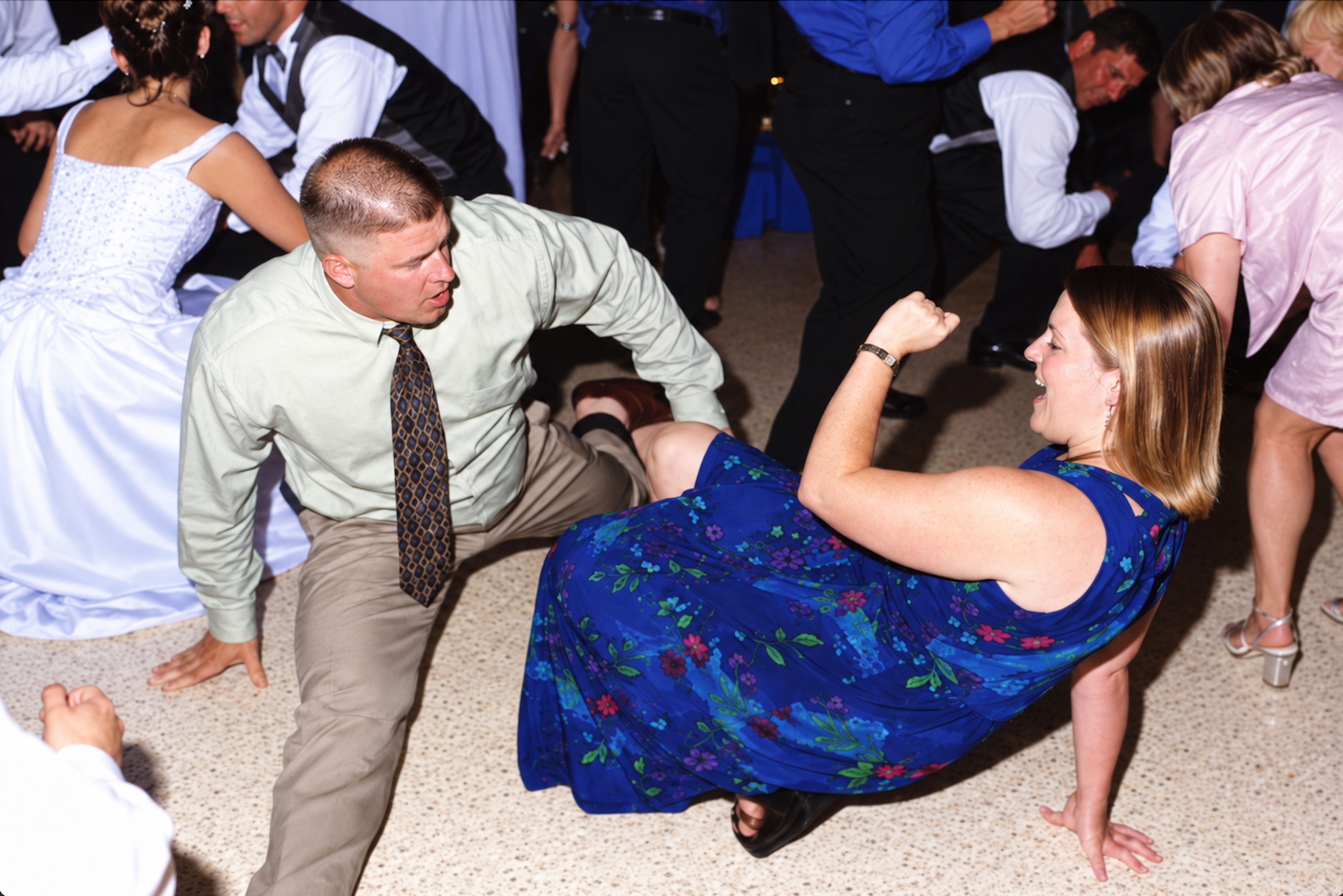
The author and his wife, at a time when getting off the floor required considerably less planning.
People ask what being an emergency physician is like, and they expect the blood, the saves, the codes, the worst nights. Those happen, and they matter, but I try not to carry those home. What I try to keep is the people. You meet everyone in …
Read more…
Why I stay in emergency medicine: a dancer at nearly 100
A few days ago, I saw a fake book cover online that was so ridiculous I laughed out loud. It was beautifully designed: deep red. Ornate gold lettering. The kind of cover that looks as though it belongs in a medieval monastery, chained to a wooden desk while a monk copies its contents by candlelight.
The title? How to Avoid Vaccines & Die Like a Medieval Peasant. The author? Robert F. …
Read more…
Distrust of science is inviting the Middle Ages back
Across the different hospitals and services where I have trained, I have noticed something I did not expect to notice. When we ask who knows the patient’s medications, who can explain what happened during the last hospitalization, or who we should call in an emergency, the answer is very often a woman. A mother. A wife. A sister. A daughter.
A specific memory I have: a seventy-year-old man with diabetes and …
Read more…
Why the family medical history lives with women caregivers
How do I know if I’m burned out or just unhappy at work? On the surface, this is a straightforward question. Job burnout is one thing; professional dissatisfaction is another. We have validated survey questions for each, like the Maslach Burnout Inventory and the Physician Worklife Survey, and measures that can differentiate burnout from dissatisfaction, like the Professional Fulfillment Index. But I’ve found that when physicians are no longer thriving …
Read more…
Burnout or job dissatisfaction: 4 causes usually in play
In the digital age, we have been conditioned to trust the social proof of a high star rating. We see five stars on a retail site and immediately assume the product is excellent. But as a psychiatrist, I have learned that when it comes to medicine, that logic is fundamentally flawed. In fact, if you encounter a physician with 375 five-star reviews and not a single negative comment on social …
Read more…
Patient satisfaction scores punish the doctors who say no
It’s time to call out medical malpractice for what it really is. Dick Durbin’s own words define what is behind medical malpractice. “Before I was elected to Congress, I worked in a courtroom. For years, I defended doctors and hospitals, and for years, I sued them on behalf of people, who were victims of medical malpractice.”
Dick Durbin became a lawyer in 1969. He was first elected to Congress in 1982. …
Read more…
Frivolous malpractice lawsuits are a governance failure
History has taught medicine some brutal lessons. Nearly two centuries ago, Ignaz Semmelweis noted a disturbing pattern in the maternity wards of Vienna, Austria. Women cared for by physicians were dying of puerperal fever at dramatically higher rates than those cared for by midwives. The hospital still looked functional, the wards remained open, physicians continued working, and the institution carried on. But something inside the system was profoundly wrong. Semmelweis …
Read more…
Why physician outsourcing is a warning sign for hospitals
I have intubated people who intentionally overdosed on many things they could find. I have sat with families in the minutes after we lost someone who didn’t have to be lost. I have written discharge summaries for patients I worried about the moment they walked out the door.
For twenty-three years, I was the doctor on the other side of the crisis. Then I wasn’t.
It didn’t arrive the way emergencies do: …
Read more…
Physician mental health and the shame of asking for help
When I was younger in surgery, I watched hands. I watched how senior surgeons held an instrument, how little unnecessary movement they made, how calmly they worked around a vessel that could turn an orderly operation into an emergency within seconds. Technical mastery was visible. You could stand across the operating table and recognize it.
I wanted that kind of control. Most young surgeons do.
In my first year of cardiovascular surgery …
Read more…
Surgical judgment: the skill no one sees from the gallery
The room was still dark, my cat curled next to me, when I looked at the clock: 4:18 a.m. It was well before my alarm was set to go off, but I knew I wasn’t going to fall back asleep. Reluctantly, I grabbed my phone, put on my slippers, and shuffled downstairs to the coffee maker. While the coffee brewed, I skimmed my email and read the news headlines. Coffee …
Read more…
Physician burnout often begins with self-abandonment
Our cultural ethos has revolved around the paragons of “hard work” and so much so that now our health leaders are suggesting that “healthy” Americans work longer to delay retirement to stimulate the economy. In the words of Dr. Oz, “If Americans could stay healthy enough to work just one additional year or start working earlier in their lives, it would increase the GDP of our nation by trillions …
Read more…
Can physicians and organized labor stand together?
I recently read Kara Wada’s September 7, 2026, KevinMD essay asking a simple but profound question: Who holds the telescope? Her article resonated with me immediately because I know the answer.
When my wife Kathy was dying, nobody did.
Kathy was not the victim of one catastrophic mistake. There was no single dramatic error that changed the course of her illness. What I witnessed instead was something more common and, in many …
Read more…
Fragmented care made my family her care coordinator
Every physician accumulates evaluations during a career. Most are read once and forgotten. Decades later, while reviewing my Air Force officer evaluation reports from Minot Air Force Base, I discovered something unexpected: a record not merely of performance, but of ideas that anticipated changes in pediatric care years before they became formal policy.
The reports documented emergency transports, developmental screening initiatives, community partnerships, staff expansion, and coordinated care systems. What struck …
Read more…
A military pediatrician inside the nuclear readiness system
Medicine has developed a new mental health illness of the “attention economy.” The term was introduced by psychologist and Nobel laureate Herbert A. Simon, who argued that an abundance of information creates a scarcity of attention, making human attention an increasingly valuable resource. Physicians always depended on attention to the patient, trainee, colleagues, and the required attention to quiet work of becoming wiser. Yet professional life increasingly unfolds within an …
Read more…
3 choices that protect physicians in the attention economy
“I know the treatment probably won’t work,” a patient nearing the end of life tells the doctor. “I want to try anyway.” The patient understands the risks but still hopes for a little more time. The physician wants to honor that hope while worrying that side effects could make the patient’s remaining days more painful. If the treatment requires resources in short supply, other patients’ needs make an already difficult …
Read more…
Medical ethics principles do not decide hard cases
abandoning ship
swim with the gentle undulations
of our stardusted oceans
as they sensitively surrender
drops of dew up
to the contemplative clouds
to convey ancient intricacies
in the dew’s quiet rest, buoyed patiently by petals who also must obey the call of gravity.
my dear mechanical world
(welded so clumsily by ego)
how blindly naive
your race
neglecting truths
engendered by beauty,
insisting instead that
the weight of time
is measured in capital.
you employ
productivity and efficiency
to justify life
proclaiming ignorantly
that sitting still
serves selfishness,
sloth,
and a stupored mind.
performative …
Read more…
A poem for anyone tired of productivity culture
I am on rounds with the medical team on the floor that has patients with medical problems and psychiatric comorbidities. My presence is not actually needed; however, the social worker who attends regularly usually feels the need for support from her attendings, who do not have the “time” to attend these meetings, so I have attended at least weekly. As I sit in the nursing station where the team meeting …
Read more…
Why doctors don’t know their patients, only their initials
Having returned to the United Kingdom from a vacation back to Southeast Asia, I found myself reflecting on the meaning of being an immigrant.
I found myself intensely missing the sun and the food. The general miasma of security and comfort that comes from being home. Of having access to not one but three cars with a full driving license, which, being Malaysian, is a huge part of one’s identity. Strip …
Read more…
The immigrant doctor who belongs to two places at once
When I joined OrthoIllinois in 2022 and took on leadership responsibilities at Injury Express, our orthopedic urgent care practice was already delivering high-quality clinical care. But as I became more involved in reviewing our patient-experience data, I noticed that some of our biggest opportunities for improvement had little to do with the medical care itself. Many involved waiting.
In 2022, our overall patient satisfaction score was 92.10 percent. When we looked …
Read more…
Patient experience in urgent care is a workflow issue too