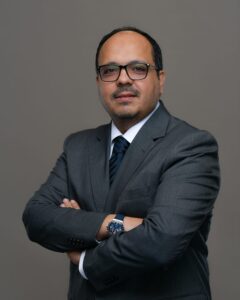
Hussain Isma'eel is a cardiologist and head of cardiology at Aman Hospital in Qatar, with subspecialty training in cardiac imaging from Harbor-UCLA Medical Center and the Cleveland Clinic. He holds an academic affiliation with the University of Balamand.
He has more than a decade of experience in health care leadership, quality improvement, and artificial intelligence. He holds a postgraduate diploma in applied health care economic and technology evaluation from the University of South Wales and a Lean Six Sigma certification in health care from Emory University.
Isma'eel is the cofounder of HEALTECH and SOLVIT, where he leads the development of AI-powered health care solutions. His work spans cardiovascular imaging, health care operations, AI implementation, and digital health innovation. He has authored numerous scientific publications, holds patents in AI applications for cardiovascular medicine, and is actively engaged in advancing the safe, ethical, and effective integration of artificial intelligence into clinical practice and health care systems.
He shares updates on LinkedIn.
Technologies differ not merely in their complexity, but in the breadth of what they enable humans to do. As their capabilities expand, so too does their influence on how we perceive and interact with the world. A stick is a simple technology with relatively few uses. Compare it to the saddle, which allowed humans to harness the power of the horse, communicate with it, direct it, and ultimately reshape transportation …
Read more…
AI and critical thinking: Use it or lose it
While the field of artificial intelligence has existed for decades, the release of OpenAI’s large language model (LLM) to consumers provided the propelling boost for AI’s widespread adoption. This transformation is evident across nearly every aspect of health care. It can be seen in the surging number of research publications on AI in medicine and is perhaps felt even more in clinical practice, where patients, physicians, and health care providers …
Read more…
Can AI defeat death? Physicians need evidence first


















