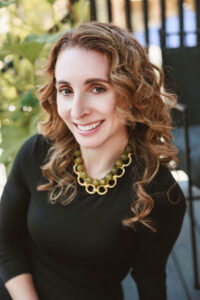
Lauren Fine is a board-certified allergist-immunologist and the founder of Permission to Change, a coaching practice for high-achieving women and physicians who feel stuck in lives they built to other people's specifications. Her work centers on ikigai and the quiet but costly difference between the rules we inherit and the ones we choose for ourselves.
She is an associate professor of medical education and assistant dean of clinical skills education at Nova Southeastern University's Dr. Kiran C. Patel College of Allopathic Medicine, and she still sees patients at the Miami VA Medical Center. She holds a faculty appointment with the Harvard Macy Institute.
She brought her ideas about ikigai and self-authored change to the TEDx stage in "Permission to Change: Finding Your Ikigai," and she continues them each week on her Substack of the same name, a running exploration of what it means to give ourselves permission to make changes. Her scholarship spans medical education, clinical skills assessment, narrative-based medicine, and physician well-being, with work appearing in Cureus, Academic Medicine, Medical Science Educator, and the Journal of Allergy and Clinical Immunology.
She writes, coaches, and connects with readers on Substack and shares updates on Instagram.
When I was deciding whether to leave full-time clinical medicine, I asked my most trusted colleagues what they thought. Most of them did not understand why I would leave something I had worked so hard to build. Others suggested I not make a change so early in my career. My family did not understand the new job either, not even my husband. In the end I did it anyway.
After asking …
Read more…
How to stop asking for permission and decide for yourself
The heaviest things we carry are rarely the tasks. They are the standards we never thought to question.
My morning mental routine: Who is picking the kids up? What are we having for dinner? What time do I need to be at work, and how much is on my plate there? What time do I need to pick the kids up in time to make dinner? Maybe we will just eat …
Read more…
How to lighten your mental load by asking better questions
“The eyes only see what the brain knows.” A patient said this to me recently, and it stopped me in my tracks. He was reflecting on his own experience in the medical system: the many physicians he had seen for the same problems, and the various different diagnoses he had received. Although each of those physicians likely trained at LCME-accredited institutions, the path beyond medical school, including residency, fellowship, and …
Read more…
How AI improves clinical reasoning for medical students
Over the past few months, my 6-year-old daughter and 3-year-old son have been confined almost entirely to our house and backyard to shelter them from the coronavirus pandemic. They know that “the virus” is dangerous and invisible. However, like superheroes facing adversity, they found their own escape from the confines of their world to their imaginary world of superheroes. During the day, my son insists on wearing a frayed and …
Read more…
The superhero within during the time of COVID-19
My grandfather was a dedicated physician. To me, he was the caring, attentive doctor depicted in the classic Norman Rockwell paintings. He was a brilliant and religious man of few but powerful words who didn’t greet his patients with a handshake, but yet he was loved by so many. He also happens to be the person who taught me as a young child why cheerios float, how lifesavers …
Read more…
How a pandemic may kill the handshake