










Listen and followApple PodcastsSpotifyYouTubeMore apps · Browse all episodes
“As medical trainees, we will shape the rapidly changing health care environment in this country. We are fiercely advocating for our disadvantaged patients, debating the price of life-saving medications, and carefully considering how the upcoming elections will shape the health care system in which we both provide and receive care. All the while, we handle our responsibilities and prepare to care for critically ill patients during a seemingly inevitable pandemic. These diverse issues bring to light a huge deficit in medical education — the lack of training on complex health systems.”
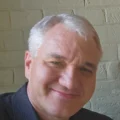
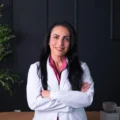
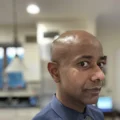
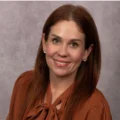
Daniel Arteaga is an internal medicine resident. Isobel Rosenthal is a psychiatry resident. Lauren Tronick is a medical student. They are founders of the podcast, Well Rounded.
They share their story and discuss Daniel and Isobel’s KevinMD article, “Medical trainees need knowledge and education on health care systems and policy.”

Hosted by Kevin Pho, MD, The Podcast by KevinMD shares the stories of the many who intersect with our health care system but are rarely heard from.


Transcript
Kevin Pho: Hi, and welcome to the show, where we share the stories of the many who intersect with a health care system but are rarely heard from. My name is Kevin Pho, founder and editor of KevinMD. Today we have a power trio with us. We have Isobel Rosenthal, who is a psychiatry resident; Dan Arteaga, who is an internal medicine resident; and Lauren Tronick, who is a medical student. Together, they are the founders of Well Rounded, which is a podcast by trainees, for trainees, that explores the health, business, and policy in the United States. Their mission is to empower clinical trainees and young professionals who want to learn more about the U.S. health care system. Isobel, we’ll start with you. Is that all correct?
Isobel Rosenthal: Yeah, no, it is. When we started this podcast a year ago, none of us could have predicted how understanding the infrastructure of our health care system would become more and more important. It is really just critical to trainees, especially right now during the COVID-19 pandemic.
Kevin Pho: So you and Dan wrote an article on KevinMD, and thank you very much. It was titled “Medical trainees need knowledge and education on health care systems and policy.” So Dan, can you go a little bit more into the article and explain why you and Isobel wrote it?
Daniel Arteaga: Yeah. The reason we wrote the article is really the same reason that we started to create the podcast. Isobel and I met in business school, and when we both went back to medical school, we had this aha moment: All of these topics that were critical to the delivery of care to vulnerable patients were being taught in business school, and probably in public health programs as well, but were not being taught in medical schools. So what we wanted to do was let people know that those topics are important and that they affect patient care in real ways. It’s kind of our responsibility as physicians and other clinicians to learn about those topics so that we can make care better for patients.
Real physician voices, twice a week
Free, and one click to unsubscribe.
Kevin Pho: So Isobel, you mentioned that the pandemic has made these topics even more important than they were. Can you explain a little bit why?
Isobel Rosenthal: Yeah, I think it’s multifaceted. One, physicians are actually becoming leaders in a way that they haven’t before. I think the public is really going to physicians to get information on the pandemic in new and different ways. People are going to Twitter to get news from individual physicians, or from emergency medicine doctors in New York, who might be telling them more about the pandemic than the CDC website is. So I think that style of information is totally different.
And then I think as residents, we are seeing a health care system that may or may not have been prepared for what was a devastating pandemic, and clearly health care will be transformed by this pandemic. I think that physicians should play a critical role in transforming the health care system.
Kevin Pho: I completely agree with you on that. One thing that’s really shocking to me is how quickly this all came on, because back in early February, even the middle of February, things were running relatively status quo. Then within four to six weeks, things completely collapsed. Right now we’re seeing frontline health care workers being furloughed and being laid off, and on the private physician Facebook groups, there are a lot of questions from doctors who just aren’t expecting this. Just having that background in the business of medicine, and knowing the role of money in our health care system and how that plays a role in what they do, I think that education probably would have come in very handy.
Now, Lauren, you’re in medical school. So tell me about the business of medicine and policy courses: What’s their current role in our medical school system?
Lauren Tronick: Yeah, so I think that I am in a little bit of a unique situation, in that we actually have two electives offered for first and second years called health policy and business and medicine. But I think that that is actually unusual, and as far as friends at other medical schools, it seems like it is the exception, not the rule.
One of the biggest spaces for policy in medicine and medical school seems to be organized medicine, and students that are involved in things like the AMA or, in California, the CMA. That’s very specific, because it is very political. It’s amazing and interesting, and it does bring together students from across the country, but it doesn’t quite give this baseline education and understanding of how the system actually works. I think that is just missing and should be much more integrated into our curriculum. So hopefully this podcast is kind of filling in those gaps and augmenting what is offered, if we are lucky enough to have an elective that does explain it or give us an introduction.
Kevin Pho: When I went to medical school about 20 years ago, there were probably 5 to 10 hours total in terms of health policy and the business of medicine, if that. And at that time, there just wasn’t much interest from the students. Now, Lauren, are you seeing acceptance from a lot of your medical student class, and do they realize how important this is as they move forward?
Lauren Tronick: Yeah, we had an event a couple of months ago. My friend and I put on an event, and over 100 people showed up. It was basically just about the state of health care and policy in 2020. A lot of people showed up, so there is interest. And I know that, as Isobel was saying, with the pandemic it’s just skyrocketing, because it has now almost become a necessity. It’s not even just about interest anymore; it’s about necessity. We need to know how this operates and how payment is working when everything is remote, etc. So I think it’s a really interesting transition from interest to necessity.
Kevin Pho: So Dan, how has the podcast been going over the last six months or so? Have you been noticing any traction, and what kind of response are you getting from your viewers and your fellow trainees?
Daniel Arteaga: Yeah, six months is a little bit of an understatement. We spent a lot of time perfecting the craft and putting all the right pieces together. Lauren does a fantastic job with our editing; we could not do this without her. And then we also have a sound engineer named Tommy, who really makes it sound professional at the end of the day. So it has taken a whole team and a good bit of time to really make it what it is.
We have been really pleasantly surprised by how excited people are about the topics that we discuss and the people that we interview. It’s folks who are not even always clinical trainees. It’s friends sharing it with friends, and then we get great feedback on it, like, “We love this, but I wanted to hear a little bit more about that.” So it kind of gives us new ideas for topics that are on people’s minds that we want to address in the future.
More than anything, it’s been very, very fun, and I hope that you’re finding, as you start this podcast, that it’s fun also. I think that we look forward to doing this as long as we can, and we are just excited to see what the next interview brings and what the next topic brings. It’s been really exciting.
Kevin Pho: And Isobel, why a podcast, of all the social media platforms? You could have a YouTube channel, a Facebook livestream, a blog. Why did you guys choose a podcast, of all mediums?
Isobel Rosenthal: Yeah, so I think that we wanted something that was really accessible to training clinicians, who, as we know, have very little free time. As much as we’re all packed for time, everyone I know listens to some sort of podcast, especially because it’s like 20, 30 minutes, and everyone has some sort of commute to work. So it just seemed like something that would be easily accessible to our peers. It was a medium that people were super comfortable with, and that could just add on to their commute, and that’s why we thought it would work so well.
Kevin Pho: Sure. And Dan, I always want to get back to the article here, about why trainees and medical students need health care system policies. What are your solutions? What are some ideas that you have for the education system to implement this within the curriculum?
Daniel Arteaga: So something that we’ve kind of noticed working in the hospital is that there are no medical students around. Lauren’s classes, she can tell you, have gone pretty much all virtual. So it kind of now seems, honestly, like a good opportunity to start looking to alternative educational techniques, and podcasts might actually help fill some of those gaps. I think that right now is kind of a good time to start thinking about how the education of medical students is going to change, because right now it kind of has to change.
I think that medical students also are increasingly interested in these topics. I remember when I was in medical school, there was a public health policy curriculum, and there were maybe a few students who were really, really interested in it. By the time I graduated, it was kind of an expectation that medical schools would provide the sort of education that people really want and need to address the big topics in health care.
I say this all the time, but I think medical school does an excellent job of teaching you how to treat the person that is in front of you. Thinking about larger populations and delivering care to large groups of people, that is a place where there’s room for improvement. We hope that Well Rounded becomes kind of one of those educational resources that helps fill in those gaps.
Kevin Pho: And Lauren, do you have a message to medical students who may be listening to this? Where can they turn if they want to find more information about the business side of medicine and on health policy?
Lauren Tronick: Well, first I would give them Well Rounded. But really, we are trying to do a wide array of topics, from how information and pseudoscience narratives spread online, to what the economics of the American emergency room are, from arrival through the doors to discharge. These are just things that, obviously, it’s quite a wide gamut, from economics to treatment to internet pseudoscience. But we’re trying to do a thorough investigation of all of these topics.
Kevin Pho: All right. And Isobel, what’s the take-home message that you want to share with the KevinMD audience?
Isobel Rosenthal: Yeah, I think that as we are all sort of in this scary time, the thing that makes me excited for the future is that I do think medicine will be different and better because of the challenge that we’re all facing as providers right now during this pandemic. I really hope that the Well Rounded podcast can begin to give you guys some basic tools to start thinking about a system that is going to be overhauled, and about how we can build a health care system that provides the best care for patients and also is rewarding for the health care providers within the system.
So I’m excited for what the future of health care will look like. I think we’re going to see an increase in telemedicine, and I’m really excited for that. So I think there will be some exciting outcomes of this pandemic in the midst of all this destruction and tragedy.
Kevin Pho: Well, I agree with you there, especially when it comes to virtual medicine. I’m in primary care; I do primary care internal medicine, and 100 percent of my visits now are virtual. Even when the pandemic ends, if there is a proverbial silver lining, it is that I think virtual medicine will be here to stay. A lot of my patients find it tremendously convenient that they don’t have to trudge to the exam room all the time just for routine health. So if there is one silver lining from the pandemic, it is that virtual medicine will certainly persist.
Well, I want to thank all of you for coming on to the show. Once again, we have been chatting with Isobel Rosenthal, Dan Arteaga, and Lauren Tronick. Together, they are the team behind Well Rounded, which is a fantastic podcast that I highly recommend. Thank you very much for joining me.
Isobel Rosenthal: Thank you.
Listen and followApple PodcastsSpotifyYouTubeMore apps · Browse all episodes