














Listen and followApple PodcastsSpotifyYouTubeMore apps · Browse all episodes
“Trainees like myself travel great distances from home in pursuit of higher edification. Yet the coronavirus makes us worry about the aged family we leave behind – parents and grandparents. A WhatsApp message ensuring they’ve stocked up on acetaminophen, toilet paper and canned soup (low sodium, of course) the only assuage to our anguish.
The rigors of medicine often demand sacrifice, sometimes in the form of long-distance relationships. Residents and fellows work overtime and trade shifts in chess-like strategy to ensure a ‘golden weekend’ with their significant other. Now with travel being high risk, golden weekends will likely be swapped for Facetime dinner dates.
Today the malefactor may be COVID-19; the only certitude is that the future will bring another. And yet, despite the perils that may exist, we toil on, for the sake of our patients and to satisfy the seraphic thirst of our higher calling. As in the end, love conquers all.”
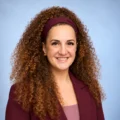
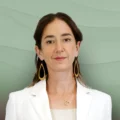
Mrinali Shetty and Yuvraj Chowdhury are cardiology fellows. They can be reached on Twitter @YChowdhuryMD and @MrinShettyMD, respectively.
They share their stories and discuss their KevinMD article, “Love in the time of coronavirus.”
Did you enjoy today’s episode?
Please click here to leave a review for The Podcast by KevinMD. Subscribe on your favorite podcast app to get notified when a new episode comes out!
Do you know someone who might enjoy this episode? Share this episode to anyone who wants to hear health care stories filled with information, insight, and inspiration.

Hosted by Kevin Pho, MD, The Podcast by KevinMD shares the stories of the many who intersect with our health care system but are rarely heard from.


Transcript
Kevin Pho: Hi, and welcome to the show, where we share the stories of the many who intersect with our health care system but are rarely heard from. My name is Kevin Pho, founder and editor of KevinMD. Today on the show, we have two cardiology fellows. We have Mrinali Shetty and Yuvraj Chowdhury. They wrote the KevinMD article “Love in the time of coronavirus.” Welcome to the show.
Mrinali Shetty: Thank you.
Kevin Pho: So I’m going to ask each of you your story and journey to where you are today. Mrinali, why don’t you start?
Mrinali Shetty: Sure. I started out born and brought up in Bombay, India. That’s where I did medical school. My dad’s a cardiothoracic surgeon who trained here in the U.S., which is why I wanted to follow in his footsteps. I was lucky to have matched in a great program for internal medicine in New Jersey. I did three years there, was chief resident, which is also where I met Yuvraj, my fiance, and we were lucky to then match into cardiology fellowship. So right now, I’m in Chicago. I’m a second-year cardiology fellow.
Yuvraj Chowdhury: So, Kevin, I grew up in a small town in India and really was never inclined to get into medicine until my dad had a heart condition. It took me to the hospital. I was scared, but in that moment, also, I think it stimulated something in me. I started my journey in medicine. I was visiting my brother here in the States. He lives in Chicago, and I happened to visit a hospital with him, and in that moment, I knew I wanted to learn medicine here. I came to New Jersey and met Mrinali. We shared a love for cardiology, and I’m here in Brooklyn now pursuing my dream.
Real physician voices, twice a week
Free, and one click to unsubscribe.
Kevin Pho: Mrinali, can you tell me about how the pandemic has affected you and your practice over the last few months?
Mrinali Shetty: Sure. I touched upon a couple of these points in the article as well, but we’ve moved to more of a telemedicine model in our outpatient unit. A lot of our office visits are now just purely telemedicine. Unfortunately, when it comes to cardiology, the clinical examination is so key, so that’s definitely been a barrier, but we do do video visits with a lot of our patients if they have phones that are compatible with it. And in the inpatient setting, obviously, we’re seeing sicker patients, patients that need more of our care, more of our time. So yeah, that’s how it’s probably changed.
Kevin Pho: And Yuvraj, what are some of the cardiology effects of COVID-19? I know that they’re still being discovered, but over the last few months, what have you discovered were some of the heart effects of this virus?
Yuvraj Chowdhury: So, Kevin, one thing which I’ve seen, and it’s almost paradoxical, is that the virus causes increased thrombosis or coagulation. It makes your blood thicker; it makes it clot. While this leads to a lot of manifestations which are systemic in terms of COVID, it also leads to a higher incidence of myocardial infarction. Vessels can clot up easier, and people come in with heart attacks. Sometimes these involve the small vessels, not really visible to us on angiography, but we do see the effects of them.
Why I call it paradoxical is because, given the uncertainty patients feel before coming into hospitals, we’ve actually seen a decline in the number of people who are coming in with acute coronary syndromes, or, as the layman calls it, heart attack. Because they’re hesitant, they discount their symptoms, which they otherwise wouldn’t have and would have prompted visits to the ER. So despite there being sort of a rise in the thrombogenicity in the circulation, we are seeing a lesser number of visits to the ER for acute coronary syndromes.
Kevin Pho: Now let’s get into your KevinMD article that both you and Mrinali wrote, “Love in the time of coronavirus.” Mrinali, can you walk my audience through that article and why you and Yuvraj decided to write it?
Mrinali Shetty: Sure. It was actually written way back in March, when, you know, lockdown still hadn’t been instituted. It was the early days, a lot of uncertainty. We didn’t know what the virus was, what its effects were. We were just hearing about it. We had a few patients coming in. There was talk about the country going into lockdown. And so it was a Friday evening, I think. Raj and I were talking, and we were just thinking about how rapidly life had changed for us, going into clinic every day. We couldn’t, you know, give patients that we’ve known for a while a tight hug. We had to elbow bump them or do namaste. And how it was affecting our own lives. We have parents back in India. We didn’t know what the situation was like back there, but we wanted them to stay home, stay safe. You’re worried about them; they’re worried about us because we’re going to the hospital every day.
And also, I think Yuvraj and I had traded calls and things like that so that we could spend our weekends together, the so-called golden weekends. So we had tickets booked, but we had no idea when we were going to see each other next, and him being in an inner-city hospital in New York, where it was so bad, that was definitely very stressful.
Kevin Pho: And Yuvraj, has anything changed since you and Mrinali wrote that article? So you guys wrote this article back in the beginning of March, and we are now talking in mid-July. So what has changed now in the last four months?
Yuvraj Chowdhury: I think, Kevin, when we wrote the article, it was a time of a lot of uncertainty. I think, as medical professionals, every day I walked into the hospital, I was a little scared, to be very honest. I was scared for myself. I was scared I might contract something. We didn’t know enough. What has changed now is I feel more confident going to work and dispensing health care to my patients, to take care of them, partly because I know PPE works. I’ve been working in probably one of the worst-hit parts of New York, and I’ve dealt with a lot of patients with the virus. There was a time where there were close to 150 people on the ventilator in my hospital, and we were all redeployed. Nobody was a cardiologist, nobody was a critical fellow; everybody, all hands on deck, and everybody did what they were taught. We just gave medical care. And today, when I go in, I feel like I’m in a position to provide that same level of health care which I was providing prior to the pandemic, with more certainty and more confidence, to give the best health care to my patients.
Kevin Pho: And Yuvraj, the pandemic hasn’t really subsided. If you look at what’s going on in the South and the West, it’s flaring up again, and there’s certainly a strong possibility it may flare up again in the New York area. How confident do you feel going forward as it relates to PPE and the lessons that you’ve learned over the last few months?
Yuvraj Chowdhury: I feel confident that wearing the right personal protective equipment protects you from the hazards of the virus, protects you from the hazards of contracting the virus. I feel I can do whatever is in my ability to provide the care my patients need. What scares me is that we still don’t have enough of an armory to treat these people. Despite giving all the evidence we have to our patients, we’re giving them all the care that we find out on a day-to-day basis, we still are not able to influence outcomes, and that’s something new for me.
You know, being in cardiology and being somebody who’s interested in interventional cardiology, I’m used to seeing a disease, a block, and opening it and resolving the issue. But with the virus, one really doesn’t know when it sort of turns for the worse, and sometimes your hands are tied. You don’t know what to do. So that makes me really anxious.
Kevin Pho: Mrinali, I was wondering if you could share with your non-cardiology clinicians: Is there something from a cardiology standpoint regarding the pandemic and the virus that you could share with your non-cardiology clinicians?
Mrinali Shetty: I think it’s definitely important in terms of medications. There is a lot of talk about ACE inhibitors, whether, you know, there’s an increased risk of contracting the virus. Not now. We know that if a person is on ACE inhibitors, definitely continue it. The second thing is the emphasis should be on: If the patients are feeling sick, they need to come in. They shouldn’t worry about the virus. They need to come, and they need to be seen, because we’re seeing patients with much more advanced complications of heart disease because they’ve ignored their chest pain while they’ve been at home, because they’ve been scared to come into the hospital setting, and that’s very worrisome.
Kevin Pho: We’re talking to Mrinali Shetty and Yuvraj Chowdhury. They are both cardiology fellows, and they co-wrote the KevinMD article “Love in the time of coronavirus.” Yuvraj, what’s something that you know now that you wish you knew back before the pandemic started?
Yuvraj Chowdhury: I think one thing which I have seen from the treatment standpoint is the use of anticoagulation, the early use of anticoagulation in people with the virus, not only those people who have evidence of thrombosis but even in people who have a severe form of disease. In my personal, limited experience, it has really altered outcomes. I really feel that the virus works through a cascade of increased thrombogenicity, and I feel like one should be sensitive to starting anticoagulation therapies earlier, sooner rather than later, in these people. I feel that makes a difference in outcomes.
Kevin Pho: Thank you so much, both of you, for sharing your insight, especially from a cardiology standpoint. Mrinali, I’m going to give you the final question. What is your take-home message from the both of you that you want to share with the KevinMD audience?
Mrinali Shetty: I just wanted to say that all of us in the health care profession have probably battled what are the greatest times that we have seen as professionals, but we’ve come out of it strong, and we’re all in this together, and hopefully, you know, the worst of it is behind us, and there are good days to come.
Kevin Pho: Well, once again, thank you, both of you, for sharing your cardiology insights, and thank you for your time and for being on the show.
Mrinali Shetty: Thank you so much, Kevin. It was a pleasure.
Listen and followApple PodcastsSpotifyYouTubeMore apps · Browse all episodes