










Listen and followApple PodcastsSpotifyYouTubeMore apps · Browse all episodes
“It is time to stop being spectators. We are at a critical turning point in our fight against this disease, and our actions now will determine whether we stay on the sidelines, or put an effective end to the scourge of the disease. If we want to avoid a deadlier and costlier battle for the years to come, students, and the general public, have to take steps to work together to disrupt disease transmission and increase cooperation. In the case these steps are not taken, humanity may soon be facing its own Civil War, where our societal fabric may be further ripped apart.”
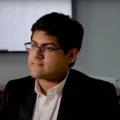
Adithya Sivakumar is a medical student.
He shares his story and discusses his KevinMD article, “Medical students: It is time to stop being spectators.”
Did you enjoy today’s episode?
Please click here to leave a review for The Podcast by KevinMD. Subscribe on your favorite podcast app to get notified when a new episode comes out!
Do you know someone who might enjoy this episode? Share this episode to anyone who wants to hear health care stories filled with information, insight, and inspiration.

Hosted by Kevin Pho, MD, The Podcast by KevinMD shares the stories of the many who intersect with our health care system but are rarely heard from.


Transcript
Kevin Pho: Hi, and welcome to the show, where we share the stories of the many who intersect with our health care system but are rarely heard from. My name is Kevin Pho, founder and editor of KevinMD. Today on the show, we have Adithya Sivakumar. He’s a medical student, and he wrote the KevinMD article “Medical students: It is time to stop being spectators.” Adithya, welcome to the show.
Adithya Sivakumar: Thank you. Thank you so much for having me.
Kevin Pho: So we’ll get into your article in a little bit, but first off, can you share your story and your journey to where you are today?
Adithya Sivakumar: Yeah, definitely. So when I was younger, I think I’m definitely a big history nerd, so I would definitely look through Wikipedia and look through history books, trying to see all these kinds of connections in the past and trying to see how these different events led to where we are today. While I was doing that, I was also a little bit interested in health care, but I wasn’t really sure why. Then I slowly found how health care just has a bunch of stories behind it, and how they all intersect to make a person, or health outcomes in general.
So just looking at those two different types of connections really brought me toward medicine: looking at the different stories people have, and how sometimes the medical field streamlines them into one kind of sector, one paragraph, to make everything easier. But in essence, that sometimes discriminates against and disenfranchises some people who need better care. So I think that’s why I primarily got involved in medicine: to take care of all the stories that a patient, or people entering the health care system, may bring, so that we have more equitable health outcomes throughout the United States.
Real physician voices, twice a week
Free, and one click to unsubscribe.
Kevin Pho: So you’re in between your first and second year of medical school. Tell me how the pandemic has affected your medical training so far.
Adithya Sivakumar: Yeah, definitely. So about March, we were chugging along, and I think it slowly felt like things were falling in slow motion. I just remember that week vividly. Slowly, people were starting to stay home, and then we moved from in-class to virtual. So it’s definitely a change, in that for most of our sessions, Rush does a really good job of having us self-study a lot of our material, so we’re able to take in all the material ahead of time and not really worry about having the lecture component in a different kind of space. So that’s been really nice for us.
However, there are some parts which are obviously difficult, like anatomy and clinical skills, just because those are so in person and you just need to see them up close. But our curriculum does a really good job of integrating those into an online format, and overall it’s been a generally smooth transition, and they’ve always been receptive to our comments.
Kevin Pho: And how is the fall semester shaping up right now?
Adithya Sivakumar: It looks like it’s going to be a hybrid curriculum, half online and half in person. The items I mentioned before, like anatomy and clinical skills, those would be more in person, just because a lot of the things that we skipped in person, like musculoskeletal and neuro exams, are generally things we would want to know later, coming on rotations and things like that. So we’re definitely going to focus on those in person, and anatomy will be a little more spread out than it usually was, so that’s another thing that will be in person. But everything else, like lectures or basic science sessions, will all be online.
Kevin Pho: All right. Well, best wishes to you as you progress.
Adithya Sivakumar: Thank you.
Kevin Pho: So let’s talk about your KevinMD article, “Medical students: It is time to stop being spectators.” Now, for those who haven’t read your article, can you walk my audience through it and share the story of why you decided to write it?
Adithya Sivakumar: Yeah, definitely. So it touches back to what I was talking about before. I’m just a huge history nerd, so I saw something similar in how we were responding to this pandemic as we might have looked at the Civil War or different items in the past. My article starts off with the First Battle of Bull Run, I believe. It starts off there and says how a bunch of spectators from the Union came to see the Union fight the Confederacy in their first major battle, and they thought it was going to be a rout. It was going to be so fun. But then, in just a second, the Confederacy took over and defeated the Union in that battle, and the spectators also started running.
So I saw that as a parallel with COVID-19 at the time. In the beginning, we were looking at it, and I just remember looking at it in the beginning like it was, “Oh, just a start to the pandemic. We’ve seen H1N1, you’ve seen Ebola, we’ve seen all these different kinds of diseases. Our health care system obviously has many faults, but somehow we got through it.” I thought COVID-19 would be very similar. Instead, everything just, I wouldn’t say imploded, but it definitely went in a direction which wasn’t very exciting for us. So obviously there were a lot of lockdowns, and people were getting accustomed to the new normal.
I felt a lot of people like me, health professional students and medical students who came into medical school with the desire to help people out, were out of the loop now, since they weren’t directly able to do that duty. That’s where I came up with the idea to give suggestions to medical students to start getting involved, if they wanted to and if they felt safe. So things like volunteering. Back then, PPE was in great shortage. I was talking about PPE drives that fellow students were doing, or going to a blood drive.
Also, taking into consideration that the pandemic has been racialized sometimes, just because of the connotations that some have thrown around about where the virus came from, and how there have been racist attacks against people of Asian descent due to that. And lastly, just taking a step back and seeing what we can do differently in the future. There’s definitely going to be a lot of talk and policy changes around what we do concerning pandemics in the future, especially after what we’ve gone through now. So just taking all those into consideration and trying to help medical students go on their path in that way.
Kevin Pho: Sure. Now, for medical students who certainly want to get involved, whether it’s volunteering and whatnot, what are some of the avenues? What are some of the ways that they can look for these opportunities to still participate, especially as the pandemic is continuing or even worsening?
Adithya Sivakumar: Definitely. So a lot of medical schools are creating avenues where you can do screenings in multiple homeless shelters or nursing homes and things like that, things that do require patient contact but are, I guess, a little less invasive than, you would say, going directly into the hospital. Sometimes, if you’re like me, a first-year or second-year medical student who is still in the preclinical stages, organizing blood drives has also been really necessary.
There have also been a lot of other situations that have arisen since March, such as racial justice and items like that. So I’ve seen a lot of medical students getting involved in that respect, like showing that there’s a connection between racial inequities and health care, and COVID-19 especially. So taking a front and taking leadership on these points has definitely been helpful to a lot of medical students, just seeing these types of connections and trying to get people aware of it so they can reduce those inequities.
Kevin Pho: Sure. So you mentioned you’re a big history buff. Are there any lessons from history that you can think of that can be applied to today’s situation with the pandemic?
Adithya Sivakumar: Yeah, I mean, you would think so. I feel like there have been a lot of similar things in the past. We always go back now to the 1918-1919 flu pandemic and see how a lot of similar things were happening. We were caught off guard, and people were resisting wearing masks. In essence, they said, “OK, we know what to do now. We know how to quarantine. We know how to study a virus if it comes about.” But we just tend to forget those lessons. There’s a quote that I love; it’s basically about how history repeats itself, and it’s just very difficult for generations to understand what the previous generation has been through.
So just looking at these kinds of avenues, like the flu pandemic in 1918-1919. We had H1N1 in 2008-2009, and I feel that one especially, there was an opinion among some people that we overreacted to it, especially since, I mean, we didn’t go through the same quarantine measures, we didn’t do anything, and the fatality rate wasn’t as high. But it still led people in another direction, saying, “Oh, we need to reduce our pandemic response,” when the opposite was actually true. It was good that we overreacted and potentially saved a lot of lives there.
Kevin Pho: Sure. We’re talking to Adithya Sivakumar. He’s a medical student, and he wrote the KevinMD article “Medical students: It is time to stop being spectators.” Adithya, is there anything that you’ve learned over the last few months that you’d pass on to your fellow medical students? Is there any advice that you could share as they’re progressing through their medical training during the pandemic?
Adithya Sivakumar: Yeah, so definitely one piece of advice that I have is to stay involved with health equity and health outcome measures, especially in these kinds of times. I think it’s really easy to be sucked into your own curriculum and just start looking at the basic sciences and your organ systems, which is really important. However, I think we should also still be looking at the bigger picture here: looking at population health, looking at racial justice and health care, and just seeing ways that we can help out. Rather than just us in the physician room, our impact should go beyond our appointments and rather go into our daily lives.
So I would suggest that a lot of medical students and health professional students take a look at how they conduct themselves and what brought them into medicine, and see how they can help out using their reasons on a daily basis, instead of just using them as something that helps you on a personal statement, but instead as something that helps you motivate yourself to be a doctor.
Kevin Pho: And my final question: Do you have a take-home message that you want to share with the KevinMD audience?
Adithya Sivakumar: So I think my take-home message is definitely to take time to understand those around you, and take time to understand how society functions around you. Because I think it’s very easy, as a medical student and in the practice of medicine overall, to just get sucked into your little bubble of how you’re perceived, and this can lead you to false assumptions about how you’re supposed to practice. So definitely take into consideration how medicine has been portrayed in different communities, and how it has been used in different communities to sometimes promote harm, and take that into consideration when you’re questioning someone for being disbelieving of medicine sometimes. So just take into consideration all the factors that medicine plays in someone’s life, and then make a decision to do it for the better good.
Kevin Pho: Adithya, thank you so much for your time and insight, and thank you again for being on the show.
Adithya Sivakumar: No problem. Thank you so much.
Listen and followApple PodcastsSpotifyYouTubeMore apps · Browse all episodes