















Listen and followApple PodcastsSpotifyYouTubeMore apps · Browse all episodes
“Through my coaching of girl’s basketball in California’s Central Valley, my daughter and I were fortunate enough to know Kobe as a mentor and coach, and a person who inspired my daughter to be the best through hard work, dedication, and passion. While Kobe will live on as one of the game’s greatest athletes, he wanted to be remembered for much more than his championships and scoring records. It’s clear that he’s left a legacy greater than his legendary basketball career, and I thank him for inspiring me to strive for greatness while honoring what matters most in life.”
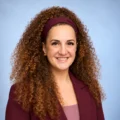
Imamu Tomlinson is an emergency physician and CEO, Vituity.
He shares his story and discusses his KevinMD article, “What I learned from Kobe Bryant as a parent, coach, and doctor.”
Did you enjoy today’s episode?
Please click here to leave a review for The Podcast by KevinMD. Subscribe on your favorite podcast app to get notified when a new episode comes out!
Do you know someone who might enjoy this episode? Share this episode to anyone who wants to hear health care stories filled with information, insight, and inspiration.

Hosted by Kevin Pho, MD, The Podcast by KevinMD shares the stories of the many who intersect with our health care system but are rarely heard from.


Transcript
Kevin Pho: Hi, and welcome to the show, where we share the stories of the many who intersect with our health care system but are rarely heard from. My name is Kevin Pho, founder and editor of KevinMD. Today on the show, we have Imamu Tomlinson. He is an emergency physician and CEO of Vituity, a physician-led and physician-owned partnership that combines clinical excellence with business acumen to help health care organizations raise the standard of patient care and improve their performance metrics. Imamu, welcome to the show.
Imamu Tomlinson: Oh, thanks for having me, Kevin. I appreciate it.
Kevin Pho: So we’ll get into your KevinMD article in a bit, and it’s a wonderful article that you wrote about Kobe Bryant. But first off, can you share your story and your journey to where you are today?
Imamu Tomlinson: Absolutely. A long, torturous journey that I won’t bore you with. But originally, I’m actually from Canada. I immigrated here when I was 18. School in New York, medical school in Cincinnati, residency in Dayton, Ohio, and then I came out to California with my wife and her family. And so I’ve been in the organization, Vituity, for about 15 to 16 years now, and really just kind of grassroots. I started as just an emergency physician doing shifts, wanting to change the world one patient at a time, and eventually went up the organization, ran for the board, and became the CEO. So I’ve been the CEO for about three years. It’s been a great journey.
Real physician voices, twice a week
Free, and one click to unsubscribe.
Kevin Pho: Now, from the perspective of a physician CEO, how has the pandemic affected the doctors that you’re meeting with and seeing every day?
Imamu Tomlinson: Yeah, it’s challenging. You know, health care obviously is the ultimate essential business, and so our physicians and our PAs and all the people that help us do our jobs so well, we’ve been right at the front lines. And so I think at some point, intimately, we know of the risks of getting through this pandemic, what we need to do. It’s been very psychologically tough on some of our providers, but ultimately, what I’ve seen is I’ve seen our physicians rise to the occasion. They’re taking care of patients, trying to protect themselves and protect their patients, and really, they’re the heroes of this pandemic.
Kevin Pho: And is there anything that you’ve learned over the past few months of the pandemic, any pieces of advice that you can share with some of the physicians who may be listening to this podcast?
Imamu Tomlinson: Yeah, I think I would share some advice. What we’ve learned is really that we’re all in this together, as physicians, as clinicians. And I think that what we’ve learned is that coordinating and connecting and integrating, not just within our particular practices but throughout the entire hospital, or really throughout the entire industry, is actually the way we’re going to get through this together. So I think this is not the time for silos. This is not the time for individual mandates, but really a time to get together and work together, to both share information but also to sometimes just get support. And it’s really, you know, it’s actually kind of emotional for me to see how people are working together to make sure that we get through this the safest way we can.
Kevin Pho: Wonderful. So let’s talk about your KevinMD article that you wrote earlier this year, “What I learned from Kobe Bryant as a parent, coach, and doctor.” Now, a lot of us know Kobe Bryant only from what we see on television. Can you share a little bit about your relationship with him and some things that you remember most about him?
Imamu Tomlinson: Yeah, I still can’t believe it happened. It’s a little surreal, and with COVID and all the other things, that story has lost some steam, so I appreciate you bringing it up.
My relationship with Kobe is actually not a relationship that started with me. It actually started with my daughter. I coached against Kobe Bryant. I was coaching my daughter, and he was coaching his daughter, and he took a liking to my daughter because of her ability and her aggressiveness. She’s just a wonderful basketball player, a wonderful human being. And he really took her under his wing and started to be a mentor to her, to talk to her about the game and talk to her about women’s basketball. And by proxy, I got some of that love also. He spent some time talking with me, and we talked about the game and how to elevate the women’s game, and actually really women’s issues, through the game of basketball. So it was very sobering for me to be a small part of his impact on the world.
Kevin Pho: Sure. And from what you’ve learned from him, what are some of the lessons that he’s taught you that could be applied to the medical profession in general?
Imamu Tomlinson: Yeah, you know, it’s interesting to know him as a player. As you mentioned, you knew him as a player, and there’s sort of a persona that we saw on the screen, and he was very different privately. And I think the most that I learned from him is actually similar to what I mentioned earlier about getting through COVID together. He was definitely a person that brought people together, and you would never have thought that from his basketball persona. But he would bring together all kinds of people around the game of basketball, in this case to elevate the women’s game.
And I also learned from him a little bit of what I already knew and what we know from medicine: Medicine is really about small incremental improvements, or small incremental work, that then over time can get to large changes in health care. And he believed that about the game of basketball. I mean, he was very detailed about what he taught the girls and how much time he spent practicing. Both of us believe in the 10,000-hour principle. And so that was brilliant for us to sit down and talk about. And then what was even more brilliant is, after a year or a year and a half, to watch his daughter mature into a basketball player and watch my daughter mature into a basketball player on that incremental, small-win kind of mindset. So I think that’s a message that we need to learn in our society, because it’s really about those small incremental changes that can one day change the world.
Kevin Pho: Let’s go into a little more detail. So you’re a basketball coach, obviously. What are some of the things that medicine can learn specifically from the game of basketball?
Imamu Tomlinson: Yeah, I love that you asked me that question. It makes me smile just to connect the two, because I feel like my life has been a connection of the two, playing college basketball and transferring to Madison.
Basketball is interesting because you have five people, and they do have different roles, but it’s not like football, because you kind of have to do everything. You kind of have to be a jack-of-all-trades. You have to work together intimately. You have to play offense and defense, and you always have to be aware of where the ball is and where your other players are. How brilliant would that be if medicine, if health care, was just like that, where you always knew where the patient was, you always knew what was important to them, you knew all the pieces that were working around them, you always knew the score and what your role was? And sometimes you knew how to prop up other parts of the health care organization, and sometimes you knew when to sit in the background and let the other players shine. And so for me, you know, you could feel me getting a little excited about it. It really is special to think about health care with respect to the game of basketball and how they’re so similar.
Kevin Pho: Well said. Now I want to take a step back. Is there anything that you’ve been passionate about or curious about over the past few months?
Imamu Tomlinson: Yeah, you know, a lot going on, obviously with COVID and especially with the social unrest that’s going on. And one of the things that I have been passionate about, and started this process about two years ago, but is really now at the forefront, is really about, how can I change the world? You know, we all have seen people in history, one person, that has made great impact. So my recent passion has been, I want to change the world. I want to help anybody I can. And to that end, we started, Vituity started a foundation called the Vituity Cares Foundation, and our goal is to eradicate health care inequities and inequalities. And we want to make sure that everybody, frankly, in the world should have access to health care and should have access to a similar and appropriate outcome. So along with basketball, that’s one of my big passions right now.
Kevin Pho: We’re talking to Imamu Tomlinson. He’s an emergency physician, and he’s the CEO of Vituity, and he wrote the KevinMD article “What I learned from Kobe Bryant as a parent, coach, and doctor.” Imamu, you talked about making changes through small increments. For those frontline physicians that are out there, what are some ways that they can make changes? What are some of the incremental changes that they can make?
Imamu Tomlinson: Yeah, so I have a saying. I may have stolen it from somebody, I can’t remember, but the line I like to say is, “If one of us is hurting, all of us are hurting.” And I think that when I look at sort of the individual impact, we forget, you know, you mentioned you’re in internal medicine, we forget the impact we have on a patient’s life just in that moment. And while we may see thousands of patients in our career, that patient may not see thousands of doctors. So I think one thing is just to remember how impactful we can be, not just from the fact of the medicines, choosing the right medicines, choosing the right therapies, but also the impact we have on their families, emotionally, spiritually.
And I think the other thing that physicians can learn from this is that, you know, it really takes a village. And so as you look around the hospital, as you look around your clinics, around your practice, those other people that are helping you do your job as a physician, you really need to embrace them and make sure that they understand the ultimate goals of what we need to do. So from that standpoint, I think that we are all, again, what am I passionate about? We are all so important in changing the world, and it really happens one patient or one life at a time.
Kevin Pho: Wonderful. And my final question: Do you have a take-home message that you want to share with the KevinMD audience?
Imamu Tomlinson: Yeah, I think, as I mentioned before, and I think you asked the previous question, I would challenge everybody that’s listening to this, that’s watching this, that’s reading about this, to really take a moment each day and say, “How can I change the world? How can I make things different?” And you know, I think we do a very good job of identifying problems in medicine, right? When we learned in medical school about our problem list, we’re very good at finding problems. But how can we really focus on finding solutions? If you take five minutes a day and say, “OK, with my capacity, with my ability to impact, with my role in the world, how can I, for five minutes, think about how can I change it, how can I improve it, and how can I improve even one life?” I think if we all did that, the world would be a far, far better place.
Kevin Pho: Well said. Well, thank you so much for sharing your time and insight, and thanks again for being on the show.
Imamu Tomlinson: I appreciate you having me. A pleasure.
Listen and followApple PodcastsSpotifyYouTubeMore apps · Browse all episodes