


Listen and followApple PodcastsSpotifyYouTubeMore apps · Browse all episodes
“Lifestyle medicine equips practitioners with the tools to affect change. One of the biggest job satisfiers for physicians is positively impacting the trajectory of their patients’ lives. Having a parent tell you that their child is ‘a different person’ because of the time you spent with them is priceless.
This is why I believe if more physicians studied and applied the principles of lifestyle medicine to their lives and their practices, we could put a dent into the burnout many of us face. We can build up resilience to the rigors of our work and experience higher levels of job satisfaction as we see our patients get better. In essence, lifestyle medicine is a prescription for physician burnout.
In many ways, I feel that my journey into lifestyle medicine is the legacy my mom gave to me. Arising from the emptiness of my early motherhood, I landed on a path leading me to flourish personally and professionally. I will be forever grateful to her not just for the life that she gave me, but for the life she is giving me.”
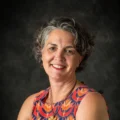
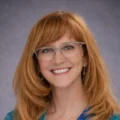
Cherie Chu is a pediatrician who blogs at Wellness Pediatrician.
She shares her story and discusses her KevinMD article, “Lifestyle medicine is a prescription to treat physician burnout.”
Did you enjoy today’s episode?
Please click here to leave a review for The Podcast by KevinMD. Subscribe on your favorite podcast app to get notified when a new episode comes out!
Do you know someone who might enjoy this episode? Share this episode to anyone who wants to hear health care stories filled with information, insight, and inspiration.

Hosted by Kevin Pho, MD, The Podcast by KevinMD shares the stories of the many who intersect with our health care system but are rarely heard from.


Transcript
Kevin Pho: Hi, and welcome to the show, where we share the stories of the many who intersect with our health care system but are rarely heard from. My name is Kevin Pho, founder and editor of KevinMD. Today on the show, we have Cherie Chu. She’s a pediatrician, and she wrote the KevinMD article “Lifestyle medicine is a prescription to treat physician burnout.” Cherie, welcome to the show.
Cherie Chu: Hi, thanks so much for having me on.
Kevin Pho: So we’ll get into your article in a little bit, but first off, can you share your story and your journey to where you are today?
Cherie Chu: Sure. So I’m actually one of those people who wanted to be a doctor ever since I was a little kid. I even have this essay I wrote in, like, third grade that says, “Someday when I grow up, I want to be a doctor for children.” So here I am, a pediatrician, and I actually did that. But I think my story about lifestyle medicine didn’t start there. I feel like that story started around the time that I had my twins.
I had my kids right after I lost my mom to breast cancer. It was literally a few months after she passed away that I found out I was pregnant. And so I think that I hadn’t really had that time to grieve her loss, and I went into a difficult pregnancy right away, and then I had my kids. And you know, I think you never really imagine that you won’t have your mom there when you have your kids for the first time. And so I think, the fact that it was just so close in time, her absence to me was really even more palpable at that point.
So it was difficult. I mean, having a new baby is hard, and then having two new babies is even harder. And so that was a time in my life that I really was struggling. And my husband was great. He was a great team player, and if it wasn’t for him, it’d be, like, a thousand times harder. But he had to go back to work pretty soon after they were born. My sister came to visit, but she had to go after a month. And so there was a good amount of time that I was home alone with two really colicky babies, and it was just a tough time.
And so I went back to work when my kids were about four months old, and then it was a whole different ballgame, because now I was struggling with balancing out my full-time job and then being a parent at the same time. And I think any parent, especially a working parent, will be able to tell you that there’s really no balance between work and home, because whenever you put more time into one than the other, one suffers time-wise. So I think, just over time, it led me to start having feelings of burnout. I was just really fatigued all the time, and I was taking my work home every day.
So that kind of got me on my path of searching for something else. I didn’t know what that something else was, but I ended up going to a conference put on by Harvard, the Healthy Kitchens, Healthy Lives conference, which is at the Culinary Institute of America. And that was the first time I heard about the whole concept of food as medicine. Before this, I really wasn’t much of a cook. I was good at making frozen food, and every time I tried to cook, sometimes it came out good, sometimes it was pretty bad. So I started to learn how to cook at that point and went to several more nutrition conferences.
But about two years ago is when I first heard about lifestyle medicine. And once I heard about it, and how it’s an evidence-based approach to managing health, it really resonated with me. I think that once I learned about that, I immediately went into it and got my certification last year, and found that lifestyle medicine for me really not only was helping my patients, but it was helping me.
And the reason for that is because when you do lifestyle medicine, lifestyle medicine specifically is focusing on six areas of health. So it’s about your nutrition, specifically a whole-food, plant-based diet; also sleeping, physical activity, stress management, avoiding risky substances, and then connecting with others. So these six areas are what they focus on. And when you go through the training, they really do a lot to tell you, as a physician, you really need to practice these things so that you can give good advice to your patients.
So I found that I was starting to prioritize my sleep, and I was starting to eat healthier and eat more plants in my diet. And so for me, I just started feeling better myself, and I didn’t expect that going into it. I knew I was going to help my patients, and it was helping my patients, but I started having more resilience, and I was becoming more effective at work, and I was getting my work done faster because I was just more well-rested.
So I think from two fronts it helped with my burnout. I think on one front, as a physician, when you have your patients actually making change and feeling better and coming back and saying, “Hey, you really helped my kid. They look like a different person today,” that is just so fulfilling from a work standpoint. But then also from a personal standpoint, because I was more efficient at work, I was getting home on time, I was not bringing as much work home as I was, and then I was just feeling better because I had prioritized myself at one point, or I started prioritizing myself. I think that those two things together really helped with my feelings of burnout.
Real physician voices, twice a week
Free, and one click to unsubscribe.
Kevin Pho: Now, what are some specific ways you incorporate lifestyle medicine into your practice?
Cherie Chu: I try to get where patients are. Sometimes they’re not at a place where they want to incorporate change, and then I just give them information, which is pretty much what I was doing before. You learn lifestyle medicine and see an idea of where patients are in the journey, if they’re actually willing and wanting to make change. And then if they are, then I have more tailored advice, and I am able to give them a lifestyle medicine prescription and say, “OK, in your diet, change this,” or, “In your sleep, change this.” And you can do it in very small, actionable chunks that are easy for them to do.
So it’s not as daunting as saying, “OK, well, go eat all plants only,” if you’re eating, like, pizza, mac and cheese, every day. That’s too much of a change. So you can make a small thing, like, “OK, we’ll add an apple at breakfast every day. OK, can you do that?” “Sure.” “OK.” So the next time, “All right, now can you add maybe a salad at lunch every day?” And so you give them small, actionable steps, and that will get them step by step to where you both want to be.
Kevin Pho: Sure. Now, a lot of us in primary care always complain that we don’t have enough time with patients, and we’re being told that we have to follow all these guidelines. And if we were to tell patients all the advice we needed to, it would take hours and hours for each patient. One of the things that you mentioned was incorporating lifestyle techniques in small, actionable chunks, but do you have any other advice that you could share with clinicians on how they can fit some of these lifestyle recommendations into a 15-minute office visit?
Cherie Chu: Yeah. So, I mean, I have 20 minutes, but I still have pretty short office visits. So I think for me, I’m in pediatrics, so we have these specific times when we see our patients. And so I have a canned talk that I do at two months, I have a canned talk I do at four months, about specific lifestyle medicine topics. So that’s helped, to have these canned talks. It also helps with documentation, because I know what I said, because I say it over and over. And then I have a dot phrase, and that way it says exactly what I said, because I say the same thing. So having canned talks is helpful for me.
And I think sometimes focusing on just a small aspect, so you may not touch on nutrition and physical activity and sleep in one visit, but you can maybe focus on one of those areas and say, “OK, let’s work on this area, and maybe next time you come back, we can work on some other area.”
Kevin Pho: Now, you mentioned that you were certified in lifestyle medicine. For those clinicians who are interested in getting formally trained, can you walk us through the process, and where do we go to find out more information about that?
Cherie Chu: You get the education part from several different sources. The actual certification is through the American Board of Lifestyle Medicine, which is the website’s ABLM. It just says, Google American Board of Lifestyle Medicine for the actual certification. But the requirements are 30 hours of some type of online didactic, and there’s a few different sources that I didn’t mind through the American College of Lifestyle Medicine, and they have two different courses that will qualify for that, including the core competency course and then the board review course. I’ve done both, but you only need to do one.
And then you also need to do an in-person conference. Normally, this year, they’re allowing you to do a virtual one, because we’re all virtual conferences.
Kevin Pho: Sure.
Cherie Chu: So the conference coming up, ACLM has an annual conference coming up in October, so that one would count for the in-person conference requirements. You have to write a case report, and then you have to take tests. So you vigorously could do all of it in one year. It doesn’t take too much time.
Kevin Pho: We’re talking to Cherie Chu. She’s a pediatrician, and she wrote the KevinMD article “Lifestyle medicine is a prescription to treat physician burnout.” When you were taking this course, did you see a lot of clinicians who took it because they were burned out like you? What were some of the other motivations behind some of the other people who were interested in becoming certified in lifestyle medicine?
Cherie Chu: That’s an interesting question. I don’t know if I went and asked everyone individually, but I do think that the common thread I see among clinicians who are doing this is that they really have a strong drive to move away from, “You just write a prescription,” as your first modality of treatment, really trying to find ways to use lifestyle. Because I think once you get into this world, you’ll see everyone in lifestyle medicine is so happy. It’s so interesting going to the conference, because everyone there is just so happy and collegial, and it’s a really uplifting environment. And I think that some of that comes from, probably, I mean, everyone there is eating plants all day long, but also, I think, we have this common goal. And so as far as coming from a place of burnout, I’m not sure, but I could see that being a driver for many people.
Kevin Pho: Sure, especially during the pandemic, where I talked to a lot of clinicians who are experiencing increasing numbers of burnout, and those numbers were already 50 percent even before the pandemic. Now, from a wellness standpoint, what would you say is your number one tip that you could share with these clinicians who may be experiencing worsening symptoms of burnout?
Cherie Chu: Well, I think trying to separate where burnout comes from. I think a lot of burnout comes from institutional, organizational things that you don’t really have immediate control over. And so you can sit and lament about those things, and it’s going to make you feel upset and sad. But on the flip side, there is also: What can you do for yourself? That’s the one thing you have control over. It’s like, how do you react to your circumstances around you? And so my advice I would give is: Do something to focus on yourself and on your own health, and do something to change your lifestyle. It doesn’t have to be something big. You can just try to go to bed earlier tonight and try to prioritize getting seven, eight hours tonight, or you can go for, like, a 10-minute walk at lunch, something small.
And for me, I would also encourage: Just try eating plant-based for a day. I did this for the first time about two years ago. I went to this international plant-based nutrition conference, and they feed you at these conferences, so that was the first time I actually ate four days in a row all plant-based. And I was so surprised how good I felt. I wasn’t eating an unhealthy diet before that, but I had never eaten plant-based. And so these conference days were long. It was in San Diego, so I was driving back and forth, and it would start at, like, seven in the morning, and I’d get home at 10 at night, and I still had a ton of energy. I was like, “Oh my gosh, I feel so different.” So I think that was, for me, what pushed me into eating more plant-based. Now, not 100 percent, but I just try to add more and more plants in my diet to just increase that proportion as much as I can.
Kevin Pho: And my final question: Do you have a take-home message that you want to share with the KevinMD audience?
Cherie Chu: Take care of yourself first. It’s so important. We are worth it, and we are going to be more effective clinicians once we take care of ourselves first.
Kevin Pho: And how could people find you?
Cherie Chu: So I have a website called wellnesspediatrician.com, and on my website, it’s actually focused on promoting healthy lifestyle habits for children. And it’s a site that I’ve needed since I was practicing pediatrics, where I can refer patients to, that I know it’s evidence-based, and it’s about wellness. I think there’s just not much out there about pediatric wellness, so that’s where you can find me, on my Instagram, wellnesspediatrician.com.
Kevin Pho: Fantastic. Cherie, thank you so much for sharing your time and insight, and thanks again for being on the show.
Cherie Chu: Thank you so much for having me.
Listen and followApple PodcastsSpotifyYouTubeMore apps · Browse all episodes