












Listen and followApple PodcastsSpotifyYouTubeMore apps · Browse all episodes
“I had no recollection of this, but as I processed what Yael said, my response was the opposite of what one might expect—I felt tremendous relief! I was happy. My pain had a name and hopefully that meant that I could get well. I was a doctor, and I knew well that the first step toward treatment is a diagnosis. I was determined to approach DID the way I had most things in my life—medical school, marriage, mothering, and advocating for women’s health care—with passion and an intensity of purpose.”
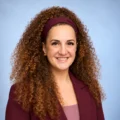
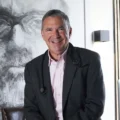
Shelley Kolton is an obstetrician-gynecologist and author of Brain Storm: A Life in Pieces.
She shares her story and discusses her KevinMD article, “A physician’s story of dissociative identity disorder.”
Did you enjoy today’s episode?
Rate and review the show so more audiences can find The Podcast by KevinMD.
Subscribe on your favorite podcast app to get notified when a new episode comes out.
Reflect and earn 1.0 AMA PRA Category 1 CME for this episode.
Also available in Category 1 CME bundles.
Powered by CMEfy – a seamless way for busy clinician learners to discover Internet Point-of-Care Learning opportunities that reward AMA PRA Category 1 Credit(s)™. Learn more at about.cmefy.com/cme-info
Do you know someone who might enjoy this episode? Share this episode with anyone who wants to hear health care stories filled with information, insight, and inspiration.

Hosted by Kevin Pho, MD, The Podcast by KevinMD shares the stories of the many who intersect with our health care system but are rarely heard from.


Transcript
Kevin Pho: Hi, and welcome to the show, where we share the stories of the many who intersect with our health care system but are rarely heard from. My name is Kevin Pho, founder and editor of KevinMD. Today on the show, we have Shelley Kolton. She is an obstetrician-gynecologist, and she’s the author of the book Brain Storm: A Life in Pieces. There’s an excerpt from that book on KevinMD titled “A physician’s story of dissociative identity disorder.” Shelley, welcome to the show.
Shelley Kolton: Thank you for having me, Kevin.
Kevin Pho: So we’ll get into your book and excerpt in a little bit, but first off, can you just briefly share your story and journey to where you are today?
Shelley Kolton: Sure. I grew up sort of normal, in a normal four-person family, a brother and two parents, in Queens, New York, and things seemed pretty OK. I went to medical school and residency, and although I was depressed for some of that time, I loved being a doctor and loved, loved my residency. I then was in a relationship with another woman, and somewhere during that time, she decided to go to medical school. In the process of her leaving, I kind of unraveled, and I went into therapy. Then I was in my 40s, I suppose, or lower 30s, and I started having a lot of headaches, terrible headaches. I went and had a CT scan. My CT scan was negative, and soon thereafter, I started having memories.
My memories were not believable to me. They were incredibly horrific, and they involved some cult abuse, which I just could not get my head around and couldn’t believe. Unfortunately, my therapist felt the same way. She couldn’t believe them, and she felt they were all symbolic. So I got a lot off my chest and went on and started a private practice in Manhattan. Somewhere during that time, I met my present partner of 20-something years, and I was horrible. I was breaking up and getting together and breaking up and getting together, and I don’t know why she stayed with me, but she did.
I went back into therapy at the suggestion of our couples therapist, and I did not want to go back into therapy at all. I had had it. I didn’t want to tell my story again. I didn’t want to have memories again. But I did, and I met this therapist who’s a very gifted therapist, but she came out in a white stretchy headband, and she was all perky, and I thought, “I cannot work with this woman.” But she turned out to be terrific. She came in to one of our first meetings, or second or third meetings, I should say, with a pile of literature about abuse, and ritual abuse in particular. We talked, and I talked, and I showed her drawings that I had done and journal entries that I had made.
Sometime about three or four months into therapy, she sat down, she looked at me, and she said, “You know, you have DID.” I said, “You’re kidding.” And she said, “No, I’m not kidding at all. I’ve seen a person here in the room who’s really separate from you and who you don’t remember, and now I’ve seen another, and I’m pretty certain of the diagnosis.” So I was kind of torn between distressed and relieved that maybe she was going to actually figure out what was going on. I went home, I told my wife and my older daughter that I had DID, and they both said, “Oh, of course, that makes total sense,” which then really flipped me out. I thought, “Why are they agreeing with her?”
So that began a very long, very grueling process of remembering and coming to terms with the fact that there were 31 parts of me that had been created to protect me from the abuse that I was having, which I had from the time I was a baby until I was around four, and then again at seven, and then again in my teens. So that’s my short story.
Real physician voices, twice a week
Free, and one click to unsubscribe.
Kevin Pho: So, the idea being dissociative identity disorder. Before getting more into your story, just tell my audience, who may not be familiar with DID, what exactly that is.
Shelley Kolton: Well, it’s the old multiple personality disorder. What it actually is, is a situation where, during a period of abuse, you create different parts of yourself to deal with pain that you cannot stand on your own. Those parts are separate from your consciousness. They act separate from your consciousness, so they have a life of their own, in a way, before you rein them in. There are angry parts and sad parts and panicked parts, and just parts that remember a lot of different things, and you don’t heal until you have owned all of them and heard all of them and brought all of them together into your consciousness. It’s a very long and difficult kind of therapy.
Kevin Pho: So in terms of how your DID affected you as a physician, what are some ways that it changed you?
Shelley Kolton: Well, while I was going through it, I was pretty panicked for a long time, but working and seeing patients really grounded me. So at the advice of several therapists, who said that I should take six months off, I said, “Absolutely not. I can’t be away from my patients, because they really make me feel whole and good.” So during the process of therapy, my practice pretty much stayed the same, grew, and I grew with it, and it’s quite large now. I’m pretty happy and proud that it survived. It survived me.
Since then, I have learned to tune in much, much better to patients, both their psychiatric issues and their medical issues, some of which, a lot of which, have to do with abuse, unfortunately. In women, it’s about one in three, and that turns out to be pretty true.
Kevin Pho: So as an obstetrician-gynecologist, when you said that you’re more attuned to the patients in the exam room, what are some examples of that?
Shelley Kolton: Well, I do a lot of transvaginal ultrasound; that’s kind of a specialty of mine. Before I was really healed, I would be scanning someone, and I was just learning the machine. I was just learning how to do it. I was very focused on doing it right and pressing the right buttons, and the lights were off, and I noticed that when I turned the lights back on, the patient would be crying. I would ask what was wrong, and they’d either say, “I don’t know,” or they’d say, “Well, you know, my father raped me,” or “This teacher molested me.” And there I was, really reenacting, in a way, some of the abuse, because I was so disconnected from them and from what they were going through, because I was trying to figure out my machine. I found a lot of sadness.
When I was fully integrated, which came years later, I was able to interact with the patient and take care of the patient at the same time I was scanning. I was able to do both things at once. So it really made me much more aware of the subtleties and some of the not-so-subtle things that women come up with in their GYN meetings.
Kevin Pho: So you share more of your story in your book. It’s titled Brain Storm: A Life in Pieces. So tell us more about some of the key messages that you want readers to come away with in your book.
Shelley Kolton: Well, I think that there are two, right off the bat. That’s that DID, which is unfortunately not a very welcome diagnosis in the psychiatric community, is real, and that it is missed often. Patients are often thought to be schizophrenic or have personality disorders when, in fact, they have DID and they have a history of abuse.
So for doctors in particular, the message I would like them to get is that psychiatric diagnoses are just like medical diagnoses. You have to listen to the patient. You have to be thinking of a diagnosis. You have to not be trying to pretzel a patient into a diagnosis that you’ve already made. And you need to know what your skills are to handle them in a psychiatric situation. If you’ve never handled a patient who’s had trauma, and it makes you anxious to feel like you’re going to be dealing with them, you shouldn’t be. I think that’s the same in medicine: When we come across a patient who we’re not prepared to take care of, we shouldn’t be doing it. We should be getting help. So that’s sort of my main message to other clinicians of all sorts.
Kevin Pho: Tell me a little bit about that therapy process. You did mention that it was grueling. Give us an idea that would illustrate how grueling that was.
Shelley Kolton: Well, I was someone who had to reenact just about every memory that I had in order for me to believe it. That’s not the way it happens for everybody with DID, but for me, I was having to relive situations where I was tortured, not where I was made to feel really disgusting and bad about myself. My therapist was sort of my rock and my kind of love energy, so all of the hateful energy that was inside of me had to come out, in terms of both talking and relating, and also what’s called abreacting, which is to reenact a memory that you’ve had, such as reenact drowning, or reenact physical torture or sexual torture. I did that a lot on her floor, and on the chair, and just about anywhere I could get where I was small and I was being hurt.
It was horrible for me. It was pretty horrible for her, for my therapist. But in the end, what happened was, as I gathered each detail more and more, I was more able to give up my denial, which was a very, very big piece of my DID, and allow myself to believe that all of this really happened. Until I could do that, I really couldn’t get better.
Kevin Pho: You mentioned that you were still practicing medicine while undergoing therapy, and you mentioned that medicine actually grounded you and helped you. I can imagine how difficult it would be to still practice medicine with everything else that was going on. Did your colleagues know about some of the treatments and therapy that you were going through while you were going to the clinic?
Shelley Kolton: My partners knew, a few of my staff knew, but none of my patients knew. What would happen was, I was very panicked. I would go into my office and kind of get over my panic and then walk out. I had a doctor part who was very intact and very, very much in my consciousness, so I was able to function quite well despite the fact that I was having all this panic. I had my panic in private, and then I did my doctoring in the room. And yeah, it was very hard, very hard. I was able to pull it off, but it was very hard.
Kevin Pho: We’re talking to Shelley Kolton. She’s an obstetrician-gynecologist. She’s the author of the book Brain Storm: A Life in Pieces. There’s an excerpt from that book on KevinMD titled “A physician’s story of dissociative identity disorder.” Shelley, one of the things that you mentioned earlier is that your lived experience allowed you to better connect with patients with, whether known or unknown, trauma. But for those clinicians who don’t have that lived experience, do you have any tips and advice that you can share with these clinicians on how they can better connect with patients with perhaps undiagnosed trauma?
Shelley Kolton: Well, I think the first thing is they can ask the patient. We’ve all learned that you almost make your diagnosis with history, and your exam becomes somewhat secondary, and that’s certainly true with this. You have to ask the patient if they have any history of mental illness, or any history of trauma, or any history of sexual abuse, before you even examine them. Some patients will know; other patients won’t know. Some patients will seem very skittish and afraid of being examined but won’t know that they have a history of anything. But the biggest thing is to believe it exists and to ask about it, and that would be my advice to just about anybody dealing with patients or clients.
Kevin Pho: And my final question: What are some of your take-home messages that you want to leave with the KevinMD audience?
Shelley Kolton: Well, first of all, my patients were fantastic with the book, and it was very gratifying to find out that patients believed what happened. In fact, they felt terrible that they had not known and that I was taking care of them when they should have been taking care of me, which is just the kind of patients I have.
My other take-home message is pretty much what I said before. I think that mental illness has to be addressed directly, and it has to be addressed by clinicians who know what the answer might mean. In other words, if someone says, “Yeah, you know, I have bipolar disease,” you ought to know what bipolar disease is before you ask a question. I think every clinician ought to be asking about mental health. Certainly psychiatrists and psychologists and social workers are doing that already, but I don’t think that a lot of medical clinicians are yet, and I think it’s a big piece of being a good doctor.
Kevin Pho: Shelley, thank you so much for sharing your story, time, and insight, and thanks again for being on the show.
Shelley Kolton: Thank you, Kevin.
Listen and followApple PodcastsSpotifyYouTubeMore apps · Browse all episodes