















Listen and followApple PodcastsSpotifyYouTubeMore apps · Browse all episodes
“Maintaining a relationship during nursing school takes some effort. Your time is taken up by studying, classes, clinicals and labs. Oh, did I mention studying? At the end of the day, there is just not much time left for significant others. Now, I am referring to romantic relationships here, but the same concept also applies to friendships.
I’ve put together a list of tips from my own experience to hopefully give some advice and encouragement to future, current and even past nursing students. I was dating, planned a wedding, got married, moved and had a baby all through my years of nursing school. And yes, I’m still married, so I must have done something right.”
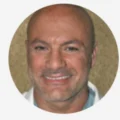
Amanda Lundberg is a nurse.
She shares her story and discusses her KevinMD article, “How to maintain your relationships during nursing school.”
 This episode is sponsored by Pattern, physician disability and life insurance made simple.
Shopping for disability insurance can be complicated and time-consuming. Wondering if you are getting the best prices and discounts while in training can make the process even more overwhelming. Pattern believes doctors have more important things to do than spend hours sorting through numerous insurance options. This is why thousands of doctors trust Pattern to help them compare and understand the insurance they are buying. They do this in three simple steps: First, request your quotes online. Second, compare your options and ask questions. And third, secure your policy. Be confident that you have the right policy so that your income is protected. With huge discounts for doctors in training and fewer requirements on labs and physicals, now is truly the best time to request your disability insurance quotes with Pattern at patternlife.com.
Did you enjoy today’s episode?
Rate and review the show so more audiences can find The Podcast by KevinMD.
Subscribe on your favorite podcast app to get notified when a new episode comes out.
Reflect and earn 1.0 AMA PRA Category 1 CME for this episode.
Also available in Category 1 CME bundles.
Powered by CMEfy – a seamless way for busy clinician learners to discover Internet Point-of-Care Learning opportunities that reward AMA PRA Category 1 Credit(s)™. Learn more at about.cmefy.com/cme-info
Do you know someone who might enjoy this episode? Share this episode with anyone who wants to hear health care stories filled with information, insight, and inspiration.

Hosted by Kevin Pho, MD, The Podcast by KevinMD shares the stories of the many who intersect with our health care system but are rarely heard from.


Transcript
Kevin Pho: Hi, and welcome to the show, where we share the stories of the many who intersect with our health care system but are rarely heard from. My name is Kevin Pho, founder and editor of KevinMD. Rate and review the show at KevinMD.com/rate. Subscribe at KevinMD.com/follow. On today’s show, we have Amanda Lundberg. She is a nurse, and she wrote the KevinMD article “How to maintain your relationships during nursing school.” Amanda, welcome to the show.
Amanda Lundberg: Thanks so much, Kevin.
Kevin Pho: So we’ll get into your article in a little bit, but first off, can you share your story and journey to where you are today?
Amanda Lundberg: Yeah, sure. So, like you said, I’m a nurse. I’ve been a nurse for about 13 years, a bedside nurse. And lately I have just dived fully into content marketing and copywriting for health care brands. So I do nurse writing, and my company is Loxley Content. It allows for a little bit more flexibility in work-life balance, and so I do freelance now.
Real physician voices, twice a week
Free, and one click to unsubscribe.
Kevin Pho: All right. Tell me about that transition that you had from the clinical role to what you’re doing as a content producer. Was it a difficult transition?
Amanda Lundberg: It’s different. It is very different. You kind of miss that one-on-one with patients, but with the content marketing and copywriting, you do feel like you are helping a wider range of patients, or just people. They don’t necessarily have to be patients, depending upon the brand that you’re working with.
And the writing part actually came pretty easily. I think about nurses, and they do a lot of documentation. It’s short, succinct, to the point. So that’s kind of how my writing is, and it translated pretty well to figuring that out. So the writing portion was actually the easier part of it.
Kevin Pho: So tell me, what kind of things do you write about?
Amanda Lundberg: So I have a blog, and those are more of my personal writings. And then for some of the other brands, I write about nonprofits, AI, and using those in health care and nonprofits. I write about different medications, working with that medication brand. You could write anything from social media posts to blog posts to advertisements, any of those. Anything really with health or wellness; just because of my background, that’s my niche.
Kevin Pho: So I have a lot of people listening to the podcast, clinicians and nurses. Sometimes they want to do something on the side, content marketing, for instance. How difficult is it to generate income doing what you do?
Amanda Lundberg: It takes a little bit of time. There’s not a lot of overhead cost to start something from home, but it definitely takes time to get your foot in the door, figure out your style, and get your first couple of clients. But once you do that, it flows pretty well. It’s very easy to pick and choose what you want to work on. So if you have a passion about some sort of thing within the health care sector, it’s pretty nice that you can choose to work on that, or sometimes turn down other companies if need be.
Kevin Pho: And did you have any guidance or a mentor to help you get started, or is it something that you did completely on your own?
Amanda Lundberg: No, that’s another thing. That would be very difficult, I think, to do on your own. Even now, when people ask what I do for a living, I’m like, “Well, it’s even hard to communicate what exactly it is.” I think I get a lot of blank stares. But yes, my sister-in-law runs a content marketing agency, not health care-related, and she helped me along in figuring out what that looks like.
Kevin Pho: All right. Let’s talk about the KevinMD article. It’s titled “How to maintain your relationships during nursing school.” Now, for those who didn’t get a chance to read your article, can you just walk my audience through it and share the story of why you decided to write it?
Amanda Lundberg: Yeah, absolutely. So it’s a lighthearted article, mixed with a little humor in there. I am no relationship guru; I’m no love expert. I’m just someone who went through nursing school. Over the last 15 years, I’ve been in school for about eight or nine of those years, with prerequisites. I have a couple of bachelor’s degrees. So in the nursing program, it’s been a long process, and through that, I’ve dated, got engaged, got married, everything. So it’s the whole process and what that looks like.
Relationships during nursing school are difficult. Nursing school takes a lot of time, and it’s not limited to nursing school. It’d be really any kind of job or any kind of school that takes a lot of your time away from your loved ones. And so I just thought it’d be a fun article to write about some of the things that I experienced that helped in my relationship, and to find out how to spend more time together and how to make that person, your significant other or a friend, anybody, feel like you are spending time with them and that you have time during this crazy time that nursing school is.
Some of my favorite ones are ones you might not find in regular articles. One of the things that I really pushed, I guess, with our relationship is outsourcing. It might be controversial. Outsourcing does take money to do, and so that was something that my husband and I really had to think about. When I say outsourcing, I’m talking about things that take away your time from each other and from school. So cleaning the house, walking the dog, grocery shopping, all those things. There are services now; laundry is another one. There are services where you can pay someone to do all those. And in some places they are reasonable, and both my husband and I worked full time during school, so we were able to make this happen.
We had to make some sacrifices. For instance, we hired a cleaning lady. I said, “OK, if I’m going to go back to school, doing my bachelor’s degree now, I want to get a cleaning lady in here so I don’t have to spend my weekends cleaning.” I’d rather either study or spend it with my significant other. And so my husband said, “OK, we’ll do that.” He agreed to it. And so we hired a cleaning company to come in, and it was great. I didn’t have to spend my free time doing that sort of thing. We basically had to sacrifice about one fancy dinner out, when we’d go out on a Friday night or something. So it was worth it to us. We’d stay in and have pizza instead, but hey, our house would be clean. So it’s those sorts of things that really help find the time to spend together.
Some of the other ones are, I encouraged my husband to find a hobby outside of just us being together. So joining a soccer league, or football, or softball, or meeting new friends. And so he can go out while I have that time to study, and I didn’t feel bad with him just sitting downstairs watching Netflix. I was able to know that he was out doing something fun, so I could focus on studying, and I didn’t feel any guilt about not spending time with him. So that was another one.
And also, spending time together doing stuff to decrease your stress levels. One thing we did was we went outside and walked every single night, just walked the dog. It was probably a 15-minute walk, but it was a nice time. We don’t have our phones with us. We just walked, and we were able to chitchat about the day. And that 15 minutes was great every night, just to connect and have that special time together. And also, I mean, walking outside is a decrease in stress in itself, and so that just helped, to do that together. Well, those are just some of the tidbits that I write about in this article.
Kevin Pho: I think a lot of the challenges that you talked about certainly would apply to people in medicine as well. A lot of clinicians listen to this podcast. So as you were going through nursing school, tell me, what are some of the biggest obstacles that you had to overcome as it relates to balancing that with your personal life?
Amanda Lundberg: I think one of the big ones was that during nursing school, a lot of your cohorts have set study group times, and there were plenty of them. Nursing school participants range from people right out of high school to 65-year-olds on their second career. So you have a range of people: people who have kids, who don’t have kids, who don’t have pets, who have fewer responsibilities. You have people who have a lot of responsibilities. And so a lot of people wanted to get together very often for these study groups.
And so one of the challenges was just taking a step back and saying, “You know what, it’s more important for me to spend time with my significant other and really value that time rather than those study groups.” And if you decrease the number of those study groups, I felt like they were more valuable, I guess, during the time. There’s less chitchat and talking about just random things. And so it’s more directed, and I valued those certain hours that we did spend together.
Whereas some people might not have anyone at home or a significant other, so that is their time to spend with people, and that’s great. A lot of people find comfort and value in that. But that was just one of my struggles.
Kevin Pho: If you were to repeat this all over again and go through nursing school all over again, is there anything that you would have done differently?
Amanda Lundberg: Yeah, I would have started when I was 18. It was kind of a second degree for me, so that’s why I took so long to get through it. I did certain portions. I did my LPN first, worked as an LPN, then went back for the RN, worked as an RN, then went back for my bachelor’s in nursing. So that’s why it took me so long. If I had known at 18, after high school, that I wanted to be a nurse, I could have gone straight into it at a four-year school. I would have been done by 22 or 23. But that’s looking back, and I wouldn’t have the experiences I do. So that’s one thing, though, that I would encourage people. If you know that that’s what you want to do, go for it.
Kevin Pho: We’re talking to Amanda Lundberg. She’s a nurse, and she wrote the KevinMD article “How to maintain your relationships during nursing school.” So, Amanda, we’ve heard a lot about the Great Resignation, right? You have a lot of health care professionals who are leaving the field, and of course, nurses are no exception. Now, you left clinical medicine, so what kind of advice do you have for these nurses who may be burned out, who may want to leave clinical medicine, and who maybe want to do something else with their nursing degree?
Amanda Lundberg: Yeah, so I have a little bit of a different take on that. I loved being a bedside nurse. I absolutely loved my position. I loved my management. I really enjoyed my coworkers and the patients. So my reason for actually leaving the bedside is different than some of the struggles that a lot of nurses have. I could not find childcare for my second baby. There was no childcare in the area, and so I had to make that tough decision and say, “OK, well, I don’t have a choice.” We pieced it together with family members for a little while, and then I just finally said, “OK, I have to stay home.” And so using your nursing background and your nursing license to do something from home that is more flexible in time is really where I decided to head.
But I do know that there are a lot of struggles right now with nurses leaving the bedside, and I think we need more support for nurses. I do think there was a lot of verbal support at the beginning of COVID, and it was great. I felt very honored to be a nurse at that time. It was wonderful. Everybody saw you as this hero, as a medical worker, and it was great. But I think that the public has a great perception of nursing, and unfortunately, the back end of nursing is a lot of administrative and management issues: wages, time off, overtime, a lot of these struggles that nurses deal with.
Kevin Pho: And my final question: What are some of your take-home messages that you want to leave with the KevinMD audience?
Amanda Lundberg: Yeah, so pertaining to the article, it’s just that in anything that you are spending a lot of time on, whether school, medical school, or just working as a nurse or a health care worker, make sure that you spend time with your significant other. There are a lot of things that they might just not understand about your work unless they work in health care, too. And the time spent can be valuable and very directed toward helping that relationship thrive during those times.
Kevin Pho: Amanda, thank you so much for sharing your time and insight. Thanks again for coming on the show. Take care.
Listen and followApple PodcastsSpotifyYouTubeMore apps · Browse all episodes