














Listen and followApple PodcastsSpotifyYouTubeMore apps · Browse all episodes
“Five days before this story begins, where everything is upside down, and the end is the beginning.
Me, standing in my PICU, slowly approaching that cradle, then removing the medication, one by one, turning off the syringe pumps. Saying out loud the number of milliliters passed, where that line is trapped, that little division between the professional and me, the person.
Where I stopped being a doctor and became a woman holding a baby.”
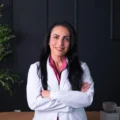
Sylvia Belda-Hofheinz is a pediatric intensivist in Spain.
She shares her story and discusses her KevinMD article, “A dead baby in my arms.”
Did you enjoy today’s episode?
Rate and review the show so more audiences can find The Podcast by KevinMD.
Subscribe on your favorite podcast app to get notified when a new episode comes out.
Click here to earn 1.0 AMA PRA Category 1 CME for this episode.
Also available in Category 1 CME bundles.
Powered by CMEfy – a seamless way for busy clinician learners to discover Internet Point-of-Care Learning opportunities that reward AMA PRA Category 1 Credit(s)™. Learn more at about.cmefy.com/cme-info
Do you know someone who might enjoy this episode? Share this episode with anyone who wants to hear health care stories filled with information, insight, and inspiration.

Hosted by Kevin Pho, MD, The Podcast by KevinMD shares the stories of the many who intersect with our health care system but are rarely heard from.


Transcript
Kevin Pho: Hi, and welcome to the show, where we share the stories of the many who intersect with our health care system but are rarely heard from. My name is Kevin Pho, founder and editor of KevinMD. Rate and review the show, subscribe at KevinMD.com, and follow. Today on the show we have Sylvia Belda. She is a pediatric intensivist in Spain, and she wrote the KevinMD article “A dead baby in my arms.” Sylvia, welcome to the show.
Sylvia Belda-Hofheinz: Thank you very much. It’s so nice to share the space with you.
Kevin Pho: So we’ll get into your story and article in a little bit. First off, just briefly share your story and journey to where you are today.
Sylvia Belda-Hofheinz: I’m a pediatric intensivist, and I work in an intensive care unit here in Madrid, in a pretty big hospital for Spain. We have patients up to 16 years old, and we have an important cardiac surgery program and also one of the first ECMO programs in the country. I have always thought the intensive care unit environment is pretty fascinating. It offers a big challenge, both scientifically and technologically, and we have so many possibilities and constant innovations. I love the challenge of keeping abreast of the latest developments and trying to offer the best possibilities to the children we attend, keeping up to date, reading, and studying. This profession, which is always evolving, is my passion.
But I have also always felt that being surrounded by this environment helps me to keep my feet on the ground. I think we live in a society that lives with its back turned to death, where it seems that we always have to be young, and I think dying is taboo. In this context, especially the illness and the death of children are kept silently ignored. I have always considered that living with death present in my daily life, and accompanying these situations in the first person, helps me to live my own life better.
So I think one of my passions since I started is just taking care of people. It has been key for me, and I think it made me choose my profession, and it also marks my fields of interest. I’m pretty aware that we invest an enormous amount of time and effort in medical training. We are constantly keeping up to date and questioning the diagnoses and the treatments, but training in accompaniment, in communication skills, and in dealing with suffering often occurs in a less conscious and elaborated way. We just copy attitudes, or we acquire strategies that we think are useful, but without formal and structured learning.
Usually, when I give some bad news to a family, I take a resident with me. Then, when we are finished and the family has left, I ask him the question, “What did you think of the information we just gave the family, and how they received it?” Big surprise: As expected, they usually answer that they thought it was great. But then comes my second question: “And why?” Usually they do not have an answer to this question, because we do not consciously analyze these acts. I think we do not debrief situations that challenge us personally and emotionally.
We still somehow maintain the idea that the professional should not be affected by the suffering of others, that there should be a clear line that divides the professional from the personal. We are not taught how to deal with these situations personally and emotionally in depth, even in the health care setting, where we are constantly facing suffering. For me, it’s very, very important to understand that behind the disease that is fascinating, and behind this pretty technological environment in the intensive care unit, there is a person, a family, millions of circumstances and nuances that make this process of suffering, of disease, or of dying tremendously personal. In the center of it all, behind all our treatments, the constant humming of the ventilator, the monitors, there is a child. There is a unique and special child.
For me, one of the big efforts in my work is to raise awareness that death is part of life, and that we as health care professionals should especially be aware of this and learn it formally, not only just unnoticed, getting the best strategies that we copy from others, which seem useful or not to us.
Real physician voices, twice a week
Free, and one click to unsubscribe.
Kevin Pho: So as a pediatric intensivist, I’m sure that you see a lot of difficult cases, and one of the things that you mentioned earlier is that you have to take care of the clinician himself or herself after the difficult case. So when you encounter a difficult case, how do you work through those emotions? How do you take care of yourself and the medical team after going through a difficult case?
Sylvia Belda-Hofheinz: I’ve learned a lot of strategies after, well, 20 years of practice that are very useful for me. I know how I have to deal with my emotions. First, I become aware that they are there, and that it is OK for me to be sad, or to be tired, or sometimes to feel not comfortable with the things that happen, and I make space for the emotions. Then I’m also very aware of what helps me get through them, not only with the team, and that’s very important, I think, debriefing these situations and talking about them, but also personally.
I love to go to the mountains, and I have my safe spots, where I know that they help me to get through these emotions. I like running, or I like having breakfast on Sunday morning with my three children. I have three girls, and these are safe spots that I cultivate, and I think this is very important. I am also very aware that what I do, even if the child dies, is very important, and I think giving it importance also makes you deal a lot better with these situations.
Kevin Pho: All right, let’s go into your KevinMD article, where you tell a story, titled “A dead baby in my arms.” For those who didn’t get a chance to read your story and article, just walk my audience through it and share the story of why you decided to write it.
Sylvia Belda-Hofheinz: OK. I think I began to write down some of the stories that I faced in my intensive care unit practice in a relatively unconscious manner. It helped me to put my thoughts in order and to vent the intense emotions that these experiences provoked in me, and it helped me get them on track to become a gain in experience and wisdom. So even without knowing what I was doing, I think I began to use this reflective writing as a form of self-care. Little by little, I also learned to share those often very personal stories, where my emotions really were written down, and I became aware that narratives have a very important teaching power.
This fact, together with my awareness that training in the accompaniment and care of the dying is lacking, made me realize that perhaps these stories could be useful to other professionals. Maybe death is the paradigm of a difficult situation for health care professionals, but I think in the health care professional setting, we are all faced with people suffering, affected by life-changing illnesses, and lots of times involving minor or major bereavement situations, and the strategies to care for them are pretty similar for all of them.
This story in particular is a very special story for me, because I think it reflects very well my personal discovery that, for me, there is no dividing line between the professional and the personal. This is why, somehow, in the story I turn from the professional pediatrician into a woman who holds a dying baby in her arms.
I also think one of the most utterly important aspects of taking care of the family is the non-judgmental attitude. I think we have to step out of our preconceived ideas of what is best for the patient, or how a good death should be, and understand the magnitude of the child’s death for the family, accepting their way of coping with it.
At the time I wrote it, I shared the story and my perception of what had happened with some of the nurses who had been present, and lots of them told me that their interpretation had been very different, because the fact that the relatives did not want to stay in the unit was interpreted as harshness or emotional remoteness. The staff felt more detached from the family because they were interpreting their way of dealing with that death, and all other value judgments.
I think we must accept that there are as many ways of dying as there are people in the world, in this circumstance, but also of suffering. The important person is the child, and it’s the family, and we must be close with all our medical wisdom, treating the symptoms but also validating and accompanying their unique and special way of living that moment. Often there are cultural, traditional, or personal differences, and we must respect them and accept them.
Knowing that this time is so valuable, we are just orchestrating this unique and particular piece of the child’s death. We help the family discover and express their wishes, and we take care of the child and the family. We make it possible that this moment, the saddest moment, can be lived consciously and transcendently, and can be remembered, because I think it’s always the first step to face the mourning that comes afterward, and the future life.
It’s also very important to be non-judgmental. I also think this story shows how I feel about accompanying, and also what I think is very important about being a doctor: not to be a judge of what we are facing.
Kevin Pho: Has this story changed how you practice and changed who you are as a physician?
Sylvia Belda-Hofheinz: I think it was a long way. It’s not only this story. I think I had come a long way before I held a baby in my arms. For me, accompanying suffering has always been very, very important, and it’s kind of a passion, and I’ve learned a lot. But I think it would be great if it did not only depend on whether you like this or not. Sometimes they say, “Oh, this doctor, what humanity.” It’s not dependent on my humanity. We all should learn how to deal with suffering and how to accompany, I think, and it should be a formal training, and usually it is not.
Kevin Pho: So one of the things that you mentioned earlier was all the technology that is involved in intensive care units, I’m sure not only in Spain but in the United States as well. So how can physicians retain the humanity in medicine in the face of this increasing use of technology, especially in a critical care setting?
Sylvia Belda-Hofheinz: I think it is easy to forget that behind all this technology and the disease that we are studying and trying to improve treatments for, the key thing of all is the child, the child and the family. I think we should personalize. It’s always another child with other circumstances, and we shouldn’t forget that we don’t treat diseases. We treat children, or adults, but we treat people, and I think that’s the key note.
Sometimes the disease is so complex and we really have to face multiple challenges, and it’s really important to know that the key point is to accompany. I think it is also very important to be aware that if a patient dies, we shouldn’t feel like we have failed. We can do a lot for the patient and for the family, even if we haven’t been able to cure the disease, and I think that’s very, very important.
Kevin Pho: We’re talking to Sylvia Belda. She is a pediatric intensivist in Spain. Her KevinMD article we’re talking about is “A dead baby in my arms.” Sylvia, for those other intensivists, or physicians for that matter, who read your story or who are listening to you on this podcast, what can they learn from your experiences in the intensive care unit? What are some of the messages that you want to give them?
Sylvia Belda-Hofheinz: Yes, I think for me the key message is that we should really be aware of what a very, very important role we play in the lives of the people we accompany, not only as doctors treating their disease, but trying to take care of them and to accompany them in some of the most difficult situations that they are facing in their lives. I think giving value to what we do is one of the key points of what I wanted to share with the stories.
Kevin Pho: And my final question: Any take-home messages that you want to leave with the KevinMD audience?
Sylvia Belda-Hofheinz: Yes. I firmly believe that one faces the suffering of patients as a person, not only as a professional, and that we cannot keep professional involvement at bay to prevent it from hurting us. I think when we face suffering, we are going to feel pain, and that is why I believe that we must find a way in which we can accompany, taking care of the patient but also of ourselves, with what they call exquisite empathy, in which we are aware of the needs of the suffering child and the family, but also of our own, and we become capable of attending to both.
I think we have a wonderful profession in which most of us are driven by a real desire to care for others, and I believe if we learn to do it well, we can feel an enormous satisfaction and continue to enjoy our profession, always keep learning and growing both professionally and personally.
Kevin Pho: Sylvia, thank you so much for sharing your story, time, and insight. Thanks again for being on the show.
Sylvia Belda-Hofheinz: Thank you very, very much. It was a pleasure.
Listen and followApple PodcastsSpotifyYouTubeMore apps · Browse all episodes