





Listen and followApple PodcastsSpotifyYouTubeMore apps · Browse all episodes
“In some ways, my diagnosis was the beginning of the rest of my life. I’m now a health coach, helping women struggling with chronic stress and anxiety. And I love what I do. I am able to use all of my healing skills and my personal journey to give back and help others along their path.”
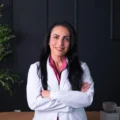
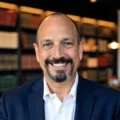
Zarya Rubin is a physician and functional medicine coach.
She shares her story and discusses her KevinMD article, “How discovering trauma changed this doctor’s life.”
SUBSCRIBE TO THE PODCAST → https://kevinmd.com/podcast
RATE AND REVIEW → https://kevinmd.com/rate
FOLLOW ON INSTAGRAM → https://www.instagram.com/kevinphomd
FOLLOW ON TIKTOK → https://www.tiktok.com/@kevinphomd
GET CME FOR THIS EPISODE → https://earnc.me/sFDqOo
Powered by CMEfy – a seamless way for busy clinician learners to discover Internet Point-of-Care Learning opportunities that reward AMA PRA Category 1 Credit(s)™. Learn more at about.cmefy.com/cme-info
Transcript
Kevin Pho: Welcome to the show, where we share the stories of the many who intersect with our health care system but are rarely heard from. My name is Kevin Pho, founder and editor of KevinMD. Rate and review the show at KevinMD.com/rate. Subscribe at KevinMD.com/podcast. Let’s get to the show. We have Zarya Rubin. She’s a physician and a functional medicine coach. Her KevinMD article is titled “How discovering trauma changed this doctor’s life.” Zarya, welcome to the show.
Zarya Rubin: Hey, Kevin. Thank you so much for having me. It’s a pleasure to be here.
Kevin Pho: We’ll get to the article in a little bit. First off, briefly share your story and journey to where you are today.
Zarya Rubin: My journey is definitely not a straight and narrow path. It’s more like a circuitous labyrinth of different career choices. I got into medicine. It was a dream from when I was a little girl. I always wanted to be a doctor, but I took some twists and turns. I actually went to opera school before going to medical school, and I still sing with the Portland Symphony here.
Then I went to medical school and pursued a residency in neurology and a fellowship in adult epilepsy at Columbia in New York, and realized, unfortunately, at the very end of my journey, that I didn’t think that pursuing a career in medicine was going to work out for me. So I did a sharp 180 and pivoted out of medicine. I worked in industry for a while, was a director of a startup, and then worked in the pharmaceutical industry and became a pharmaceutical executive. Then I did another hard pivot and became a stay-at-home mom.
I went back to medicine briefly and had a breastfeeding medicine practice, and then decided that health coaching was really going to be the path I wanted to take. It was going to fulfill a lot of my desires and need to heal and help people, while still taking care of my mental health and honoring who I am: the square peg in the round hole that I kept trying to hammer into a medical career. So that’s where I’m at now. I have a functional medicine practice called Wild Lilac Wellness, where I coach mostly women, the occasional man, and where I’m also pursuing group programs, public speaking, workshops, and all of that. Mix and match, choose your own adventure, if you will.
Real physician voices, twice a week
Free, and one click to unsubscribe.
Kevin Pho: For those who aren’t familiar with functional medicine, just briefly tell my audience what that is.
Zarya Rubin: Functional medicine is something that’s been around for a while, but it really wasn’t too prevalent when I was in medical school, because I think that if I had known more about it back then, I might have pursued that path. It might have been a little straighter. Who knows? We’ll never know.
Functional medicine really is about the concept of the interconnectedness between all of the body systems, rather than just being very subspecialized: “This is my area. If I’m a foot doctor, I don’t care about the kidney or about the gut or the heart.” It’s all interconnected, because obviously our body is one whole entity. It’s really looking at the root causes for things, rather than just looking at symptom constellations and making diagnoses. It’s more about why these symptoms are present and what is underlying this, from a sort of socio-psychological perspective as well as a biochemical and immunological one.
We really go deep into things like biochemistry and gut health, trying to puzzle-piece together what’s going on for the individual person in front of us, rather than, “Oh, this looks like this diagnosis, because that’s what other folks with these symptoms have, so you must have that.” It’s more like symptoms can lead to many different diagnoses, and many different diagnoses can present as many different symptom constellations. It’s really about figuring out why this individual person, at this time in their life, is presenting this way, and how we can hopefully reverse the process before entrenched disease sets in.
Kevin Pho: All right, let’s talk about your KevinMD article, and this is a major part of your life. It’s titled “How discovering trauma changed this doctor’s life.” For those who didn’t get a chance to read your article, just walk my audience through it and share the story of why you decided to write it.
Zarya Rubin: This was a really personal article, and I struggled a bit with whether I wanted to share it all publicly. Then I thought to myself that the story deserves to be told, and that hopefully other physicians would benefit from it and maybe recognize a little bit of themselves in it.
Unbeknownst to me, I was diagnosed with PTSD as an adult, in my mid-40s. I did not know that I had this, because it wasn’t a classic presentation. I thought, “I’ve never been in the Army. I’ve never suffered a major trauma.” But I didn’t realize that as a child, I’d had multiple medical traumas, some quite serious ones, and serious diagnoses. Being told I had a couple of months to live, things like that really affect you as a child, and I didn’t realize the impact that it had on my life. I kept everything to myself, the whole “I’m fine, I’m fine, everything’s fine, I can do this, I’m tough.” As doctors, I think we are conditioned in some ways to be superhuman, to really disconnect from our feelings and our inner selves, and to just present this hard outer shell that has to be really resilient in the face of what we deal with on a day-to-day basis.
I went through medical school and residency and really struggled, not academically, I was the top of my class, but personally and psychologically. I had panic attacks. I had trouble being in the hospital. I had trouble working one-on-one with patients, trouble in the OR. I was always nearly passing out, and I really just had these symptoms that I couldn’t place. I thought they were anxiety. I realized later that they were, in fact, flashbacks to personal trauma that I had. It wasn’t until long after leaving medicine that I was able to figure all this out, to finally get a diagnosis, to finally address the unresolved trauma issues, to get treatment for it, and to reintegrate my life. Who knows? If it had been addressed earlier, maybe I would have been able to continue on in medicine.
I think it’s so important for physicians to get the mental health support that we need and deserve. That isn’t always there, and it certainly wasn’t back in the day. I went through medicine in the mid-’90s and early 2000s. I think it’s gotten a lot better now. There’s a lot more awareness. It was just Physician Suicide Awareness Day, I think it was last week, and that is something that is really eye-opening, that we’re not aware that so many of our colleagues feel so desperate that they take their own lives. I think it’s a real wake-up call for all of us to pay more attention to mental health in medicine. You know, it’s like, “Physician, heal thyself.” So that was a real lesson I needed to learn.
Kevin Pho: You mentioned that these symptoms went years without a proper diagnosis. So tell me, who made the diagnosis, and how did you discover that these were flashbacks to incidents of trauma in your past?
Zarya Rubin: Nothing against all of the providers, therapists, and counselors that I worked with all throughout my life, but I was just simply told over and over that, oh, I had some panic attacks, but we would do CBT and they would go away, or, “Oh, you have anxiety,” or, I don’t know, “You’re Jewish and whatever, and you’re neurotic, and it’s all good.” I accepted that and kept going, and thought maybe this is just how people are. This is how everyone feels. Maybe everyone feels the world is about to come crashing down at any moment, or maybe everyone feels that the tiniest symptom is a fatal diagnosis. Maybe that’s just normal. So I normalized it for myself.
Then it really just came to a head after I became a mother. The anxiety levels just increased 100-fold once you have a child to also worry about, and I was no longer able to suppress my symptoms. It was interesting. I was able to lead this double life. I had this inner world that was very tumultuous and full of anxiety and turmoil, and I had this outer world that I presented as very calm and unruffled: “Everything’s fine. I’m perfect.” Really, that duality kind of became too much to sustain.
I actually went to see my family doctor, who was a PA. She was a Black woman who had experience in trauma, a lot of experience in trauma, racial trauma, and intergenerational trauma, and she was quite brilliant in figuring it out. Even when I saw a psychiatrist, he scratched his head and said, “Are you sure you have PTSD?” Then he did the intake, and we did all the symptom inventories and whatnot, and he was like, “Wow. Yeah, good for that PA.” Yes, I owe her a lot. Leslie Gregory, she’s amazing, at Solwood Medical in Portland, and she does really great work for the community in trauma. Yeah, I owe her a lot, because I really discounted it.
I think that PTSD is probably a lot more prevalent than we think. I actually looked at one study recently of physicians and the incidence of PTSD, and it ranged from, like, 12 to 38 percent, which is huge, because I don’t think that awareness is there. Given what we’re exposed to on a regular basis, it is very possible that some of us may develop PTSD. More research is needed as to who is going to develop it, and when, and how, but certainly, first you have to be aware of it in order to diagnose it.
Kevin Pho: You mentioned that if this was diagnosed earlier, or even when you were practicing medicine, this could have changed the course of your career. You could have stayed in clinical practice. So I guess if you did this all over again, is there anything that you would have done differently?
Zarya Rubin: Gosh. I think that we always say that hindsight is 20/20, and who knows what would have happened. I have to believe that everything happens for a reason, and this was the path that I was meant to be on. It’s a very difficult path to walk. I was actually listening to one of your episodes recently with a neurosurgeon. I thought that was a great episode, and he speaks to the notion of, “If you’re not a doctor, then who are you?” Because it’s not a job, it’s not a career; it’s an identity for many of us. To be able to separate from that and say, “You know what? I’ve invested so much, not only my time and my finances, but really my soul and my identity, and I’m going to now walk away from this and separate from this,” it’s a really hard ask, I think. I think a lot of physicians probably struggle with that.
I was thinking to myself, “I can stick it out. I can go another 30 years, 40 years, until retirement. I can do this.” Then I thought, “Geez, this is crazy.” At a certain point, you have to say to yourself. And I came across this proverb that really did change my life, which was, “No matter how far you’ve gone down the wrong road, turn back.” That really gave me the permission to change my life and to take this incredible leap of faith, to jump off a cliff without a parachute and think, “Hopefully the parachute’s going to magically appear and open.” Luckily, it did, and there is life after medicine. You can make a different choice, and you can find fulfillment and satisfaction. It’s just not always an easy choice to make.
Kevin Pho: Now, when you were practicing clinical medicine, what kind of symptoms were you having? I want to ask this because there are other clinicians who are out there and may have similar symptoms, and they may have undiagnosed PTSD. So tell my audience what exactly you were feeling when you were practicing and your PTSD was still not diagnosed.
Zarya Rubin: I think it can masquerade as a lot of other things. It can masquerade as depression, as anxiety. There can be comorbidities with these other conditions, but it can also be confusing and be misdiagnosed. I think there’s a lot of overlap with burnout as well, and disassociation. So I think I probably had elements of all of those, but really, the underlying factor was the PTSD.
I was incredibly anxious all the time, and I had symptoms of anxiety like palpitations, sweatiness, and trouble breathing. This intensified, of course, when I was in the hospital and in clinical situations. Obviously, you’re sleep-deprived as well, which I think really doesn’t help if you have a mental health diagnosis alongside of that. The sleep deprivation exacerbates everything. Everything feels worse. Everything feels more intense.
There was also the inability to leave work at work. I would constantly be perseverating and ruminating about, “Did I do the right thing for this patient? Did I write the right dose for this medication?” I would just never be able to let anything go. I was a super perfectionist and was always just wondering, “I’m going to go double-check this. I’m going to triple-check this.” There’s almost an element of OCD to it. I would feel my pager going off all the time, day, night, the middle of the night. I’d wake up, and sometimes I’d call the ward and say, “Is my pager working? You guys haven’t called me.” They’re like, “Go back to sleep. What is wrong with you?”
So there was this hypervigilance that I think is characteristic of PTSD. There was also a hypersensitivity to stimuli, to noise. I was hypersensitive. If someone would drop a glass or something, I would jump 20 feet. Then there was always the kind of looking for escape routes in public places, always, “Where’s the exit? If something bad happens, how can I get out of this?” And there was the constant fear that something terrible was going to happen, that the other shoe was going to drop.
I think that those are all pretty classic manifestations that can be ignored. They can be misdiagnosed or misinterpreted. I would say, if you’re experiencing any of this, don’t suffer in silence. Don’t try to deal with it on your own. And you can deal with it in other ways. I would run, like, two hours a day in medical school. I was trying to outrun my problems, I think. Yes, exercise is great for mental health on one side of things, and on the other side, there is a limit to how much is too much. Seek help. Go see a counselor. Speak to somebody. Speak to a friend. Don’t try to take it on your own.
Kevin Pho: We’re talking to Zarya Rubin. She’s a physician and functional medicine coach. Her KevinMD article is titled “How discovering trauma changed this doctor’s life.” Zarya, what are some of your take-home messages that you want to leave with the KevinMD audience?
Zarya Rubin: Oh, gosh. There are so many things that I would love to share with my physician colleagues, and I really take my hat off to all of them who have endured the pandemic. My God, talk about PTSD and stress. I think we’re actually going to be seeing a lot more diagnoses in the coming years as a result of the pandemic, and I think a lot of people are going to be realizing, “My gosh, this career, while it is so important, and maybe it’s love and maybe it’s passion, can really take a lot out of you.”
I would urge people to take care of themselves first. You have to put your own oxygen mask on first before you can help others. It’s the first thing they tell you on the airplane. I think in medicine, we often forget that. We are so outwardly focused on serving others and helping others, and we just think that somehow, magically, we’re going to get taken care of. We don’t even go to the bathroom when we’re on call, or we don’t make our own doctor’s appointments. I don’t think I ever went to the dentist when I was a resident, because it’s like, “Who has time for that? I have to be superhuman. I have to take care of others first.”
So I would urge anyone listening to really just look inward. If you’ve got symptoms, if you’ve got what you think may be a mental health issue, get it addressed. Go seek help. There’s no shame in it anymore. There is still, of course, mental health stigma, and I think a lot of us were afraid to be labeled or diagnosed, or of “What will my colleagues think?” But I think they’ll think that you’re a lot stronger for speaking up, raising awareness, and getting the help that you deserve, so you can be a better clinician, so that you don’t burn out, so that you maybe don’t leave medicine, or so that maybe you find another way to practice it. Maybe you go part-time. Maybe you find a different way to practice. There’s also no shame in that. There are so many ways that, as physicians, we can use our gifts, our intelligence, and our training, and serve, and find a way that works for you, for your family, and for your health, because we all deserve it. We all deserve to be healthy and happy.
Kevin Pho: Zarya, thank you so much for sharing your story, time, and insight, and thanks again for being on the show.
Zarya Rubin: Thank you, Kevin. It was a pleasure.
Listen and followApple PodcastsSpotifyYouTubeMore apps · Browse all episodes