










Listen and followApple PodcastsSpotifyYouTubeMore apps · Browse all episodes
“As we continue this journey as a family in what will likely be an even more challenging six months ahead, the last six months have provided lifelong lessons. Equipped with these learnings, a new exciting professional opportunity to build the type of care my father would be proud of, and with my flock of peeps by my side — I’ll continue to strive to be the best physician-son for my dad.”
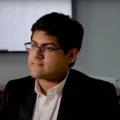
Amish H. Desai is an internal medicine physician.
He shares his story and discusses his KevinMD article, “The reality of being a physician and a son at the same time.”

The Podcast by KevinMD is brought to you by the Nuance Dragon Ambient eXperience.
With a growing physician shortage, increasing burnout, and declining patient satisfaction, a dramatic change is needed to make health care more efficient and effective and bring back the joy of practicing medicine. AI-driven ambient clinical intelligence promises to help by revolutionizing patient and provider experiences with clinical documentation that writes itself.
The Nuance Dragon Ambient eXperience, or DAX for short, is a voice-enabled, ambient clinical intelligence solution that automatically captures patient encounters securely and accurately at the point of care. Physicians who use DAX have reported a 50 percent decrease in documentation time and a 70 percent reduction in feelings of burnout, and 83 percent of patients say their physician is more personable and conversational.
Rediscover the joy of medicine with clinical documentation that writes itself, all within the EHR.
VISIT SPONSOR → https://nuance.com/daxinaction
SUBSCRIBE TO THE PODCAST → https://kevinmd.com/podcast
RATE AND REVIEW → https://kevinmd.com/rate
FOLLOW ON INSTAGRAM → https://www.instagram.com/kevinphomd
FOLLOW ON TIKTOK → https://www.tiktok.com/@kevinphomd
GET CME FOR THIS EPISODE → https://earnc.me/A0N1i5
Powered by CMEfy.
Transcript
Kevin Pho: Hi, and welcome to the show. Rate and review at KevinMD.com/rate. Subscribe at KevinMD.com/podcast. Today on the show, we have Amish Desai. He’s an internal medicine physician, and his KevinMD article is titled “The reality of being a physician and a son at the same time.” Amish, welcome to the show.
Amish H. Desai: Kevin, thanks so much for having me. I love your podcast and love the work you do. It’s really a privilege to be here.
Kevin Pho: Oh, thank you so much for sharing your story and joining me today. Before we get into that story, just briefly share your own journey to where you are today.
Amish H. Desai: Yeah, my background, to where I am here today, is really focused predominantly on vulnerable and underserved communities. I’m an internal medicine physician and did my training in internal medicine. I’ve got a master’s in really thinking about how we improve health care delivery. Currently, I’m a physician in value-based care models of primary care and outpatient medicine, and I’m helping design how we really take care of patients to make sure they don’t get left behind. That’s really how I got here. And really, the last six to 12 months have been really eye-opening for myself and my family, and I’m happy to share the story.
Real physician voices, twice a week
Free, and one click to unsubscribe.
Kevin Pho: Absolutely. Before we get into the story, I’m an internal medicine physician myself, so give an example of how you, as an internist, move the needle when it comes to helping underserved populations.
Amish H. Desai: Yeah, the example I would give is how we really think about pushing proactive instead of reactive care. How do we design health care models and systems to really stratify our patients around risk, and then really think about how we keep them out of trouble with community health workers, care management, and wraparound services? Often, in between our visits, there’s so much that happens and so much we need to do, thinking about where our patients live, work, and play, and the social context of what they do. And then there’s thinking about the whole care continuum, right? When they’re in transitions of care in the hospital setting, how do we make sure we really keep our promise to them and are accountable to them? I think that’s probably the arc of where I’ve been and what I’ve continued to want to do.
Kevin Pho: All right. So you share your story here, “The reality of being a physician and a son at the same time.” Tell me how this article came about.
Amish H. Desai: Yeah, Kevin, I apologize if at times I get a bit emotional, but the story is truly about my father. Around the end of 2020, we knew he had IPF. After a dry cough and things like that, we came to that diagnosis.
Kevin Pho: And for those who aren’t familiar with IPF, what is that?
Amish H. Desai: Idiopathic pulmonary fibrosis. What that diagnosis ultimately means is a path of continuous remodeling of the lungs, fibrotic changes, or changes in the lungs, which really means you need to be on oxygen. You need to be on that sort of path, unless there’s an alternative option, which is often lung transplant. That was really interesting during the pandemic, of course, where you’re thinking thoughtfully about how to protect your father. Really, around COVID, we did that for him and, obviously, for our loved ones, making sure we kept him safe as we kept our patients safe, right, around mitigation strategies.
And thinking about how this article really came about, at the end of February this past year, he went through his first flare, and at the same time, I tore my Achilles. Life was just really altering, I think, for him, someone who has not had a ton of other significant health problems, someone who’s been the backbone of our family, coming to this country and doing all that he could to give me the opportunity. So that centered this story and what ultimately unfolded in the lessons I learned over the last six to 12 months, being both a physician, of course, and the backbone of being a son.
Kevin Pho: Tell me some of the feelings and mixed emotions that you had fulfilling those dual roles.
Amish H. Desai: Yeah, there’s the pragmatism of being a physician, right? How do we continue the pace of all that I can do? And really, all of our connections allowed us to leverage, from my residency program director to getting connections back to the pulmonary department there, to get second opinions and to get him in quickly to see a specialist, whether it was from cardiology or when he was going for a transplant eval. Leveraging connections and leveraging the pace, I think, kept us grounded on his care needs.
That came with the mixed challenges of when things didn’t go the way we wanted them to go, whether that meant, through the transplant journey, places that said no, given age and complexity. How did I still leverage the optimism as a son, right, to say, “What else can we do? What else should we be doing?” So it was hard, I think, the first mixed feeling, but it was something I learned a ton from, to both leverage my skills as a physician, as a clinician, when he’s going into a flare. What else should we be thinking about? How do I signal to his pulmonologist, at the same time, to not give up hope, anchoring on the hope?
And some of that, actually, Kevin, has been from his strength and his fortitude, seeing him trying to do six-minute walk tests to keep his strength up, checking his pulse ox all the time, and checking on his weight, to keep him centered and really strong as well. So leaning in on his strength and his positivity has been really critical to my own optimism when we were going through really tough stretches.
Kevin Pho: A lot of times, as physicians, we don’t often navigate the health care system from the patient perspective, right? So tell us, what are some surprising things that you learned as you navigated the system from the patient’s perspective?
Amish H. Desai: Yeah, it’s so often not timely, right? That’s number one. Whether that means when we call a colleague or specialist, or we call a larger institutional body, for an imaging test, for a study, or for lab draws, it’s often not timely, right? And it’s not time-sensitive or time-bound depending on needs. Even on our end, even though we put in an order, and we put in the intentionality, the system often does allow for it, right?
I think two, the other challenge that I found for him, is the confusing nature of his insurance, which allowed him to have authorization under transplant for a ton of things, but then how to get in-network for a specialist that wasn’t under the transplant umbrella. We would have to be debating between his main hospital system and another local hospital system. So I think really the confusion for him, and I think the swiftness that we needed, which often wasn’t allowed unless I jumped in, right, to say, “Hey, I need this,” because I know from a time-sensitive nature, and given the connection, I could work around it.
Kevin Pho: And how would you do that when you jumped in?
Amish H. Desai: I would just jump in, yeah, with a phone call and text, right? So I think often, if I was on staff already at the main hospital system, or I had connections through a fellow colleague, an email would just go such a long way, right, or a text would go such a long way, so that they knew that they were talking to another physician on the other side. It’s the same way when I’m consulting specialists for my own patients, right? There’s the level of engagement that automatically happens because there’s another physician on the other side.
And I think it’s that advocacy that is also lacking, right, in the patient journey, which naturally comes when there’s another physician on the line, right, that they’re advocating because they know that there’s someone else who has expertise, or it feels like there’s a reliance on what is being asked. But I think, Kevin, to your earlier question, it’s the timeliness, or the lack thereof, the advocacy, or the lack thereof, and the confusion that just naturally comes with navigating the system.
Kevin Pho: So I want to circle back to something you said, that you had to balance the severity of your father’s condition with hope. How did you go about doing that?
Amish H. Desai: Yeah, this is one that I thought a lot about, both what this means for me individually, and then, as I think about it, the lessons for us as a physician and clinician community. Personally, I leaned on others to support the optimism and support the hope: my sister, my mom, my wife, and, most importantly, my father, right, as I highlighted. I also think there are cultural nuances to this, right, as you navigate optimism and hope, which is really beautiful and can get people motivated around what they need to do to really keep up their appointments or next steps, right?
And so often, I then think, well, how do you navigate that and do that thoughtfully in the exam room, right? How critical it is to bring in pragmatism around the severity of an illness, but also the motivation around whatever the next step may be, even if that next step is more discussions around goals of care, right? Getting to that means balancing the positivity and the optimism that’s needed. So I would say that it has been really challenging and, at the same time, eye-opening around how to do it thoughtfully in every moment, to be honest, now at this point too, Kevin, as we’re navigating where we are with transplant, and really the other path of just living with IPF and what that will mean.
Kevin Pho: So you’ve mentioned experiencing this whole system as a patient. How does that affect you going forward as you now see patients as a physician? How has this experience changed you as a physician?
Amish H. Desai: Yeah, I think the first one is really around how you take the pause that is so hard to take when there are life-altering things. It doesn’t have to be this example, but anything, and we’re so deeply engaged, rightfully so, that we often forget about our own well-being and forget our own challenges. We put them to the side, and they keep piling up and lead to either burnout or challenges in wellness. So I think the first thing is how do you take the thoughtful pause that you often can’t get but really know you need. So that was, I think, one.
But to the piece around the exam room and what this means for patients, one, I think it’s a lot harder than we say it is around caregiving. I often take care of seniors, and when we have those conversations around complex caregiving, the family dynamics, and the needs, there is so much depth to what happens outside of that clinical encounter. We need the other people, right, the social worker, the case manager, or the palliative care team, to really deeply dissect how families navigate caregiving. So I think that’s one lesson. And two, I think, are the cultural nuances that come with end of life and navigating goals of care, which I think are really important. I knew about them, and then when you face it yourself, you know to adapt.
Kevin Pho: So talk in a little more detail, in terms of what would be an example of how your culture influenced the situation.
Amish H. Desai: Yeah, I think two things. One, often, I think, in a lot of traditions, whether it’s South Asian or others, that anchor on shared well-being and anchor on community, how do you think about caregiving and the services that are often offered, in home health and whatnot? And how do you intersect those, leaning in on community and social connections, versus institutional things that we just naturally go to? So one is really understanding family and community dynamics when you think about home needs.
And then two is around discussions about the pragmatism of what we need to say while navigating hope, and, in reality, how we talk about it, and still talk about it, both allows next steps to happen and doesn’t lose the family’s hope or the potential other side of getting through this, right? And often we can be harsh in the exam room, right, and we don’t mean to. So how do we do that in ways that really understand cultural nuances, by asking, “Well, what do you know about this? And how do you navigate that with your own cultural understanding, or religious understanding, or spiritual understanding?”
My dad would often say, and still says, he’s been given a number of breaths by a divine power, and that’s written, and he believes that. And that allows him to sit up every morning and still do yoga and pranayama. And I believe that is what he can control and what he can’t control, right, in the process.
Kevin Pho: We’re talking to Amish Desai. He’s an internal medicine physician, and his KevinMD article is titled “The reality of being a physician and a son at the same time.” Amish, what are some of your take-home messages that you want to leave with the KevinMD audience?
Amish H. Desai: The first, biggest one, and I think kudos to you and this work, is just how important reflection is, you know, when things become hard, right? It gives a moment of respite, right, for myself. My sister is a writer; she writes. So actually, reflection is so important for two reasons. It gives you respite and a mental reprieve, right, an outlet. And it allows you to then move in ways, when you sit down and break down what you’ve learned; it allows you to self-analyze what maybe you could do differently, right, and move differently.
So I encourage people to really reflect, write, and speak to others about things that they have learned, because it will influence, most importantly, yourself in that journey, but also a ton of other people, right? I’ve gotten lots of text messages, and through social media and posting, about how just writing this has made others also think about their own situations. So I think that’s really important. That’s number one.
I think, lastly, for our physician community, it’s how do you take a pause, in whatever way you can, when there are life-altering things, to think about your own wellness and well-being, but also then think about shared well-being, right? Whether that’s your partner, your spouse, or whoever you consider your loved ones, think about individual well-being, but more importantly, shared well-being. And I think Tim Urban’s quote on countless time and countable time is really important when you take it into the context of our lives, and really, we have countable time with the people that we spend it with. And how do you make decisions that you don’t have regret about? Those are probably the biggest lessons that I’d like to give to the audience.
Kevin Pho: Thank you so much for sharing your story, time, and insight. Thanks again for being on the show.
Amish H. Desai: Thank you, Kevin.
Listen and followApple PodcastsSpotifyYouTubeMore apps · Browse all episodes