














Listen and followApple PodcastsSpotifyYouTubeMore apps · Browse all episodes
“Shame has no place in illness or in health. The first step to eradicating shame is to openly speak up about symptoms and concerns and for health care providers to commit to acknowledging and interrogating the needs of every individual thoroughly.”
Susan Salenger is a writer.
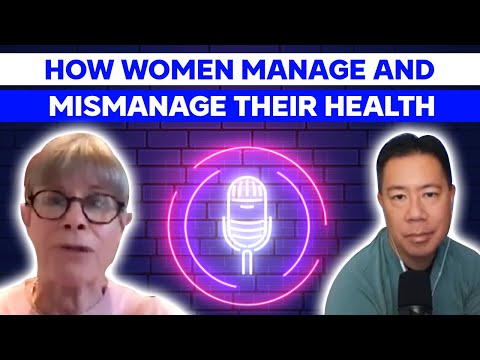
She shares her story and discusses her book, Sidelined: How Women Manage & Mismanage Their Health.

The Podcast by KevinMD is brought to you by the Nuance Dragon Ambient eXperience.
With a growing physician shortage, increasing burnout, and declining patient satisfaction, a dramatic change is needed to make health care more efficient and effective and bring back the joy of practicing medicine. AI-driven ambient clinical intelligence promises to help by revolutionizing patient and provider experiences with clinical documentation that writes itself.
The Nuance Dragon Ambient eXperience, or DAX for short, is a voice-enabled, ambient clinical intelligence solution that automatically captures patient encounters securely and accurately at the point of care. Physicians who use DAX have reported a 50 percent decrease in documentation time and a 70 percent reduction in feelings of burnout, and 83 percent of patients say their physician is more personable and conversational.
Rediscover the joy of medicine with clinical documentation that writes itself, all within the EHR.
VISIT SPONSOR → https://nuance.com/daxinaction
SUBSCRIBE TO THE PODCAST → https://kevinmd.com/podcast
RATE AND REVIEW → https://kevinmd.com/rate
FOLLOW ON INSTAGRAM → https://www.instagram.com/kevinphomd
FOLLOW ON TIKTOK → https://www.tiktok.com/@kevinphomd
GET CME FOR THIS EPISODE → https://earnc.me/fmEzgN
Powered by CMEfy.
Transcript
Kevin Pho: Hi, and welcome to the show. Rate and review at KevinMD.com/rate. Subscribe at KevinMD.com/podcast. Today on the show, we have Susan Salenger. She’s a writer, and she’s the author of the book Sidelined: How Women Manage and Mismanage Their Health. Her article on KevinMD is titled “Shame not on us: Diagnoses and treatments need to be transparent.” Susan, welcome to the show.
Susan Salenger: Thank you so much for having me. I appreciate it.
Kevin Pho: So we’ll get into your article in a little bit, but first off, briefly share your story and journey to where you are today.
Susan Salenger: Well, many years ago, I had a surgery that I was positive I didn’t need, and I agreed to it. And not only that, I insisted it be done sooner rather than later. It was exploratory surgery. They did the surgery, and they found nothing. I was very ashamed of myself and angry at myself for agreeing to it in the first place. I had other options that I could have explored and didn’t. As I said, this was many years ago, so, I mean, I dropped it, and life goes on.
Then many years later, after I retired, I took some medical anthropology classes, and for a project, I did a study of women with hysterectomies. Many of them had agreed to the surgery, and they didn’t think they needed it. So of course, that triggered everything in me, and I began to wonder how women make medical decisions. What goes into those decisions that we do make? So that was sort of why I wrote the book and how I got here.
Real physician voices, twice a week
Free, and one click to unsubscribe.
Kevin Pho: So before getting into your book and article, during your research, especially with the women who had those hysterectomies, what were the reasons presented to them that made them go through with the procedure?
Susan Salenger: Well, they were told that their symptoms could be best cured by hysterectomies. One had endometriosis. She understood that a hysterectomy was sort of the treatment of last resort, but she wasn’t sure that she had tried everything else previously. But what was left out of what they were told was the emotional repercussions. Few of them expected to be as depressed, and they did not expect the recovery to take as long as it did. It’s such a common surgery. They all said to me, “Well, everyone has hysterectomies, you know.” So they were really startled about that.
Kevin Pho: So what are the repercussions? Go into more detail, because like you said, hysterectomy is a fairly common procedure. But for those who aren’t familiar with those repercussions, talk more about that.
Susan Salenger: Well, I won’t say most of them, but many of them became severely depressed, particularly, of course, those that had their ovaries removed as well. So they were very depressed. I think it was presented as a procedure. I don’t know if that’s still true today. And, I mean, although it is a procedure, it’s also a major surgery. They did not expect the pain, and they had a longer recovery than they anticipated. I think they all sort of assumed it was going to be like the common poll, where you have the surgery and then you’re done, and you live happily ever after, so to speak.
So I think that they were really surprised, and they didn’t ask enough questions. It wasn’t just that the doctors didn’t tell them, either; they didn’t understand what they were told. They didn’t ask questions. Some of them said they just agreed, and none of them got second opinions, which actually surprised me.
Kevin Pho: And again, in the majority of cases during your research, was the hysterectomy presented as a choice? Was there a lot of patient input into the decision-making process?
Susan Salenger: I don’t know. They felt that there wasn’t. But now, whether the doctor wasn’t interested in the patient input or whether they simply didn’t, I mean, I don’t know, because I wasn’t present at the appointment. But I felt they felt that they weren’t given the information they needed, and I sort of felt that maybe they hadn’t asked enough questions. I don’t know.
Kevin Pho: So you mentioned that your book, which we’ll talk about now, as well as your article, goes into the decision-making process that women make. So before talking about that book and article, just tell me the events that led up to you writing that book.
Susan Salenger: Well, mostly what these particular women said, as I think I said earlier, really made me wonder how women decide what procedures and treatments to go ahead with. So I interviewed about 40 or 50 women, most of whom had, you know, what I call female diseases: endometriosis, fibromyalgia, all that sort of stuff. I was just really surprised at some of the behaviors that they had in common, even though their diseases were different. They all felt that there was a tremendous gap between doctors and patients, and they were terribly ashamed about being ill.
Kevin Pho: When they said the gap, when they said there’s a tremendous gap between doctors and patients, what do they mean by that?
Susan Salenger: Ah, good question. That’s one of the reasons I wrote the book, because we expect so much from our doctors. I really wanted doctors to be more aware of the gap, and I really wanted to help patients describe their symptoms clearly.
You know, there was a study done several years ago where the researchers really wanted to understand the difference between how doctors and patients understand each other. They found that the doctors assumed that patients understood that their illness had a biological cause and that they had very little control over it. Patients, on the other hand, assumed that their illness was their fault, and as a result, they had a lot of control that they could exert over it. So there was a basic misunderstanding there that went on.
I think that some of the ways women describe their symptoms, we describe our symptoms in a context. We talk to doctors much differently from how men do. So we get all caught up in our feelings and about how we feel about being ill, and sometimes our physical symptoms, I found, got sort of lost in the shuffle. I wanted to help women describe their symptoms a little more clearly and succinctly. And I’m as guilty of that as anybody. I’m the least succinct person it’s possible to be.
Kevin Pho: So you mentioned in that study, when you were talking about the women who had hysterectomies, that they may not have asked the right questions. So talk more about that.
Susan Salenger: I think, number one, that it’s always good for women to say, “What else could this possibly be?” when they get a diagnosis. “Is there another possibility? What’s the real name, the clinical name, of my disease, so I can go home and research and look it up? What treatment do you recommend? What happens if I do nothing? Are there other treatments that might be helpful?”
I think it’s very important for patients and doctors. I don’t think that patients realize how difficult diagnoses are. I certainly didn’t until I started doing all this research. And I think that women hesitate to get second opinions, and I think it would be very helpful if doctors would help them open up the subject. Women are so afraid of hurting their doctor’s feelings, of being a pain in the neck. They don’t want to be labeled a difficult patient. One woman said to me she was afraid that if she asked about a second opinion, it would be a black mark against her, you know, that would follow her through her medical career. We want our doctors to like us, so we don’t want to be rude. We want to play nice. And I think if doctors opened that up, it would be very helpful for women, and for doctors, to make sure to confirm their own diagnoses.
Kevin Pho: So when you said that you want doctors to open that up, give us some advice. What kind of questions should we as physicians, we as clinicians, be asking women in the exam room to help bridge that gap?
Susan Salenger: One of the things that I found, frankly, I was amazed, is that only about 15 percent of women tell their doctors when they don’t understand something, and that means that 85 percent of women don’t. I think that doctors need to be sure that their patients really understand what they say.
You know, I’m especially guilty of that, because I consider myself, particularly because I wrote the book and did the research, a sophisticated patient. And yet when I go to the doctor, I’m so anxious, I don’t hear. I mean, I can hear a pin drop, but I can’t necessarily repeat in my own words what the doctor said. Now I’ve learned to take somebody with me.
Kevin Pho: So what kind of questions should we be asking?
Susan Salenger: Yeah, I think that doctors should make sure that patients repeat back what they heard in their own words. That will give patients an opportunity to make sure they understood, and it gives the doctor a chance to confirm or not, or correct any misunderstandings. So I think that’s a very basic question.
I think, too, the doctor should say, “Are there any questions that you want to ask me that you haven’t yet? Have we completed your agenda? Have we followed your list?” Really, women should come in with a written agenda, and only about, I think, less than 2 percent get their agenda completed, because the office visit sometimes goes off focus. But the basic question, and I really want to repeat that, is, “Did you understand me? Can you repeat, you know, what you heard? Let’s be sure that you heard me correctly.”
Kevin Pho: Now, did you see a difference between male and female physicians in terms of their interactions with female patients?
Susan Salenger: I’m going to be a little vague about that, because really, I studied patient behavior. But yes, there is a difference between male and female physicians. Male doctors tend to take a little more history than a female physician. A female physician is more interested in building a relationship.
You know, one of the most common questions I get when I do these is, “Should I go to a male doctor or a female doctor?” My answer is, you really want to go to a doctor that you feel likes you and that you feel understands what you’re saying. If you’re on your lunch hour, you might want a male doctor, because your visit will be shorter, and the doctor will be more biologically oriented. A female doctor takes a longer time. So if you’re one of those women that wants to get in and get out, go to a male doctor. If you’re more interested in a personal relationship, go to a female doctor. But just like male and female patients speak differently to doctors, male and female doctors speak differently to patients. I mean, conversations are socialized by gender to a certain extent, as you well know.
Kevin Pho: We’re talking to Susan Salenger. She’s a writer, and she’s the author of the book Sidelined: How Women Manage and Mismanage Their Health. Susan, tell us some of the other key points that you want listeners to come away with after reading your book.
Susan Salenger: I think what I want listeners to come away with, from a patient point of view, is that I want women to really make sure that they understand what their doctor says and to take charge of their bodies. From a clinician point of view, I want them to be aware of the gap that may occur between doctors and patients, and I want both parties to work hard to overcome that. I think that there is gender bias in diagnoses. I think that still goes on. I think it’s unconscious, but I think it still goes on.
Kevin Pho: Now, what would be an example of that?
Susan Salenger: Well, there was a wonderful test done where there were two groups of patients. One group was given a scenario where stress was not mentioned. The second group was given a scenario where stress was mentioned. Both groups had the same symptoms for a cardiac diagnosis, and the scenarios were given to a group of, I think, 200 doctors or something. When stress was not mentioned, both the men and women received the same diagnosis and treatment recommendation for a cardiac workup. As soon as stress was mentioned, only 15 percent of the women received a cardiac diagnosis. I was startled by that, because I didn’t realize that gender bias was as rampant as it seems to be. That surprised me.
And then I also had an experience with my mother, and this is strictly anecdotal. My mom was sharp as a tack, and she was about 75 and had gone in for some knee surgery. It was an outpatient thing. I mean, it was no big deal. She was given some pain medication, and overnight, she turned senile. I mean, all she could remember was the name of her beauty shop. I mean, it was silly. But the doctor, you know, took me aside and said, “Sue, you have to let your parents age graciously. You’re making it difficult for them.” And I kept saying, “But nobody gets senile overnight like that.” We threw out the medication. She was allergic to it, and that was that. But because of her age, this particular doctor was not interested in looking for other causes.
So I think there is bias in a diagnosis, and I can see why, because diagnoses are so incredibly difficult. The women that I interviewed that had autoimmune diseases, so many of them were told that their symptoms were due to depression. You know, that’s such a hard call, because women do suffer more from anxiety and depression than men do. They felt that they were being, you know, gaslighted, so to speak. And they weren’t necessarily, but they didn’t know how difficult autoimmune diseases are to diagnose. So it’s a balance between the doctors and the patients.
Kevin Pho: And my final question: What are some of your take-home messages that you want to leave with the KevinMD audience?
Susan Salenger: I want to make sure that doctors are aware of this chasm that does exist, or that can exist. And I want to make sure that patients know how to describe their symptoms and know what to do to help overcome that gap. They need to help bridge it, too. So much of the gap is due to the patients, too, and I think patients tend to blame their doctors, and that’s not fair. So I really want them to be aware of what they can do to contribute to overcoming the gap themselves.
Kevin Pho: Susan, thank you so much for sharing your time and insight. Thanks again for being on the show.
Listen and followApple PodcastsSpotifyYouTubeMore apps · Browse all episodes