



















Listen and followApple PodcastsSpotifyYouTubeMore apps · Browse all episodes
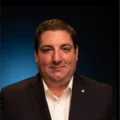
In this episode, we have Dennis Hursh, a physician contract lawyer, sharing his experiences in dealing with hospitals and their tendency to condescend towards physicians and their lawyers, also known as “hospitalsplaining.” He discusses a recent example where negotiations for call coverage in a physician employment agreement were met with resistance from the hospital’s representative, who cited the need for flexibility in a business. Dennis emphasizes the importance for physicians to be aware of situations where they are being talked down to and stand up for their rights to be treated with respect and professionalism.
Dennis Hursh is a veteran attorney with over 40 years of experience in health law. He is founder, Physician Agreements Health Law, which offers a fixed fee review of physician employment agreements to protect physicians in one of the biggest transactions of their careers. He can also be reached on Facebook and LinkedIn.
He shares his story and discusses his KevinMD article, “Hospitalsplaining: a lawyer’s perspective on condescension in the medical field.”

The Podcast by KevinMD is brought to you by the Nuance Dragon Ambient eXperience.
With so many demands on their time, physicians today report record levels of burnout. Burnout is caused by many factors, one of which is clinical documentation. Studies indicate physicians spend two hours documenting care for every hour spent with patients.
At Nuance, we are committed to helping physicians do what you love – care for patients – and spend less time on clinical documentation. The Nuance Dragon Ambient eXperience, or DAX for short, is an AI-powered, ambient clinical intelligence solution that automatically captures patient encounters securely and accurately at the point of care. Physicians who use DAX have reported a 50 percent decrease in documentation time and a 70 percent reduction in feelings of burnout, and 83 percent of patients say their physician is more personable and conversational.
Rediscover the joy of medicine with clinical documentation that writes itself, all within the EHR.
VISIT SPONSOR → https://nuance.com/daxinaction
SUBSCRIBE TO THE PODCAST → https://kevinmd.com/podcast
RECOMMENDED BY KEVINMD → https://kevinmd.com/recommended
GET CME FOR THIS EPISODE → https://earnc.me/67t148
Powered by CMEfy.
Transcript
Kevin Pho: Hi, and welcome to the show. Subscribe at KevinMD.com/podcast and get CME for this episode by clicking on the CME link. Today we welcome back Dennis Hursh. He’s a physician contract lawyer. His most recent KevinMD article is titled “Hospitalsplaining: a lawyer’s perspective on condescension in the medical field.” Dennis, welcome back to the show.
Dennis Hursh: Thank you. It’s good to be here.
Kevin Pho: So I always love to hear your insights behind the scenes when it comes to contract negotiations. Let’s jump right into this one. You talk about the term “hospitalsplaining.” So what do you mean by that?
Dennis Hursh: Well, it’s sort of like mansplaining, but it’s what a hospital does, because it assumes that the poor, uneducated physician just doesn’t realize that “We’re running a business here. So your foolish aspirations about wanting to sleep at night and not having 50 patient contact hours, all I need to do is explain to you that we’re running a business.” And then your expected reaction is to do a head-palm plant and say, “Oh, now I understand that. Sure, my foolish personal preferences obviously need to be pushed aside.”
Real physician voices, twice a week
Free, and one click to unsubscribe.
Kevin Pho: Now, what would be a story? You told a story in your article, so lead into it. What’s the story of that happening, from your experience?
Dennis Hursh: Well, it’s happened many times, but the particular one in the article was that we were negotiating a physician’s employment agreement, and the contract provided, as many do, that call coverage will be assigned by the employer. Well, that’s fine, but I just wanted them to agree that it would be equitably allocated among all eligible providers. So maybe you don’t really need a physician on call; maybe you can have somebody else. I also wanted some reasonable limitations. We were asking for one in five, but we probably would have accepted more, but one in five is not bad. And then we also did an MGMA analysis, so we knew what the median unpaid hours per week were, and we asked for the MGMA median for payment over that.
And we were going through the agreement. The hospital representative was friendly enough, but when she got to that provision, she felt that she had to explain to me that the hospital is a business, and therefore they couldn’t possibly have anything but a total blank check on the physician’s call schedule. And I started to wonder: What did she think would have happened? Was I just going to say, “Oh, well, then sure, a foolish physician, you know, 24/7 would be fine”? And I guess I would go to my physician and say, “Well, you know, you may have to do 24/7 under this call, but you’ve got to understand that the hospital is a business, so they need flexibility.” And I just have this sense that she probably wouldn’t have said, “Oh, in that case, sure, I don’t need sleep ever.”
And you get it all the time. I see it in particular when the physician client is on a call with me. The hospital rep will sit there and say, “Well, Kevin.” The first thing I would do then, I think, is say, “Mr. Hursh, I prefer Dr. Pho.” It’s not confrontational, but I just think, “You know, I’m a mister, you’re a doctor. Let’s just get that down.” It’s not Kevin and Dennis setting up an appointment to do some brewskies and go bowling. This is a serious negotiation, and you have some rights too. And that’s the first thing I see: They start right off with the first name on the physician, and naturally your response is to be, “OK, Dennis,” you know, “we’ll do it that way.” But again, I recommend, “No, Mr. Hursh, I prefer Dr. Pho.” And again, not in a confrontational way at all, but let’s get it there: “I’m a mister, and you’re a doctor, and let’s keep it at that status for a bit.”
Kevin Pho: Now, do you find that this type of attitude is universal across different types of hospitals? What about settings like community hospitals versus academics versus big city? Do you find that this attitude is pervasive?
Dennis Hursh: I do. And I think the sense is, “Physicians don’t really know about business, so all I have to do is just educate you. I mean, all you’re doing is healing clients. I’m spending my days in important meetings and looking at PowerPoints, which, after all, is what runs a health system.” I really think for a lot of people, that’s what they think: “You know, we do have to treat patients; that’s sort of part of what we do. But the really important stuff is the meetings and the PowerPoints, and you’re not participating in that, so you just aren’t as important as I am in this process.” And you can’t really educate them 100 percent on that, but at least maintain your status a little bit.
Kevin Pho: All right, so if you’re a physician negotiating against some type of hospital system that comes at you with this type of hospitalsplaining, what options do physicians have?
Dennis Hursh: I think you just have to say, “You need to realize that my main concern is quality of care and taking care of the patients. I am a fabulous doctor, but you know what? If I don’t sleep for four nights in a row, I’m no longer a fabulous doctor, and I’m concerned about the patient care I’m giving.” I usually don’t try and say, “I’m entitled to a life,” you know, you get vacation, you go home at night, you don’t ever have call. I just really think you have to put it in terms of what your main goal is, and that is taking care of the patients.
Kevin Pho: So tell us some next steps of the story. You’ve been through so many of these negotiations. Give us some success stories where a response like that would sway a hospital.
Dennis Hursh: Oh, it does frequently. I just say, “Put yourself in a physician’s shoes. So what you’re saying is there’s a possibility that she’s going to be 24/7/365.” And they usually come back and say, “Oh, no, no, we would never do that,” to which my response is, “Well, then, if you will never do it, let’s put it in the contract.” And sometimes they will. Like, we can’t do one in five, but I can say no more than two weekends a month, or at least get some limits there.
Their problem is they can always abuse the physicians, and you will almost always just take it. You’re going to be worried about your patients. At some point they need to realize it’s going to cost some money: “We may have to bring in a locums. We can’t keep having, you know, there are four people in a department. One quits, one got pregnant, and one got sick. You can’t be expected to do 24/7 until we get around to it. Yeah, it costs us money. It might hit the CEO’s bonus, but we may need to get a locum tenens in to do some of this call coverage.”
Kevin Pho: So you mentioned earlier that in a lot of cases the hospital can make physicians do things they otherwise wouldn’t, and physicians would just take it because they have other things to worry about, like care for their patients. What’s the long-term impact on the physician psyche of this constant, pervasive attitude?
Dennis Hursh: Well, I always phrase it in terms of quality of care. I don’t care how good a physician you are. If your last three weeks have been getting four hours of sleep, with maybe a call in the middle of the night, you’re doing 40 patient contact hours a week. So you come in in the morning, you do some charting, you see patients. Maybe at five the last patient comes in, although probably it was six, because they kind of overbooked. So you see patients till six, and now you can do charting for a little bit, go home, grab something to eat, and chart until you go to bed, and start over tomorrow. I don’t care about your training. I don’t care about how concerned you are for patients. At some point the quality of care is going to drop. It just has to, not because you don’t care, but because you just aren’t going to have the cognitive bandwidth that you would if you were leading a more reasonable life.
So I usually put it in those terms. To that lady at the hospital, I think I said, “Would you like to be treated by her if she’s been on call the past eight nights? Do you really want to go in and have her treat you?” And sometimes they understand that. Like I said, they’re going to push back, because they know they can get you to just keep working and working, and probably not get paid for it, as opposed to paying a locum tenens, and that comes out of money. But at some point it truly does impact quality of care.
Kevin Pho: So a lot of times physicians don’t necessarily have an attorney like yourself and may not phrase what they want as diplomatically as you do, right? So tell these physicians, short of hiring an attorney, what are some things not to do or not to say when negotiating some of these, when they’re talking to the hospital?
Dennis Hursh: Well, like I said, I usually insist on being referred to as doctor. I think that is something you’ve earned in spades, so at least let’s not call you by your first name.
Kevin Pho: Does that happen pretty often? Do a lot of hospitals just reflexively call physicians by their first name?
Dennis Hursh: Yeah, I see that all the time. It’s calculated; I think it’s a tactic. I think in some cases it might just be legitimately breaking the ice: “Hey, Kevin, call me Dennis.” And maybe some people really do it to be nice, but like I said, you’re a physician. I’d say, “I prefer Dr. Pho.” I think that’s first and foremost: Get it right.
I think also you can’t say things like, “I don’t care about your business. Your CEO gets a massive bonus every year. Your CEO makes eight times what I make.” I don’t think any of that is useful. I really do think you have to keep circling back to the quality of care. And I think you have to tell the truth: You are going to get burned out. They’re a lot better off treating you right than having to recruit a physician, or probably two physicians, because people coming out of training are not as willing as some of the middle-aged and older physicians. But it does save them money. But I keep coming back to it: It’s a quality-of-care issue. “If I’m seeing that many patients, I’m not going to be able to do my best. I’m going to do my best till I drop, but at some point I’m not going to be at my peak.”
And I think you have to say there have to be reasonable limits. Maybe, I think, it’s perfectly fine for a physician to have call every other night, but at some point, what if the other physician gets sick? Now is it 24/7? I just think you have to say, “There have to be limits here. For our patients, there have to be limits.” And I think it’s standing on that, and keeping in the back of your head that, really, ultimately, it is patient care that you’re working on. Yeah, it’s your quality of life, but if we destroy your quality of life, the patient care is going to go down with it.
Kevin Pho: Now, you said the term “hospitalsplaining” obviously comes from the term “mansplaining.” Now, I do want to bring in some gender issues. So let’s say male versus female physicians: Do you find that hospitals talk to female physicians differently than they do male physicians?
Dennis Hursh: I think they do sometimes. It was shocking to me. I had a case where the husband and wife, two physicians, got job offers at a hospital, and the wife got offered less CME, less CME time, and less vacation. Now, at most hospitals, all physicians have the same; sometimes there’s a departmental difference. But yeah, I do think that there’s still this sense of, “You know, we don’t have to be as good to you.” And I think women physicians are less likely to assert themselves. I think they’re more attuned to sort of giving in, if you will, or being nice and getting along, where I think male physicians have a slight edge in sometimes trying to protect their rights a little bit.
Kevin Pho: But yeah, hospitals take advantage of that?
Dennis Hursh: Oh, I think they do. I think they take advantage of physicians in general, and I think anything they can do, they will. And as I said, they’re not all bad people. It’s probably not a negotiation tactic for everybody, but certainly for a lot of those people, I think it is: “Let’s be friends, and I’ll explain. You know, the problem here is that we need flexibility, and somebody has to, this is a win-lose, and obviously we need to win.” I think physicians just have to phrase it in terms of, “No, what’s going to be best for our clients?”
And by the way, believe it or not, you do have the right to a life. I mean, you’ve spent so long worrying about patient care, but believe it or not, you actually have the right to sleep at night from time to time too, and you just have to keep that in mind. It’s not all about patient care. Every sacrifice you make doesn’t necessarily improve patient care. It’s just a sacrifice.
Kevin Pho: Now, a lot of these interactions, a lot of physicians, like me, for instance: I would outsource it to an attorney and let the hospital’s attorney and someone like yourself just negotiate on my behalf. Are there situations where physicians should represent themselves?
Dennis Hursh: Well, I’m biased. I don’t think so, just because there are so many different issues that physicians could miss. And I think also somebody who’s done a lot of it might be able to do more of a compromise. You know, I’ve seen this. But it’s also easier for me to say, “Look, my client can’t do this; you should get a locum tenens,” than it is for you to say, “I don’t want to take that extra call; you should hire a locum tenens.” That’s money out of your pocket, your budget; at least it’s going to impact your bonus. So I just think it’s easier for me to say, “Look, this is not fair,” than it is for a physician.
But I do think, if you’re comfortable, just say so. Physicians are really bad about understanding that they have rights, that what they’ve done is an amazing accomplishment, and that there should be some recognition for that. They just tend to be like, “All I care about is treating my patients. If you think I need to do that, then I guess, you know, I’m not a businessman.” Well, no, but you’re a person. You have some rights.
Kevin Pho: And my final question, Dennis: Tell us some of your take-home messages from this piece.
Dennis Hursh: I’ve sort of been hammering on it, but I think just remember that you got where you got through incredibly hard work. Yes, you’re dedicated to your patients. I think if you put it in terms of taking the best care of your patients, you will realize that you need breaks on that too. You need to be treated fairly. Ultimately, you may leave this position and go someplace else, which probably won’t be as good for your patients, or you’ll just sit there and grind yourself into a shadow of your former self, and that’s not good for your patients. So don’t do it for you. Do it for your patients.
Kevin Pho: Dennis, once again, thank you so much for coming back on the show and sharing your time and insight.
Dennis Hursh: Sure, it’s my pleasure.
Listen and followApple PodcastsSpotifyYouTubeMore apps · Browse all episodes