















The letter arrives from the medical staff office in a plain envelope.
Dr. Paul Whitaker is 71. He has operated at the same hospital for thirty-four years. The letter informs him that reappointment now requires a neuropsychological screen and an eye examination for every practitioner 70 or older.
Paul is fictional. Yale New Haven Hospital adopted a policy like the one in his letter.
He is not afraid of the test. He is offended by the question. Then a quieter thought arrives: He has no way to answer the question himself.
Real physician voices, twice a week
Free, and one click to unsubscribe.
Six weeks later he announces his retirement. His partners give a dinner. Nobody asks whether he left because he was ready or because he preferred not to find out. He is not sure either.
I work on the financial side of physician transitions. Whether Paul was fit to operate is not a question I can answer. The one I keep returning to is different: What would it have cost him to hear the answer?
Who will raise the concern?
Association of American Medical Colleges (AAMC) survey data put 23.9 percent of practicing physicians at 65 or older in 2024, up from 16.8 percent a decade earlier.
Age alone tells us little about an individual physician’s fitness to practice. Yale New Haven screened 141 clinicians aged 70 or older who were applying for reappointment, 125 of them physicians. After screening and, in some cases, further evaluation, its review committee found 18 with cognitive deficits that it judged likely to impair independent practice.
The more telling finding is what came before the screen. None of the 18 had previously been brought to the attention of medical staff leadership for performance problems.
That is not for lack of a process. Department chairs and peer-review bodies handle these concerns. But colleagues can hesitate. Thomas Gallagher, a University of Washington bioethicist, told the AAMC that peers are uncomfortable reporting one of their own.
Self-assessment does not close the gap. A systematic review in JAMA found that physicians’ self-ratings had little, no, or an inverse relationship to external measures of competence in 13 of 20 comparisons.
This is a question no physician should have to answer alone.
Stepping back is not one decision
What the 18 at Yale did next is instructive. All 18 agreed to changes in their practice. They either stopped practicing or moved into closely supervised practice.
So the alternative to operating is not only retirement. A physician can give up call, narrow his procedural scope, practice with supervision, or move into teaching.
Paul considered none of these. Six weeks was enough time to announce his retirement. The work of preparing for it could have started years earlier.
What makes the answer hard to hear
Three pressures can make it harder to act on an assessment.
- Income: In a 2023 Medscape survey, as reported by Becker’s, 26 percent of physicians planning to practice into their late 60s did not expect to have saved enough to stop sooner.
- Identity: In the same survey, 46 percent of all respondents expected retirement to feel like losing part of who they are.
- The enterprise: For a practice owner, the lease, the staff, and the buyout his partners have not funded all assume he will be in clinic on Monday.
For owners, these compound. An unfunded buyout can give an owner another reason to stay. As long as he stays, recruiting a successor can feel less urgent. Without a successor, the practice is worth less without him. Each year can make stepping back more expensive.
If the household still depends on a full clinical schedule, even a modest reduction in hours can be hard to absorb. Financial independence gives a physician room to act on an assessment that may be hard to hear.
Put it in writing
That plan is built in the decade when it feels unnecessary. It answers each pressure in turn.
For income, the household needs enough from outside clinical practice to cover its expenses if the physician cuts back or stops seeing patients. The test is a number: If he gave up call next month or cut his clinic schedule in half, how much income would the household have to replace?
For the enterprise, the practice needs a successor and a buyout it can pay without him in the building. The test for an owner: Could the practice still fund that buyout on his reduced schedule?
For identity, he needs a written statement of what he wants to keep doing: teaching residents, seeing clinic patients, mentoring the partner who will take his cases.
Then comes a short agreement, made in advance, that separates three jobs. A trusted peer, named in writing, raises the concern. A credible concern about operative performance triggers an independent, specialty-specific assessment, which the physician has already agreed to seek. The hospital’s review process decides what happens to his privileges. That review can also address whether his duties should change while the assessment is pending.
The named peer is one route, not the only one. Anyone can still raise a concern directly through the hospital’s reporting process, and an urgent patient-safety concern should go there promptly.
With a plan in place, Paul could have faced the assessment knowing how he would manage a reduction in hours or a move out of the operating room. He still might have dreaded it. But he would have known what to do next.
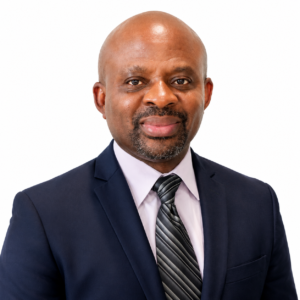
Mike Chando is the founder of Chando Global Group, a Charlotte-based capital architecture firm serving physicians, practice owners, and executives, and editor of The Capital Architect, a private briefing on how capital is structured and how it quietly comes apart.
Most physicians build their financial lives one competent decision at a time: a retirement plan chosen by an employer, a practice interest governed by a partnership agreement, a certified public accountant here, an attorney there, someone managing the portfolio. Each professional may be highly capable within a particular discipline. The problem is that no one necessarily owns the seams between them, and the seams are where structural failures tend to surface: tax exposure embedded inside retirement assets, a buy-sell agreement without sufficient liquidity behind it, or an estate plan that no longer reflects the family or balance sheet it was designed to protect.
His work is architectural rather than transactional. The central question is not simply what a physician owns, but how the pieces interact, how much control the family retains, and what happens to the structure when the person holding it together is no longer there.
Physicians can pressure-test their own structure with the three-minute Capital Architecture Diagnostic. Essays and prior issues of The Capital Architect are available in the journal archive.
He lives in Charlotte, North Carolina.