











Listen and followApple PodcastsSpotifyYouTubeMore apps · Browse all episodes
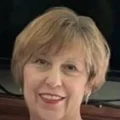
Radiologist Robyn Tiger shares her journey from childhood tragedy to a career dedicated to healing and self-discovery. Robyn recounts how the loss of her father to suicide sparked her passion for understanding the human mind and led her to become a physician. She opens up about her struggles with chronic stress, burnout, and the profound insights that transformed her life and career. Robyn now empowers others with the tools to navigate their own well-being, proving that life’s greatest challenges can become opportunities for growth and service.
Robyn Tiger is a radiologist.
She discusses the KevinMD article, “Through a physician’s eyes: Living twice as long as your parent.”

Our presenting sponsor is DAX Copilot by Microsoft.
DAX Copilot, by Microsoft, is your AI assistant for automated clinical documentation and workflows. DAX Copilot allows physicians to do more with less and turn their words into a powerful productivity tool. DAX Copilot automates clinical documentation—making it available in the EHR within minutes—and clinical workflows, including referral letters, after-visit summaries, style and formatting customizations, and more.
70 percent of physicians who use DAX Copilot say it improves their work-life balance while reducing feelings of burnout and fatigue. Patients love it too! 93 percent of patients say their physician is more personable and conversational, and 75 percent of physicians say it improves patient experiences.
Discover AI-powered solutions for clinical documentation and workflows. Click here to see a 12-minute DAX Copilot demo.
VISIT SPONSOR → https://aka.ms/kevinmd
SUBSCRIBE TO THE PODCAST → https://www.kevinmd.com/podcast
RECOMMENDED BY KEVINMD → https://www.kevinmd.com/recommended
GET CME FOR THIS EPISODE → https://www.kevinmd.com/cme
I’m partnering with Learner+ to offer clinicians access to an AI-powered reflective portfolio that rewards CME/CE credits from meaningful reflections. Find out more: https://www.kevinmd.com/learnerplus
Transcript
Kevin Pho: Hi, and welcome to the show. Subscribe at KevinMD.com/podcast. Today we welcome back Robyn Tiger. She is a radiologist and a physician coach. Today’s KevinMD article is “Through a physician’s eyes: Living twice as long as your parent.” Robyn, welcome back to the show.
Robyn Tiger: Thank you, Kevin. It’s such a privilege, and what a great way to start the year off together.
Kevin Pho: Absolutely. So tell us what this article is about.
Robyn Tiger: Yes. So the inspiration for this article actually came over a year ago, December ’23, when I was on vacation with my family. I was just sitting, looking out at the water, beautiful beach, and I started to overhear this conversation. This group of individuals who were much younger than me were talking about how upset they are about getting older, that they’re sad and depressed about their age, and that they hate birthdays. It’s the worst time of the year for them.
And it got me thinking. It got me thinking about how common that is in my professional life, in my personal life, hearing this over and over again, and even my coaching clients, you know, whether they are physicians who are retired or midcareer, or residents who are coming on, unhappy about being thirty years old. And I thought, well, why do I think that way, the opposite of that? Why is it that for me, birthdays are a celebration? Why is it that I get excited about that?
And I started to reflect, and I spent the year reflecting, beginning December of ’23, on that. I came to recognize that at age fifty-eight, I had lived twice as long as my father. My father, who suffered from manic depression, died from suicide at age twenty-nine, when I was seven years old, or seven years young. And I thought, OK, let me start there. You know, what was I like at that seven-year-old child age, and how am I here now? What’s gone on?
And initially, well, me being inquisitive, I wanted to learn more about the human mind and the human brain, and I thought, well, I want to be a doctor, because I want to actually understand this and prevent this from happening to anyone else again. You know, big, big dreams at age seven. And I took the path, right? I went to medical school, residency, and fellowship, became an attending, got married, and had kids.
And, well, I realized that I started developing all kinds of symptoms, symptoms that initially a lot of people couldn’t figure out. I was physically not well. I became emotionally not well, and I had thoughts, my own thoughts, of not wanting to be here. Really scary thoughts. And I had three physician friends die from suicide. So I had the suicide of my father, the suicide of three physician colleagues, and now I’m having my own thoughts. And I did not want to take that road. I remember thinking, looking at my children and saying, well, I do not want this to happen to you. I don’t want what happened to me to happen to you.
So I decided to look outside the box of traditional Western medicine, because it really wasn’t helping at the time. I was taking lots of medications; I wasn’t getting better. I was having all types of therapy; I wasn’t getting better. And I wanted to get better. And I found tools to help me feel better: tools that helped relieve my stress, tools that I learned from studying lifestyle medicine, about the importance of mood with food, what you eat actually affects you emotionally, moving your body, getting exercise, getting sleep, connecting with others, and so on. And I totally turned my life around. I’d never felt happier, healthier, or more vital in my life. And that’s when I pivoted my career in medicine to help other physicians feel the same.
Real physician voices, twice a week
Free, and one click to unsubscribe.
Kevin Pho: Now, of course, I want to talk about those tools in a bit. But before I do so, the time when you were having these thoughts, and certainly you’re reflecting on your father’s death by suicide and the suicide of some of your physician colleagues. Just take us through the mindset. What exactly were you feeling during those dark times?
Robyn Tiger: As a child, there was a lot of feeling of fault and blame, like if I was a good girl, this wouldn’t have happened. You know, if my father loved me more. You know, there was this enoughness, this feeling of not being loved and not being good enough. And then, you know, carrying that with me into adulthood.
My own thoughts of not wanting to be here: It wasn’t that I was going to figure something out. It was just being in so much pain that it would be so much easier to not have to wake up and experience that each day. And that was really, you know, what was happening in my brain, and how I was feeling: just so distraught, so depressed, so sad, feeling, again, this sense of loss and lack of worth, you know, not belonging, and so on.
Kevin Pho: Now, you said that you were on medications and you did traditional Western medicine techniques to help you through these times, and you mentioned that they weren’t as effective as you would like. So tell us some of the things that you went through during that time that weren’t as effective.
Robyn Tiger: Yes. So these symptoms seemed disconnected at the time, and they happened over time. So I developed things like migraine headaches with intractable vomiting, vertigo, tinnitus, pain in my body, lots of tension, burning reflux, you know, GE reflux, inability to digest food, you know, lots of abdominal pain and distention, poor bowel habits, and inability to sleep.
A really scary symptom was paresthesia in my hands and feet and the left side of my back, which, of course, my physician brain thought I had some debilitating neurologic disease, right? I’d be in the middle of a breast biopsy, and I would be holding the biopsy gun, and I would be right there at the lesion, and my tech would say, “Hey, Dr. Tiger, you’re right there at the lesion.” And I would say, “Hey, OK, yeah, I’m just checking it out.” But the truth was, I had to wait, Kevin, for the paresthesia to pass so I could actually do that biopsy.
So these were the physical symptoms that I was experiencing, and that led me to see lots of different specialists in medicine: gastrologists, neurologists. I had bleeding gums as well, periodontist, and so on. And so each doctor gave me a different medication. As we say, a pill for an ill. So I had a pile of pills I was taking every day, but I wasn’t getting better. And then I was also seeing a mental health care professional, who was lovely, but it just wasn’t where I needed to be. It wasn’t what I needed at the time. Lab test negative, imaging negative, everything negative.
Kevin Pho: And at what point did you look outside the Western medicine paradigm, and how did you go about doing that?
Robyn Tiger: Yeah, it was when I realized that these thoughts, these thoughts were the symptom that was absolutely terrifying: afraid that I was following my father’s path, afraid I was following the path of my three physician colleagues, and looking into the eyes of my children and just not wanting this for them. And so, yeah, I said, OK, Western medicine is amazing, right? We are Western medicine-trained physicians, but there has to be more.
And so that’s when I started looking outside the box, and I started hearing about things like yoga, meditation, coaching, and so on. And I was already exercising a lot. I was running races. I was eating what I thought was a pretty healthful diet, which I learned needed some tweaking. And when I started to dip my big toe into things outside of what we had learned as physicians and medical students, I started to feel better. My symptoms started to resolve, and eventually all of them, even the paresthesia, even the thoughts that I was having that didn’t serve me about living, all resolved, all went away.
Kevin Pho: Now, what were some of the techniques or things that you did that helped alleviate your symptoms?
Robyn Tiger: Well, it started with understanding the power of the stress response, and I now know from the literature that up to 90 percent of symptoms that we experience, and that our patients experience, are secondary to chronic stress. So once I started to learn how to balance my autonomic nervous system, to bring the sympathetic and parasympathetic nervous systems back into balance, into homeostasis, I started to feel better. And that was anything from learning how to breathe in certain ways, move my body in certain ways, and think in certain ways.
And understanding the power of food, as I started to mention earlier: Research shows that when we eat whole plants, fruits, vegetables, legumes, nuts, and seeds, it actually helps us with our feelings of calm, decreasing our anxiety, decreasing depression, decreasing stress, and allowing us to feel grounded. When we eat foods that are processed and full of saturated fats and chemicals, those chemicals that you can’t pronounce, let alone spell, they actually cause us to feel worse and worse in the mood that we’re already feeling, that we don’t want to feel.
When we learn how to move our bodies, to exercise a certain amount of time per week, the types of exercise that we should be having per week, we also feel better. When we get nourishing sleep, sleep is incredible medicine. The power of connection: Our own surgeon general, Dr. Vivek Murthy, really focused on this in the past few years, the power of connection, and how Harvard research shows us that this is probably the most important thing to our own mental health and well-being. And really starting to incorporate all of these things into my life, I just had this unbelievable shift. And there were things that we were really never taught but were incredibly transformative.
Kevin Pho: Now, you’re a coach, and I’m sure a lot of physicians come to you in states of chronic stress. In fact, I’m sure chronic stress is a definition of a physician’s professional life. So paint us a picture of how these physicians are coming to you, and talk about some of these techniques that you’re trying to affect and change in their life.
Robyn Tiger: Yeah, so you’re right. I mean, stress, really, I see it as the umbrella under which all of these other behaviors live. There’s this bidirectionality between stress and the food we eat, stress and the way we move our body, stress and if we’re sleeping or not, stress and if we’re connecting or not, and so on. And so understanding this bidirectionality, and understanding that stress really is the umbrella under which these other behaviors are determined, is key.
And so when physicians come to me, I usually do a short lifestyle medicine assessment, where we really get to understand, as I think about it, the spokes on the wheel, that all of these pieces are important spokes on the wheel for the wheel to work, right? And so what are these spokes looking like in your life? Where are you feeling strong, if any area, and where are you feeling weaker? And then we begin there.
Kevin Pho: So give us an example. You don’t have to talk about a specific client; perhaps an amalgamation of clients where you implemented some of these techniques and really moved it into their lives. Tell us a story.
Robyn Tiger: Yeah, so I like to think about it as both a bottom-up and top-down approach to stress relief first. And so when I work with individuals, and I’ll say someone that I most recently worked with, who is a mom physician of three, married to another really busy physician, comes to me with marriage on the rocks, children not wanting to spend time with her, actually saying, “I hate you,” all the time. Her job is teetering; they’re going to kick her out. She’s had multiple warnings because her behavior is so reactive, and she’s really unhappy, and patients are complaining, staff is complaining. She is prediabetic and hypertensive and has put on a lot of weight. So this is an example of just someone recently, in the past few months.
And so it was really imperative that we start bottom-up, body-based, and teach her some tools to relieve her stress, so she can prevent and relieve what was going on, all this reactivity. So working with breath, teaching her some somatic-based movements, and teaching her some self-regulation tools to interrupt and regain control of the sympathetic response, so then she can start to work with her mind, through thoughts. That’s that top-down piece, the life coaching, understanding, based in cognitive behavioral therapy, that our thoughts create our feelings and our emotions, which then drive our actions or inactions and then create our results. So teaching those techniques first.
And then, what’s on her plate? Lots of McDonald’s, lots of processed foods, lots of drinking, right? So working on putting more plants on her plate and decreasing the amount of processed foods, lots of chemicals, finding ways to feel better so that she’s not reaching for that alcohol, because she can feel better all by herself. And then getting her into an exercise routine and teaching her some ways to transition into sleep and stay asleep, so she can wake up not tired and be caffeinated all day, which is only adding to that anxiety and stress. And then leading into more connection, which she so desired with her family, to start.
And so this physician did amazing. She was able to become less reactive at work and actually start enjoying her job again. The staff actually enjoyed working with her again. She did not lose her job. She was spending more time with her husband and her kids, who then thought she was a cool mom again. She decreased her labs to the point that she’s no longer prediabetic; she’s in normal range. Her blood pressure came down. She decreased her blood pressure medications, and she’s just so much happier overall. And so this is an example of just making some behavior changes and having this unbelievable transformation.
Kevin Pho: Now, for the physicians who may be listening to you on the show and may not be able to have a formal coaching session with you, what are some high-yield tips that you could share with them that they could just implement to help reduce some of their stress?
Robyn Tiger: Yeah, so first, just know that you’re not alone, because that is something that causes a lot of stress, and that there are so many out there that are feeling what you’re feeling, and you don’t have to be ashamed and feel bad about sharing what’s going on with you. So just starting right there is just to normalize what’s happening.
And then being present, I think, is something that’s really, really missing in just about everyone, if not everyone’s life, that I work with. And that being present, meaning spending all that time worrying about the past and thinking about the future, means that you’re not here right now. And right now is really all that we have, and right now is really where the magic happens.
So inviting yourself to be present, and a really easy way, a quick way, to do that is to focus on your senses. And that’s because we can’t think a thought and feel a feeling at the same time. We actually can’t really think a thought and feel a feeling in our body at the same time. So when you draw your attention to the somatic experiences in your body, you can come out of busy thinking mind, create space in your mind, and create space in your body. So just simply focusing on the sensation of touch, your skin, the air on your skin, your clothing touching your skin, drawing in sounds, and noticing what you’re smelling and tasting, and noticing what you’re seeing. And when you do that, you can bring yourself back to the present moment, which helps you feel calm and clear and ready for whatever’s coming up.
Kevin Pho: We’re talking to Robyn Tiger. She’s a radiologist and physician coach. Today’s KevinMD article is “Through a physician’s eyes: Living twice as long as your parent.” Robyn, let’s end with some take-home messages that you want to share with the KevinMD audience.
Robyn Tiger: Yeah, I would like to share with you: Don’t wait for that special occasion. Don’t die with your dreams inside of you. Realize that right now is the special occasion. Now’s the time to love, to grow, to serve, and to enjoy. And as Confucius says, “We have two lives, and the second begins when we realize we only have one.” So I invite you to go get it.
Kevin Pho: Robyn, as always, thank you so much for sharing your perspective and insight, and thanks again for coming back on the show.
Robyn Tiger: It’s an honor. Thank you, Kevin.
Listen and followApple PodcastsSpotifyYouTubeMore apps · Browse all episodes