
Patients often assume that someone is directing their care. That there is a clinician who sees the whole picture, integrates the information, and guides what happens next. In many cases, that is not how modern care is structured. Patients move between clinicians (primary care, specialists, urgent care, consultants), each focused appropriately on a specific aspect of the problem. Each encounter may be thorough. Each decision may be reasonable. Each plan may be appropriate within its context. From the system’s perspective, care is progressing. From the patient’s perspective, something else may be happening.
The pieces are not clearly connected. Each clinician offers an interpretation. Each documents their understanding. Each defines a plan within the scope of that encounter. But no one is consistently responsible for integrating those interpretations into a single, usable understanding, and directing the course of care over time.
The role once described as “captain of the ship” has become diffuse in modern medicine. Not only in responsibility, but in function. What is often missing is not ownership. It is active clinical direction.
Integration requires more than awareness of prior notes or test results. It requires engagement: aligning interpretations, recognizing what has changed, identifying what remains unresolved, and determining what should happen next. Without that, care proceeds as a series of discrete encounters. Each may be appropriate. But the overall process can become difficult to follow.
Real physician voices, twice a week
Free, and one click to unsubscribe.
This is particularly evident when symptoms persist without a clear diagnosis, or when patients move between multiple specialists. One clinician emphasizes one aspect of the problem. Another focuses on a different possibility. A third reframes the issue again. None of these perspectives are necessarily incorrect. But they are not always connected. The patient is left to reconcile them. They must decide which explanation should guide action, which concerns remain unresolved, and which interpretation should be trusted.
These are clinical judgments. But they are now being made outside the clinical setting.
Some patients attempt to synthesize the information themselves. Others seek additional opinions. Some defer to the most reassuring explanation. Others focus on the most concerning one. All of these responses are understandable. None of them are ideal. Because what is missing is not expertise. It is direction.
Clinical care is not only the evaluation of symptoms. It is the management of understanding over time. When no clinician is actively directing that process (integrating information, prioritizing possibilities, and guiding next steps), the burden shifts. Patients are left to manage a process that was not designed for them to direct.
The consequences are not always immediate. Care may continue. Testing may proceed. Follow-up may occur. But the overall understanding becomes less stable. Patients may hesitate to act, uncertain which guidance applies. They may escalate care, seeking resolution through additional evaluation. They may disengage, feeling that their situation is not being consistently understood.
Trust becomes more difficult to sustain. Not because clinicians lack expertise. But because the patient cannot locate a clear and stable understanding within the care they are receiving.
This is not a problem that can be solved by more data alone. Electronic records can store information. They do not direct care. Communication can occur. It does not ensure integration. Direction requires a function that is increasingly diffuse in modern practice.
Patients do not need every clinician to agree. But they do need someone actively engaged in bringing those perspectives together in a way that allows them to act.
Without that, care continues. But it does not always cohere into a form that is usable. And when that happens, the course of care is shaped not only by clinical decisions, but by the absence of someone directing them.
This article is discussed on The Podcast by KevinMD: When you have five doctors and no one is directing your care.
Alan P. Feren is a retired surgeon, independent physician, health care consultant, and patient advocate with more than 50 years of experience in clinical practice, system leadership, and health care innovation. Formerly in academic and community surgical practice, he has worked across the evolving landscape of managed care and clinical governance.
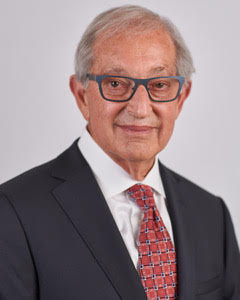
In the 1990s, Dr. Feren co-authored clinical guidelines that evolved into what is now MCG Health, now used by more than 80 percent of U.S. health plans and over 3,100 hospitals. He has advised health technology startups, helped shape managed care policy, and served as a clinical content developer for health care technology platforms.
His work centers on restoring shared understanding between clinicians and patients in an era defined by speed, fragmentation, and technological mediation. Drawing on both professional experience and his own journey as a complex patient, he writes about transparency, accountability, and the disciplined methods that make medical care trustworthy. He is a contributor to KevinMD and a podcast guest. More information is available at mypersonaladvocate.net and on LinkedIn.