Science, especially Newtonian physics, has taught us to appreciate the elegant laws that govern the physical world. A moving object carries momentum. A stationary object possesses inertia. One tends to keep moving in its current direction until acted upon by an external force. The other resists movement until sufficient force is applied. These principles explain planets, automobiles, athletes, and machinery.
Perhaps less obviously, they also offer a useful way to understand human behavior, organizations, and health care. While people are not governed by Newton’s laws, societies often display remarkably similar patterns. Ideas gather momentum. Habits develop inertia. Policies accumulate institutional weight. Entire health care systems continue traveling in familiar directions long after evidence suggests a better path exists.
Every physician has witnessed this phenomenon. We continue ordering tests because they have always been ordered. We prescribe medications because that is what guidelines emphasize. Hospitals invest enormous resources in treating advanced disease while comparatively little attention is devoted to preventing that disease from developing in the first place. None of these decisions are irrational in isolation. Collectively, however, they create an enormous momentum that becomes increasingly difficult to redirect.
Likewise, inertia affects individuals. Patients often know that regular movement, restorative sleep, nutritious food, stress management, and maintaining healthy body mechanics would improve their long-term health. Yet knowing is not the same as doing.
Real physician voices, twice a week
Free, and one click to unsubscribe.
Daily routines become biologically and psychologically entrenched. The body repeats familiar movements. The brain reinforces familiar neural pathways. Comfort favors continuity. Changing direction requires effort, mental and otherwise.
Organizations experience the same phenomenon. Large institutions naturally develop structures, committees, budgets, reimbursement models, and cultures that reward stability. These characteristics provide consistency and reliability. But they also make meaningful innovation slow. The greater the organizational mass, the greater the force required to alter its trajectory.
Health care delivery modes are no exception. For decades we have built extraordinary expertise in diagnosing disease, performing complex procedures, developing pharmaceuticals, and managing medical crises. These achievements deserve admiration. Modern medicine has saved millions of lives. Yet success itself can generate momentum. When entire industries, educational systems, reimbursement models, and professional identities become centered around disease management, disease prevention often becomes the smaller conversation.
This is not because clinicians oppose prevention or health enhancement. Quite the opposite. Most physicians would prefer to prevent illness rather than treat its consequences. The obstacle is not motivation. It is momentum. Current incentives, workflows, education, regulations, and financial structures continue pulling the system in the same direction.
At the same time, society develops its own inertia. Communities normalize sedentary lifestyles. Ultra-processed foods become routine. Poor posture becomes common. Sleep deprivation becomes a badge of productivity. Stress becomes accepted as inevitable. Eventually these patterns no longer appear abnormal because everyone around us lives similarly.
We have built larger waiting-room chairs because of the obesity epidemic. Looking at some old pictures from a few decades ago demonstrates change in our body habitus clearly. Collective inertia quietly reshapes what society considers normal.
History teaches us that positive momentum is equally powerful. Public sanitation dramatically reduced infectious disease. Seat belts became routine. Smoking rates declined after sustained public education. Hand hygiene transformed hospital safety. Vaccination programs eliminated or controlled diseases that once devastated entire populations.
None of these changes occurred overnight. Each required enough scientific evidence, courageous leadership, public education, and persistent advocacy to overcome existing inertia. Health enhancement deserves the same sustained effort.
Our bodies have spent millions of years evolving remarkable systems for repair, adaptation, and resilience. Movement strengthens bone. Sleep reorganizes the brain. Muscles protect joints. Balanced nutrition supports immune function. Healthy biomechanics reduce unnecessary tissue stress and chronic inflammation. The body continuously rewards healthy habits with improved function.
Unfortunately, evolution also rewards repetition. Whether the repeated behavior is beneficial or harmful, the body adapts. In this sense, biology develops momentum of its own. Health and disease both become easier to sustain over time.
The encouraging news is that momentum works in both directions. A healthier posture today makes tomorrow’s posture easier. Daily walking encourages tomorrow’s walk. Improved sleep facilitates healthier choices the next day. Small improvements accumulate. Healthy habits generate their own momentum.
Perhaps the next great opportunity in health care is not abandoning our remarkable disease-treatment system. It is gradually redirecting its momentum. Imagine a health care system that invests as much intellectual energy in creating health as it currently invests in treating disease. Imagine physicians, nurses, therapists, health systems, employers, and patients all contributing small but consistent forces in the same direction. Eventually, momentum changes. History suggests that is exactly how meaningful progress has always occurred.
Sometimes the greatest breakthroughs do not come from discovering entirely new forces. They come from recognizing the direction in which we are already moving, and having the wisdom and courage to gently change the course.
Narinder Singh Parhar is a physician with more than three decades of experience in internal medicine, hospital medicine, and intensive care medicine. Over the course of his career, he cared for a broad spectrum of medically complex and critically ill patients while developing a growing interest in health care systems improvement, prevention, biomechanics, and population health.
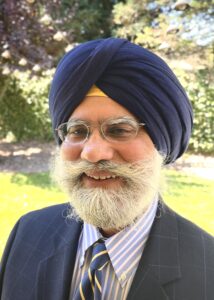
Dr. Parhar previously served as an associate clinical professor affiliated with the University of California, Davis, and on the executive board of Sutter Independent Physicians IPA in California. His professional experience spans outpatient medicine, inpatient care, intensive care medicine, and health care leadership, including past affiliations with Sutter Health and Sutter Roseville in California.
Throughout his career, he became increasingly concerned about several structural challenges within the current health care model, including affordability, accessibility, polypharmacy, health care fragmentation, microbial resistance, physician burnout, and the progressive underemphasis of prevention and functional preservation. These observations led him to develop the Health Enhancement Organization (HEO) Framework, a prevention-oriented and biomechanics-aware health care enhancement model designed to complement scientific medicine through earlier biological support, movement preservation, patient empowerment, and health care team well-being.
Dr. Parhar’s current work focuses on health care course correction, scalable prevention strategies, biomechanics education, healthier aging, and improving long-term population health resilience in practical, affordable, and biologically grounded ways. He is the founder of Jeeva Health Systems, and his research includes “Impact of a Novel Plant-Based Treatment Option in Improving Pulmonary Function Markers,” published in Alternative and Integrative Medicine.