Medicine trains us to master physiology, pharmacology, and diagnostic reasoning. We spend years learning how to manage ventilators, interpret imaging, and navigate complex clinical decisions. But the skills that actually determine whether a physician survives a career, or is broken by it, are almost never taught. They are quiet skills. Uncelebrated skills. Skills that determine whether you can practice with dignity in a system that often makes dignity difficult.
After four decades in medicine, across clinical practice, academic leadership, and institutional transitions, I have learned that the physicians who endure are not the ones with the highest test scores or the most publications. They are the ones who master four competencies that rarely appear in any curriculum.
Maintaining dignity under institutional pressure
Every physician eventually encounters a moment when the institution’s priorities diverge from the patient’s needs, or from the physician’s own moral center. It may be subtle: a pressured discharge, a productivity demand, a documentation requirement that distorts the truth. Or it may be overt: retaliation for speaking up, pressure to conform, or the quiet expectation to look away.
Real physician voices, twice a week
Free, and one click to unsubscribe.
The physicians who survive are not the ones who fight every battle. They are the ones who know which battles matter, and who can hold their dignity without burning themselves to ash. Dignity is not defiance. Dignity is steadiness. It is the ability to say, “This is the line I will not cross,” and to hold that line without theatrics, self-destruction, or apology.
Navigating collapsing systems without losing your moral center
Every generation of physicians believes the system is collapsing, but today’s clinicians face pressures that are qualitatively different: corporatization, loss of autonomy, moral injury, the erosion of continuity, and the replacement of judgment with metrics.
The quiet skill here is not cynicism. It is moral endurance. It is the ability to practice medicine inside a system that often undermines the very values that brought you into the profession, without becoming numb, bitter, or complicit. This requires a kind of internal architecture: a clear sense of who you are, what you stand for, and what you will not allow the system to take from you.
Physicians who lack this architecture drift. Physicians who build it survive.
Mentoring without creating dependency
Medicine romanticizes mentorship, but the truth is more complicated. A mentor who creates dependency is not a mentor. They are a gravitational field. They pull trainees into their orbit, limit their growth, and confuse loyalty with development.
The quiet skill is teaching people in a way that allows them to leave you. A good mentor does the following:
- Gives judgment, not just information
- Models steadiness, not perfection
- Teaches the craft, not the performance
- Prepares the trainee to stand alone
The best mentors are the ones whose students succeed without needing them. That is not loss. That is legacy.
Exiting a role with grace and continuity
No one teaches physicians how to leave, how to step out of a role, a department, or a system without chaos, resentment, or unfinished business. Yet exits shape reputations more than entrances ever do.
A graceful exit requires:
- Clarity
- Preparation
- The discipline to hand off responsibilities cleanly
- The humility to let others take ownership
- The foresight to leave the institution stronger than you found it
The physicians who exit well are the ones who understand that continuity is a form of care, not just for patients, but for colleagues, trainees, and the institution itself. Leaving well is not retreat. It is stewardship.
Why these skills matter now
Mid-career physicians feel the ground shifting beneath them. They see the pressures rising, the metrics tightening, the autonomy shrinking, and the culture changing. Many feel unprepared, not clinically, but existentially.
The quiet skills are what carry you through these moments. They are what allow you to practice medicine with integrity in a system that often rewards the opposite. These skills do not appear on board exams. They do not earn RVUs. They do not show up in promotion criteria. But they are the skills that determine whether a physician can sustain a career without losing the parts of themselves that matter.
The truth we rarely say aloud
Medicine will always demand intelligence, stamina, and technical competence. But the physicians who endure, the ones who remain whole, are the ones who cultivate the quiet skills. They are the ones who understand that survival in medicine is not about brilliance. It is about character. And character is built not in the dramatic moments, but in the quiet ones, the moments when no one is watching, when the institution is indifferent, and when the only person who knows whether you upheld your values is you.
Those are the skills that save a medical career. And they are the skills worth teaching.
Ronald L. Lindsay is a retired developmental-behavioral pediatrician whose career spanned military medicine, academic leadership, and national advocacy for dignity-centered neurodevelopmental care. His NIH-funded work with the RUPP Autism Network helped define evidence-based approaches to autism and related developmental disorders.
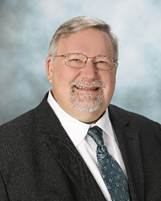
He directed the LEND Program at The Ohio State University and founded JBLM CARES, a $10 million autism resource center for military families. His writing spans clinical scholarship and long-form fiction. He is the author of The Mercy Directive and the six-novel Cassandra series, a completed political and medical fiction saga tracing the rise of the Cassandra system from its origins to its national and international legacy. His forthcoming memoir, The Quiet Architect, examines how conscience and structure collide in modern medicine.
He shares updates on LinkedIn.