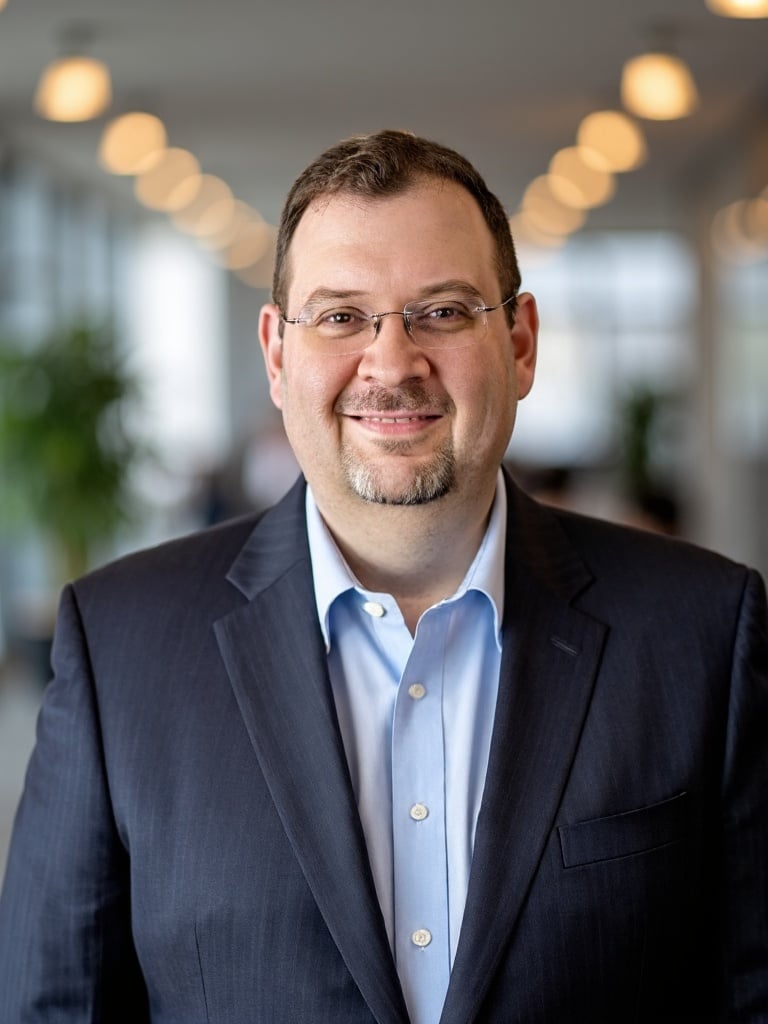
Muhamad Aly Rifai, MD is a psychiatrist, internist, and addiction medicine physician, and the founder, chief executive officer, and chief medical officer of Blue Mountain Psychiatry in the Greater Lehigh Valley, Pennsylvania. He has published 37 essays on KevinMD since September 2024 and has been a guest on The Podcast by KevinMD 28 times. His work runs on two tracks that meet in his own biography: what psychiatry can and cannot yet deliver for patients, and what happens to a physician when the federal government decides that a billing dispute is a crime.
This spotlight is part of a series on subscribers to the KevinMD enhanced author page.
He published six essays in 2024, 23 in 2025, and eight so far in 2026. Sixteen are about psychiatric treatment and the substances patients bring into the exam room: ketamine, transcranial magnetic stimulation, psychedelics, kratom, supplements, adult ADHD, telepsychiatry, and deprescribing. Eight are about the prosecution of physicians and the enforcement machinery behind it, a subject he writes about as a defendant who was acquitted by a federal jury in 2024. Five are about physician suicide, wellness, workplace violence, and bullying in training. The rest take up data accuracy and artificial intelligence (AI), federal health policy, and how a physician manages a public reputation.
Why are physicians being criminally prosecuted for health care fraud? Because the statutes are broad enough to reach ordinary practice, Rifai argues, and because few defendants can afford to test the government at trial. In “The continued unjust prosecution of physicians,” September 2024, he recounts his own federal trial in Pennsylvania, where the prosecutor told the jury he had stolen from the government and the jury acquitted him on every count in “less than four hours.” In “Criminalizing care: How the system turned on physicians,” March 2025, he sets his case beside those of other acquitted physicians, cites Pew Research data that only 0.4 percent of federal defendants are found not guilty, and notes that most physicians plead out because the risk of fighting is too great. His conclusion: “It is time to end the criminalization of care.”
Can a physician go to prison over a coding disagreement? One nearly did, and Rifai uses the case to argue that it should never happen again. In “Why CPT coding ambiguity harms doctors,” November 2025, he walks through United States v. Elfenbein, in which a Maryland urgent care physician was convicted over level 4 visits billed during COVID-19 and the judge then entered an acquittal after finding the Current Procedural Terminology rules ambiguous. Rifai draws the line in one sentence, “Fraud is billing for services not performed, forging notes, or lying about what happened,” and treats a level 3 versus level 4 dispute as something to correct through education and repayment. He pairs the prosecutions with automatic insurer downcoding as two halves of the same vise, and his instruction to prosecutors and payers is five words: “Save criminal courts for crime.”
Is telepsychiatry here to stay? Yes, in Rifai’s view, because patients will not give it up. In “The rise and fall of telepsychiatry,” December 2024, he traces the field from Pennsylvania’s approval of telepsychiatry reimbursement in 2006, when he was among the first psychiatrists seeing rural patients by video, through the pandemic that made it the default. He also describes the regulatory hazards from the inside: The federal charges he was acquitted of concerned telepsychiatry services he had provided in 2017. His prediction is that telepsychiatry is “here to stay because it is being demanded by patients.” How physicians described the sudden shift to virtual care as it happened is on the KevinMD record on COVID-19.
Does ketamine work for depression, and is at-home ketamine safe? It works fast for some patients, and Rifai does not think home use is ready. In “A psychiatrist’s 20-year journey with ketamine,” September 2025, he describes first watching ketamine lift a patient out of severe depression at the National Institute of Mental Health in the early 2000s, and using it in selected patients in the two decades since. His summary of the evidence is that ketamine is “fast, potent, and not for everyone,” and he insists it be paired with psychotherapy and a maintenance plan: “Ketamine opens the door. People still have to walk through.” On compounded products for home use, he says that for now “clinic-based care is the right side of the risk curve.”
Is kratom safe? No, Rifai writes, and he expects it to get worse before regulators act. In “Why kratom addiction is the next public health crisis,” July 2025, he puts regular use at an estimated 3 to 5 million American adults, explains that kratom’s alkaloids bind the same receptors opioids do, and describes withdrawal that mirrors opioid withdrawal. He calls it “another devastating epidemic hidden in plain sight.” In “Unregulated botanical products: the hidden risks of convenience store supplements,” December 2025, he widens the warning to the gummies, shots, and powders sold at convenience store counters, and lists the beliefs that sell them, beginning with “natural means safe and plant means gentle.” His verdict: “None of those statements hold up.” Physicians and pain patients argue the adjacent questions on the KevinMD record on opioids.
When should a psychiatric medication be stopped? When harm outweighs benefit, and with a plan, which Rifai says most patients never receive. In “How America became overmedicated, and what we can do about it,” April 2025, he cites Centers for Disease Control and Prevention data suggesting nearly one in four American adults may take a psychotropic medication, and observes that these drugs often become long-term prescriptions “by default rather than design.” In “How deprescribing in psychiatry offers a path to safer care,” December 2025, he gives the method: Map every medication to an indication and a start date, reduce the highest-risk drug first, taper slowly with scheduled follow-up, and learn to tell withdrawal from relapse. The sentence he hears most in clinic is “Nobody told me how to stop.” He is equally clear that deprescribing is not a campaign against medication: “America does not need a purge. America needs an upgrade.”
Are psychedelics ready for use in psychiatric treatment? Not yet, according to Rifai, and he has no patience for either the cure story or the menace story. In “Psychedelic-assisted therapy: science, safety, and regulation,” January 2026, he separates psilocybin and MDMA, which remain investigational and Schedule I, from esketamine, which the Food and Drug Administration (FDA) has approved for treatment-resistant depression under supervision. He explains why the FDA declined to approve MDMA for post-traumatic stress disorder, including trials in which participants could tell they had received the active drug. His reading of the literature: “Science supports some optimism, then science stops short.” He adds that the essay “does not serve as a green light for self-experimentation.”
What would reduce physician suicide? Confidential care with no career penalty, Rifai argues, and leaders who build systems around the risk data. He has worked with the Pennsylvania Physicians Health Program for more than a decade. In “Physician suicide: Addressing the silent epidemic,” December 2024, he lists the warning signs physicians voice about feeling trapped in health systems and writes that “we have not been listening.” In “Physician suicide prevention: a call to action,” October 2025, written after the death of Dr. Nolan Williams, a researcher in treatment-resistant depression, he addresses trainees, program directors, hospital executives, and journalists in turn, asks that credentialing questions cover current impairment only, and asks everyone to use humane language: “Say died by suicide.” He adds a point drawn from his other subject, that a physician acquitted in court can still be crushed by the years of process, because “acquittal does not end pressure.” Other physicians’ accounts are on the KevinMD record on physician suicide.
Is physician burnout the same as depression? No, and Rifai thinks the confusion costs lives. In “It’s time to operationalize physician wellness,” September 2025, he writes as a psychiatrist that burnout grows from workload, lost autonomy, and misaligned values, and that system redesign treats it, while depression, anxiety, and trauma-related conditions need therapy and medication. “We must stop mislabeling everything as burnout,” he writes, because the wrong label delays the right care. The same essay argues that hospitals should run wellness as “a core business function, not a poster on the breakroom wall,” with external mental health providers outside the employer’s records and protected time to use them. The long argument over causes and fixes is on the KevinMD record on physician burnout.
Are AI therapy chatbots safe for mental health care? Not when they present themselves as clinicians, Rifai argues. In “AI therapy chatbots are crossing into impersonation,” May 2026, he responds to Pennsylvania’s lawsuit alleging that a Character.AI chatbot claimed to be a licensed psychiatrist and supplied an invalid license number. “A chatbot predicts words,” he writes, while a psychiatrist listens for what the illness is trying to hide, and good therapy includes friction that a system built to keep the conversation going will not supply. He does not blame patients, since AI “did not create the mental health access crisis. We did.” He asks clinicians to add chatbot use to every psychiatric intake and gives the rule he wants developers held to: “AI should support clinicians, not counterfeit them.” What other physicians make of these tools is on the KevinMD record on artificial intelligence.

ADVERTISEMENT
Does a physician need a LinkedIn profile? Yes, Rifai writes, and he learned it under pressure. In “LinkedIn for physicians is not optional in 2026,” May 2026, he describes how, when negative coverage surrounded his name, LinkedIn was one of the few places where he could build a current public record in his own voice and help accurate information rank above stale material. “That was not vanity. That was survival,” he writes. He notes that AI answer engines now cite LinkedIn heavily, which makes a profile part of how machines describe a physician, and he warns absent colleagues that “you are letting the internet decide who you are.”
Rifai has been on The Podcast by KevinMD 28 times, from October 2024, when he told the story of his trial, to March 2026. Asked for a take-home message in that first episode, he told physicians to learn the coding rules in their field “because nobody else is going to help you with those.” In January 2026, discussing an excerpt from his book Doctor Not Guilty, it was “Do not wait for the knock on the door to learn the rules.” In January 2026, on physician suicide, he asked executives to “refuse to normalize preventable death.” Rifai sells into his subjects, and he says so: Doctor Not Guilty is his account of his prosecution and acquittal, and his practice offers the ketamine treatment and transcranial magnetic stimulation he writes about.
About the KevinMD enhanced author page: This spotlight exists because Rifai’s author page is an enhanced author page: his photo, biography, affiliations, and links on one page that ranks for his name and that ChatGPT, Perplexity, and Google’s AI read when someone asks who he is. The same branded attribution appears at the end of every article he has published, so each essay listed below points back to a page he controls. Subscribers get three things the free track does not:
✓Publish in 1 to 3 days. Free-track articles wait 5+ weeks, and the wait keeps growing. Subscribers skip the line.
✓Get a guaranteed podcast slot. Free slots fill within hours and the waiting list runs into the hundreds. Subscribers are guaranteed a spot.
✓Control your Google and AI identity. Your KevinMD author page is one of the highest-ranking results for your name. Make it represent you, in your words.
The enhanced author page is $99/month or $999/year.
Cancel anytime for any reason, and your author page will revert to the standard attribution.
Have questions before you subscribe? Contact Kevin.
Everything Muhamad Aly Rifai has written for KevinMD:
- “The continued unjust prosecution of physicians.” September 2024
- “The use of artificial intelligence in the enforcement of health care regulations.” September 2024
- “The role of social credit scores in the enforcement of health care regulations.” October 2024
- “Why ADHD in adults is more common than you think.” November 2024
- “The rise and fall of telepsychiatry.” December 2024
- “Physician suicide: Addressing the silent epidemic.” December 2024
- “The criminal enforcement of HIPAA.” January 2025
- “Super Bowl betting: How America’s favorite game fuels gambling addiction.” February 2025
- “The future of psychiatry: How AI and genetics are reshaping mental health care.” March 2025
- “How data accuracy failures are costing lives and money in health care.” March 2025
- “Criminalizing care: How the system turned on physicians.” March 2025
- “How America became overmedicated, and what we can do about it.” April 2025
- “When doctors die in silence: Confronting the epidemic of violence against physicians.” May 2025
- “When rock bottom is a turning point: Why the turmoil at HHS may be a blessing in disguise.” May 2025
- “In medicine and law, professions that society relies upon for accuracy.” May 2025
- “Physician patriots: the forgotten founders who lit the torch of liberty.” June 2025
- “How deep transcranial magnetic stimulation is transforming mental health care.” June 2025
- “How President Biden’s cognitive health shapes political and legal trust.” July 2025
- “Why kratom addiction is the next public health crisis.” July 2025
- “How insulin resistance may cause Alzheimer’s disease.” August 2025
- “A psychiatrist’s 20-year journey with ketamine.” September 2025
- “It’s time to operationalize physician wellness.” September 2025
- “The crisis in inpatient psychiatric care.” September 2025
- “Physician suicide prevention: a call to action.” October 2025
- “The rise of digital therapeutics in medicine.” November 2025
- “Why CPT coding ambiguity harms doctors.” November 2025
- “Physician legal rights: What to do when agents knock.” November 2025
- “How deprescribing in psychiatry offers a path to safer care.” December 2025
- “Unregulated botanical products: the hidden risks of convenience store supplements.” December 2025
- “Psychedelic-assisted therapy: science, safety, and regulation.” January 2026
- “How fNIRS and light therapy are shaping precision psychiatry.” January 2026
- “Physician due process: Surviving the court of public opinion.” February 2026
- “How to handle clinical disagreement with patients.” March 2026
- “The truth about psychiatric supplements and mental health.” March 2026
- “Confronting the reality of bullying in medicine today.” April 2026
- “AI therapy chatbots are crossing into impersonation.” May 2026
- “LinkedIn for physicians is not optional in 2026.” May 2026
Muhamad Aly Rifai on The Podcast by KevinMD:
- “Inside the courtroom: a doctor’s battle against a fraud investigation.” October 2024
- “How AI could disrupt the future of health care regulations.” November 2024
- “Why ADHD diagnosis in adults is often overlooked.” December 2024
- “Telepsychiatry’s role in a post-pandemic world: challenges and triumphs.” January 2025
- “Physician suicide: Understanding the silent epidemic and finding solutions.” February 2025
- “Understanding social credit scores in health care enforcement.” February 2025
- “Why are only physicians prosecuted under HIPAA?” February 2025
- “Data accuracy failures in health care.” April 2025
- “How AI and genetics are revolutionizing psychiatric diagnosis and treatment.” April 2025
- “Healers or criminals: the alarming trend of physician prosecution.” April 2025
- “Addressing America’s reliance on psychotropic medication.” May 2025
- “HHS at rock bottom: Could the current crisis be a blessing for U.S. health?” June 2025
- “From Founding Fathers to modern battles: physician activism in a politicized era.” July 2025
- “Deep transcranial magnetic stimulation for depression.” July 2025
- “Why we need a transparent standard for presidential cognitive health.” August 2025
- “AI isn’t hallucinating, it’s fabricating, and that’s a problem.” August 2025
- “Why kratom addiction is emerging as a hidden public health crisis.” September 2025
- “A psychiatrist reflects on two decades of treating depression with ketamine.” September 2025
- “Why physician wellness must be treated as a core business strategy.” October 2025
- “Fixing the system that fails psychiatric patients.” November 2025
- “A psychiatrist explains the new frontier of prescribed software treatments.” December 2025
- “Alzheimer’s link with insulin resistance.” December 2025
- “Physician suicide represents a silent epidemic demanding urgent reform.” January 2026
- “Invoking your rights is the only way to survive a federal investigation.” January 2026
- “Stopping medication requires as much skill as starting it.” February 2026
- “Ambiguous billing rules threaten every doctor in practice.” February 2026
- “Navigating the hype and hope of psychedelic medicine.” February 2026
- “Unregulated botanical products pose hidden risks in convenience stores.” March 2026