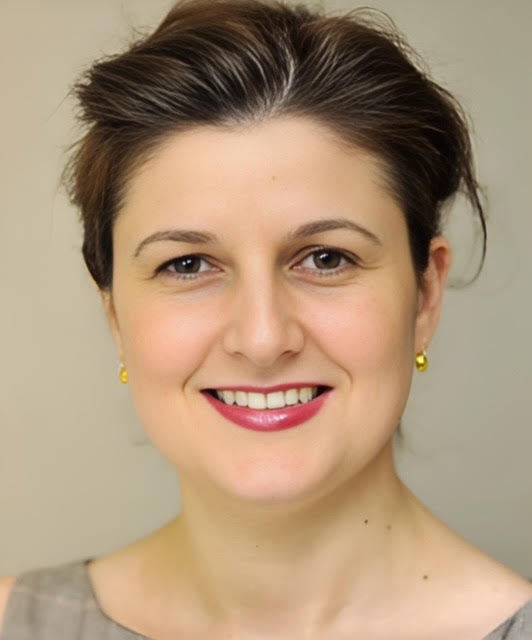
Jerina Gani, MD, MPH is a primary care physician in Boston, trained in internal medicine, with about twenty years in practice. She has published nine essays on KevinMD since July 2025 and has been a guest on The Podcast by KevinMD three times. Nearly all of that work makes one argument from her own schedule: a primary care physician can see fewer patients on fewer days, earn more, and give better care, and the patients are the first to notice.
This spotlight is part of a series on subscribers to the KevinMD enhanced author page.
She published six essays in 2025 and three so far in 2026. The 2025 essays are about mechanics: the doctor-patient relationship as a revenue strategy, billing accuracy, working alongside nurse practitioners and physician assistants, and what a three-day clinic week looks like from inside it. The 2026 essays turn to what the old schedule was costing her, and they end in September 2026 with the claim that physician well-being is a patient-care issue, not a wellness one.
Jerina Gani at a glance
9essays on KevinMD
3podcast episodes
July 2025writing on KevinMD since
10questions answered below
Questions Jerina Gani answers
- Can a primary care physician work less and earn more?
- Why does working harder in primary care fail?
- Should the 15-minute visit exist?
- How does trust affect a practice’s revenue?
- Why does billing accuracy matter so much in primary care?
- Should physicians and nurse practitioners compete or collaborate?
- Is primary care a good career for a medical student?
- What is worse than burnout, according to Gani?
- What does a physician get back by working fewer hours?
- Is physician burnout a wellness problem or a patient-care problem?
Can a primary care physician work less and earn more?
Yes, according to Jerina Gani, because she did it, and she gives the numbers. In “My journey to loving primary care again,” July 2025, she describes tracking her time and her revenue per visit, then rebuilding the schedule around what she found: “Now I work only 3 days a week seeing patients every 30 minutes.” In “Physician income vs. burnout: Why working harder fails,” November 2025, the count is 22 rushed visits a day cut to 16, and her income “increased to more than when I worked full-time.” “Overcoming physician burnout with a new care model,” April 2026, states the principle behind all three: “the structure always wins over volume.” Her essays sit alongside the KevinMD record on physician burnout, where the sharpest recent argument is that most interventions add programs without removing work.
Why does working harder in primary care fail?
Because rushing destroys the value of the visit, Gani argues, for the patient and for the physician’s income at once. In “Physician income vs. burnout: Why working harder fails,” November 2025, she writes that “working harder in medicine does not make you richer” and lists what a rushed visit costs: missed problems, thin documentation, underbilling, and no time for prevention. Her summary of the trade is that “medicine rewards quality, not speed.”
Should the 15-minute visit exist?
No, in Gani’s view. Asked about it on The Podcast by KevinMD in September 2025, she said that “that fifteen-minute visit should not exist.” Her own visits run thirty minutes, and in “The most overlooked revenue strategy in primary care: trust,” August 2025, she describes what the extra time buys: patients who “complete follow-up care,” accept preventive services, and stop moving from one provider to the next.
How does trust affect a practice’s revenue?
Directly, Gani writes, and without adding time. In “The most overlooked revenue strategy in primary care: trust,” August 2025, her claim is that a trusted relationship means fewer no-shows, less attrition, and patients who bring their families, and that the relationship is “how I personally began to earn more while seeing fewer patients.” The rule she gives for a full schedule: “Trust doesn’t require more time; it requires more intention.”
Why does billing accuracy matter so much in primary care?
Because it decides income and liability at the same time, Gani argues, and nobody teaches it in training. In “The overlooked power of billing in primary care,” August 2025, she writes that “under-coding is common in primary care” because physicians undervalue their services out of habit or fear, while over-coding and incomplete documentation invite audits and repayment demands. Learning to code correctly, she says, is what let her increase revenue “while seeing only sixteen patients a day.”
Should physicians and nurse practitioners compete or collaborate?
Collaborate, and Gani says so as a physician who works alongside nurse practitioners every day. In “Unity in primary care: Why I believe physicians and NPs/PAs must work together toward the same goal,” August 2025, she writes that “we simply cannot afford to waste energy on turf battles,” describes the different training each brings to a visit, and closes with the instruction to “see each other as allies, not rivals.” Hers is one position in a long argument on the KevinMD record on scope of practice, which cites physician, nurse practitioner, and PA authors at the same weight.
Is primary care a good career for a medical student?
Yes, Gani argues, and a better one than its reputation suggests. In “The hidden rewards of a primary care career,” September 2025, written to trainees choosing a path, she calls primary care “one of the most rewarding, and surprisingly profitable, paths in medicine” and names the reward no other specialty matches: caring for parents, then their children, then their grandchildren. Her advice is seven words: “Do not shy away from primary care.” The debt, prestige, and specialty-choice arguments students make for themselves are on the KevinMD record on medical school.
What is worse than burnout, according to Gani?
Losing yourself, and she thinks it is happening to the best physicians she knows. In “Physician burnout is quietly costing doctors themselves,” May 2026, she describes colleagues “slowly becoming emotionally numb,” not because they were poor doctors but because “the structure of medicine was draining the humanity out of them.” The question she asks physicians to put to themselves is what they want their lives to look like outside medicine, and her warning is that after enough years many stop asking it.
What does a physician get back by working fewer hours?
Attention, in Gani’s account, and patients notice it first. In “Overcoming physician burnout with a new care model,” April 2026, she describes twelve- and thirteen-hour days seeing more than 22 patients, then the decision to work fewer days with longer visits, after which “patient interactions became more meaningful” and patients “felt more supported, more understood, and more confident in their care.” In September 2026 she adds what the time did for her clinical thinking: she “could sit with uncertainty instead of rushing toward the easiest answer.”
Is physician burnout a wellness problem or a patient-care problem?
A patient-care problem, Gani argues in her most recent essay, and she has changed her mind about what dedication means. In “Why primary care burnout is really a patient-care problem,” September 2026, she writes that exercise, meditation, and resilience training “cannot fully compensate for workloads designed around chronic overextension,” and that protecting a physician’s cognitive and emotional capacity is part of quality of care rather than separate from it. Reducing her hours, she found, did not make her less committed: “I became a better doctor.” The line she ends on is a revision of her earlier self: “I no longer believe that exhaustion is proof of devotion.”
Real physician voices, twice a week
Free, and one click to unsubscribe.
Questions on this page · All spotlights
Gani has been on The Podcast by KevinMD three times: on redesigning her practice in September 2025, on the financial and emotional rewards of primary care in February 2026, and on seeing fewer patients as the cure for burnout in July 2026. Asked for a take-home message in the first, she pointed listeners to the course she teaches for primary care clinicians at Dr. Gani Secrets and gave her motto, “Work less, earn more in primary care.” In the last she described her dream for primary care physicians who “end the day feeling satisfied rather than burned out,” and told listeners that physicians “have to speak up, nicely,” because no one will do it for them.
About the KevinMD enhanced author page: This spotlight exists because Gani’s author page is an enhanced author page: her photo, biography, affiliations, and links on one page that ranks for her name and that ChatGPT, Perplexity, and Google’s AI read when someone asks who she is. The same branded attribution appears at the end of every article she has published, so each essay listed below points back to a page she controls. Subscribers get three things the free track does not:
Publish in 1 to 3 days. Free-track articles wait 5+ weeks, and the wait keeps growing. Subscribers skip the line.
Get a guaranteed podcast slot. Free slots fill within hours and the waiting list runs into the hundreds. Subscribers are guaranteed a spot.
Control your Google and AI identity. Your KevinMD author page is one of the highest-ranking results for your name. Make it represent you, in your words.
Enhanced author page
Upgrade your author page
The enhanced author page is $99/month or $999/year.
Cancel anytime for any reason, and your author page will revert to the standard attribution.
Have questions before you subscribe? Contact Kevin.
Everything Jerina Gani has written for KevinMD:
- “My journey to loving primary care again.” July 2025
- “The most overlooked revenue strategy in primary care: trust.” August 2025
- “The overlooked power of billing in primary care.” August 2025
- “Unity in primary care: Why I believe physicians and NPs/PAs must work together toward the same goal.” August 2025
- “The hidden rewards of a primary care career.” September 2025
- “Physician income vs. burnout: Why working harder fails.” November 2025
- “Overcoming physician burnout with a new care model.” April 2026
- “Physician burnout is quietly costing doctors themselves.” May 2026
- “Why primary care burnout is really a patient-care problem.” September 2026
Jerina Gani on The Podcast by KevinMD:
- “How one physician redesigned her practice to find joy in primary care again.” September 2025
- “Primary care offers unexpected financial and emotional wealth.” February 2026
- “Why the cure for physician burnout is seeing fewer patients.” July 2026