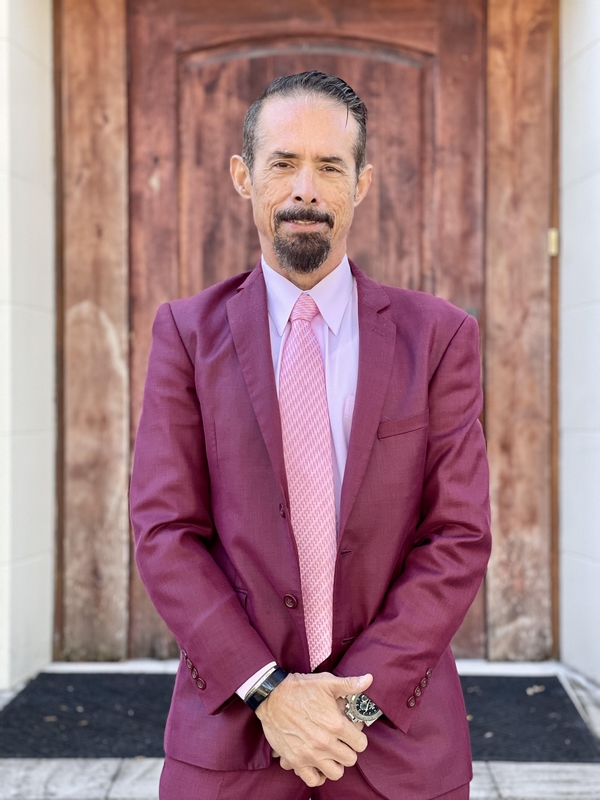
Francisco M. Torres, MD, is an interventional physiatrist who specializes in spine-related pain syndromes at Florida Spine Institute and Wellness in Clearwater, Florida, and is certified by the American Board of Physical Medicine and Rehabilitation and the American Board of Pain Medicine. He has published 60 essays on KevinMD since July 2022 and has been a guest on The Podcast by KevinMD ten times. His argument, from the pain clinic to the gym, is that evidence beats a shortcut, whether the shortcut is an insurer’s algorithm or a peptide ordered online.
This spotlight is part of a series on subscribers to the KevinMD enhanced author page.
He published four essays in 2022, eight in 2023, nine in 2024, ten in 2025, and 29 so far in 2026. Ten of them concern pain medicine and spine care, from pain management referrals to radiofrequency ablation and the multifidus muscle. Nine concern weight, fitness, and longevity, usually asking what the evidence supports before a patient spends money or hope on a quick fix. Twelve, starting in April 2025, follow his own prostate cancer surgery and recovery as a patient. The rest cover the human side of practice, medical ethics, and his career. Six essays are co-authored, with Felix S. Linetsky, MD, Christian Youssef, Simon Wahba, Purab Patel (two), and Emory Hubbard, and five are excerpts from his books.
Francisco M. Torres at a glance
60essays on KevinMD
10podcast episodes
July 2022writing on KevinMD since
12questions answered below
Questions Francisco M. Torres answers
- Why does a referral to pain management feel like an accusation?
- What is the back pain cause doctors overlook?
- What does radiofrequency ablation do to the back muscles of a young patient?
- What should a physical therapy referral contain?
- Should patients try BPC-157 or other peptides to rebuild muscle?
- Will a pill ever replace exercise?
- Does paying cash change the standard of care?
- Why does the physical exam still matter when imaging is so good?
- Which comes first, chronic pain or obesity?
- Can a wearable’s heart rate variability score tell me I am overtraining?
- Can people over sixty keep getting fitter?
- What should men do before and after prostate cancer surgery?
Why does a referral to pain management feel like an accusation?
Because patients have learned to expect suspicion, Torres argues. In “30 years in pain management: Transforming lives beyond opioids,” June 2024, he says pain management is “more than just medicating patients” and describes Tim, who arrived bedridden and in his 70s was working with a physical therapist and a personal trainer to ride his motorcycle again, and Diana, who went skydiving at 79 after he stopped a tramadol prescription that was causing memory problems first mistaken for Alzheimer’s disease. In “Why a pain management referral feels like an accusation,” September 2026, he writes that “fears like Tim’s are among the most common I encounter in practice,” and cites a secret shopper study in which about 40 percent of primary care practices declined new patients who were taking opioids for chronic pain. His fix starts with the referring physician, who should present the visit as “an escalation of care.” The KevinMD record on opioids collects what pain patients say.
What is the back pain cause doctors overlook?
The multifidus muscle, Torres argues. In “Multifidus dysfunction is the back pain cause we overlook,” October 2026, he calls it “the spine’s primary stabilizer” and lays out a stepped approach: ultrasound or magnetic resonance imaging for a baseline, motor control exercise as first-line rehabilitation, temporary peripheral nerve stimulation for some patients, and an implantable restorative device only for patients with persistent disability and clear multifidus dysfunction who have not improved with conservative care. He reports that two-year pivotal trial results showed “76 percent of participants had substantial, clinically meaningful improvement.” He adds that a large randomized trial comparing temporary stimulation with the permanent implant is still missing.
What does radiofrequency ablation do to the back muscles of a young patient?
It can weaken the muscle that holds the spine steady, Torres and his co-author Emory Hubbard argue. In “Radiofrequency ablation and the young back pain patient,” July 2026, they explain that insurers began requiring medial branch blocks before facet joint injections, which pushed more young patients toward ablation, and that “we are denervating a muscle.” A 2024 systematic review, they write, connected lumbar ablation to measurable multifidus atrophy. They ask for an explicit consent conversation, muscle assessment on imaging at baseline and follow-up, and “a treatment algorithm that weighs durability of relief against long-term structural cost.” The KevinMD record on medical ethics collects what other physicians say about informed consent.
What should a physical therapy referral contain?
More than a signature, Torres argues. In “A physical therapy referral needs more than a signature,” August 2026, he contrasts the generic “evaluate and treat” script with the Puerto Rico system in which he trained. He does not want that model back, since direct access to physical therapy is now allowed in some form in every state, unrestricted in 21, but he concludes that the critical factor is “not who signs the referral, but whether a comprehensive evaluation was conducted beforehand.” When a patient reports that therapy did not work, his first question is whether the diagnosis was right. The KevinMD record on medical errors collects what physicians say about diagnostic error.
Should patients try BPC-157 or other peptides to rebuild muscle?
Not yet, Torres argues. In “BPC-157 safety remains uncertain without human evidence,” August 2026, he describes a 62-year-old patient whose shoulder had healed with an injection and physical therapy but who asked about the peptide for the thinned muscle around it. Torres writes that “there is a gap between preclinical promise and clinical certainty,” and adds that “almost every trial uses a single dose.” He told the patient “no such shortcut exists yet” and recommended the prescription that had healed the shoulder: load the tissue and be patient with the timeline. The KevinMD record on glucagon-like peptide-1 (GLP-1) drugs collects what physicians say about compounded drugs and peptides.
Will a pill ever replace exercise?
Torres doubts it, and says history is the reason. In “The exercise pill is back, and history urges caution,” October 2026, he describes ENV-308, an oral compound designed to mimic a molecule released during intense exercise, whose Phase 1 trial in 88 healthy volunteers found it well tolerated. But Phase 1 studies are “focused on safety, not efficacy,” and he recalls GW501516, shelved after a cancer signal in long-term rodent studies, and myostatin inhibitors that added muscle but did not consistently deliver strength or function. His conclusion: “Exercise still does something no pill has replicated.” The KevinMD record on GLP-1 drugs collects what physicians say happens when patients stop taking them.
Does paying cash change the standard of care?
It should not, Torres argues. In “Does cash-pay medicine change the standard of care?” September 2026, he describes a regenerative medicine webinar at which the presenter justified a high cash price as more individualized care but offered “stories, anecdotes, not numbers.” He writes that “Medicine has never come with a warranty, no matter how you pay,” and asks cash practices to go beyond standard informed consent by stating plainly that payment buys access to treatment and not a guaranteed result. The KevinMD record on medical ethics collects what physicians say about honesty and disclosure.
Why does the physical exam still matter when imaging is so good?
Because imaging often misses what an exam finds, Torres argues. In “Physical exams: the life-saving tool doctors must reclaim in modern medicine,” December 2024, he describes Mr. Bautista, whose scans showed spinal stenosis but whose back pain turned out to be shingles, found only because Torres examined his lower back. He reports that insufficient physical examination is “the number one most common cause of diagnostic and treatment errors,” citing a study of 208 adverse events in which 63 percent of the errors came from doctors failing to examine the patient physically. The KevinMD record on medical errors collects what physicians say about diagnostic error.
Which comes first, chronic pain or obesity?
Either can, and treating one alone fails, Torres argues. In “We cannot ignore nutrition’s impact on both pain and obesity,” October 2022, an excerpt from Epigenetics and the Psychology of Weight Loss, he writes that “reducing pain and body weight should be approached in a multifactorial way,” and warns doctors against assuming weight explains every symptom. He cites a study of patients with knee osteoarthritis in which only 12.9 percent of men and 7.7 percent of women reached the minimum recommended amount of physical activity. The KevinMD record on diabetes and obesity collects what physicians say about blame, bias, and body mass index.
Can a wearable’s heart rate variability score tell me I am overtraining?
Only with a clinician’s help, Torres argues. In “Interpreting heart rate variability beyond wearable scores,” August 2026, he describes a 58-year-old recreational cyclist who brought months of data to the exam room. Torres, himself a competitive masters physique athlete, trends his own numbers because “one low reading is noise and a week-long pattern is signal.” He notes that wearables now agree with sleep laboratory testing at rates of 85 to 90 percent for total sleep time and sleep stages, but that resting variability falls with age, so a 58-year-old’s low reading may simply be his baseline.
Can people over sixty keep getting fitter?
Torres says yes. In “The key to longevity: fitness, mindset, and nutrition,” March 2025, an excerpt from Embracing Fitness as You Age, he argues that “it is never too late to embrace health, vitality, and joy.” He cites a meta-analysis by Alex Zhavoronkov, Sergey Young, and Marina Matina finding that people satisfied with their age enjoyed life more, and that these measures did not correlate nearly as strongly with chronological age. The KevinMD record on aging and dementia collects what physicians say about longevity and anti-aging medicine.
What should men do before and after prostate cancer surgery?
Start pelvic floor training early, Torres argues from his own recovery. In “A doctor’s own prostate cancer recovery,” November 2025, he describes months of urinary incontinence after a robot-assisted radical prostatectomy and a first therapy visit that “shattered the illusion that anatomical knowledge equated to functional mastery.” He recommends starting pelvic floor training four to six weeks before surgery and again seven to ten days after it, once the catheter is out, with biofeedback, and says that “Prehabilitation is not a luxury.” In “The prostate cancer recovery few men are warned about,” April 2026, an excerpt from Before and Beyond the Scalpel, he calls the gap in how patients are prepared “a systems failure that is causing unnecessary suffering.”
Real physician voices, twice a week
Free, and one click to unsubscribe.
Questions on this page · All spotlights
Francisco M. Torres on The Podcast by KevinMD: He first came on the show in August 2022 to talk about non-judgmental empathy, and he has returned nine times: nutrition and pain in December 2022, missed signs of depression in January 2023, Ehlers-Danlos syndrome and regenerative injection therapy with Felix S. Linetsky, MD, in August 2023, his book Dr. T’s Drop the Fat Diet in February 2024, humanizing medicine in July 2024, longevity after 60 in April 2025, prostate cancer recovery in December 2025, cybersecurity with Purab Patel in June 2026, and radiofrequency ablation in August 2026. His take-home messages are plain. In December 2022 it was that patients need “a coach, a good doctor who believes in you.” In April 2025 he said “you are never too old to change.” In June 2026 he said that cybersecurity is now a patient safety issue and that AI “is a tool, and it is not a truth machine.” In August 2026 he said doctors should not let their treatment be “dictated by an algorithm from the people who pay your bill.” He has written five books, and the shows and essays name them: Epigenetics and the Psychology of Weight Loss, Dr. T’s Drop the Fat Diet, Beyond Diagnosis, Embracing Fitness as You Age, and Before and Beyond the Scalpel.
About the KevinMD enhanced author page: This spotlight exists because Torres’s author page is an enhanced author page: his photo, biography, affiliations, and links on one page that ranks for his name and that ChatGPT, Perplexity, and Google’s AI read when someone asks who he is. The same branded attribution appears at the end of every article he has published, so each essay listed below points back to a page he controls. Subscribers get three things the free track does not:
Publish in 1 to 3 days. Free-track articles wait 5+ weeks, and the wait keeps growing. Subscribers skip the line.
Get a guaranteed podcast slot. Free slots fill within hours and the waiting list runs into the hundreds. Subscribers are guaranteed a spot.
Control your Google and AI identity. Your KevinMD author page is one of the highest-ranking results for your name. Make it represent you, in your words.
Enhanced author page
Upgrade your author page
The enhanced author page is $99/month or $999/year.
Cancel anytime for any reason, and your author page will revert to the standard attribution.
Have questions before you subscribe? Contact Kevin.
Everything Francisco M. Torres has written for KevinMD:
- “The importance of non-judgmental empathy.” July 2022
- “Are we too scared to talk to our patients about their weight?” September 2022
- “We cannot ignore nutrition’s impact on both pain and obesity.” October 2022
- “Not listening carefully to a vulnerable patient can become a matter of life or death.” November 2022
- “How technology is transforming medicine and making distance healing a reality.” January 2023
- “Why taking risks is worth it: a doctor’s journey from uncertainty to opportunity.” January 2023
- “Combining academic medicine and private practice: a success story.” February 2023
- “Finding hope and relief: a physical therapist’s journey with chronic pain and Ehlers-Danlos Syndrome (EDS).” May 2023
- “Optimize your knee injury recovery without surgery.” July 2023
- “Patient respect in medicine: Ensuring well-being and trust.” August 2023
- “Debating the role of psychiatric assessments in medical decisions.” September 2023
- “Ozempic: miracle drug or a band-aid for obesity?” December 2023
- “Lessons from treating a transgender patient.” January 2024
- “A intern’s journey in delivering tough diagnoses.” February 2024
- “From pain management to Port au Prince: a doctor’s journey in disaster relief.” February 2024
- “Unlocking compassion: lessons from a prison clinic.” April 2024
- “Fulfilling fatherhood and a thriving medical practice: my story.” April 2024
- “Reviving humanity in medicine: Why doctors must embrace the human art of healing.” May 2024
- “30 years in pain management: Transforming lives beyond opioids.” June 2024
- “The ethical dilemma of accessible parking permits.” July 2024
- “Physical exams: the life-saving tool doctors must reclaim in modern medicine.” December 2024
- “The key to longevity: fitness, mindset, and nutrition.” March 2025
- “A philosophical shift: the doctor’s journey into the role of patient.” April 2025
- “What prostate cancer taught this physician about being a patient.” May 2025
- “Why sedation access varies by clinic and hospital.” August 2025
- “When life makes you depend on Depends.” August 2025
- “A pilgrimage to Italy with prostate cancer.” October 2025
- “Physician work-life balance and family.” October 2025
- “A doctor’s own prostate cancer recovery.” November 2025
- “Physician grief and patient loss: Navigating the emotional toll of medicine.” December 2025
- “How I got Dr. Luis Torres Díaz on Wikipedia: a grandson’s journey.” December 2025
- “Physician investment in patients: ethical risks and rewards.” January 2026
- “The burden of being both doctor and family: an ethical reflection.” January 2026
- “Prostate cancer genomic testing: a physician-patient’s perspective.” January 2026
- “Is testosterone replacement safe after prostate cancer surgery?” January 2026
- “Prostate cancer screening limitations: Why PSA isn’t enough.” February 2026
- “The enduring value of the physical exam in modern medicine.” February 2026
- “A celebrity patient and the core of patient confidentiality.” March 2026
- “Navigating postoperative complications and post-surgical depression.” March 2026
- “Navigating the cybersecurity challenges of artificial intelligence in medicine.” March 2026
- “Why MRI classification systems improve spinal stenosis care.” March 2026
- “How ethical dilemmas in medicine affect body donation.” April 2026
- “Unrecognized depression is a hidden crisis in medicine.” April 2026
- “The $500,000 drug and the cost of modern medicine.” April 2026
- “The prostate cancer recovery few men are warned about.” April 2026
- “PRP therapy protocols lack expert consensus.” May 2026
- “Why thymic involution is the aging organ doctors miss.” May 2026
- “What happened when I brought faith into medicine.” June 2026
- “Radiofrequency ablation and the young back pain patient.” July 2026
- “Depression after spinal cord injury hides in plain sight.” July 2026
- “Discipline isn’t the missing piece. Agency is..” July 2026
- “A physical therapy referral needs more than a signature.” August 2026
- “A survivor waits on testosterone after prostate cancer.” August 2026
- “BPC-157 safety remains uncertain without human evidence.” August 2026
- “Interpreting heart rate variability beyond wearable scores.” August 2026
- “Why a pain management referral feels like an accusation.” September 2026
- “Does cash-pay medicine change the standard of care?” September 2026
- “A $480 editing fee and the fairness of academic publishing.” October 2026
- “Multifidus dysfunction is the back pain cause we overlook.” October 2026
- “The exercise pill is back, and history urges caution.” October 2026
Francisco M. Torres on The Podcast by KevinMD:
- “Non-judgmental empathy in the exam room.” August 2022
- “Nutrition’s impact on pain and obesity.” December 2022
- “Missed signs: a doctor’s reflection on depression.” January 2023
- “Ehlers-Danlos Syndrome and regenerative injection therapy.” August 2023
- “Going beyond the usual advice for eating healthy.” February 2024
- “Humanizing medicine in a high-tech world.” July 2024
- “Fitness, mindset, and nutrition: Unlocking longevity after 60.” April 2025
- “A doctor’s humbling journey through prostate cancer recovery.” December 2025
- “Why AI cybersecurity is now a patient safety issue.” June 2026
- “A back procedure that can weaken a young spine.” August 2026