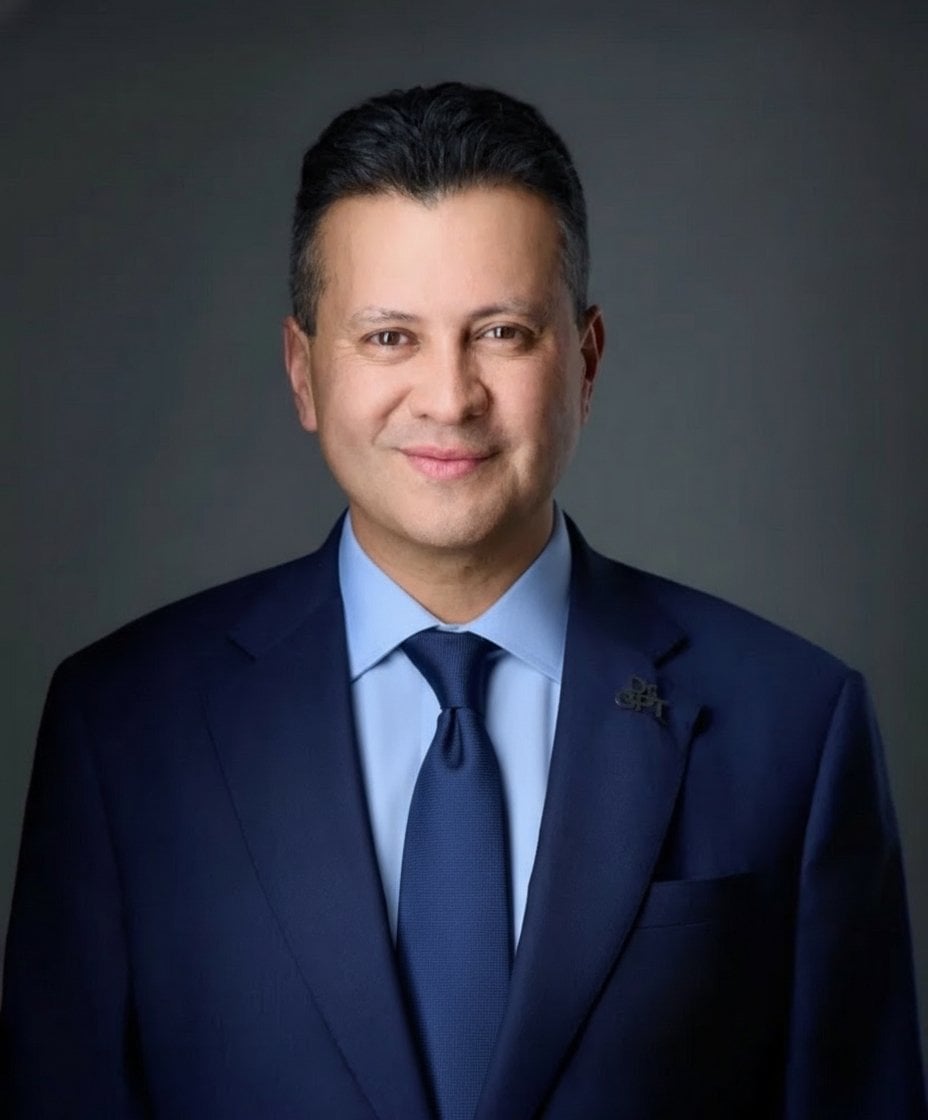
Harvey Castro, MD, MBA is an emergency physician, chief AI officer, and physician futurist known as DR GPT™. He has published 98 essays on KevinMD since January 2023 and has been a guest on The Podcast by KevinMD three times. Most of that work is about the same two questions: what medicine should let a machine do, and who is responsible when it does.
This spotlight is part of a series on subscribers to the KevinMD enhanced author page.
He published 59 essays in 2023, 18 in 2024, 11 in 2025, and 10 so far in 2026. The 2023 pieces cover ChatGPT’s first year in medicine as it happened, including privacy, hallucinations, and whether the tool could ease the physician and nursing shortage. In 2024 and 2025 he wrote more about hardware and standards, including Apple Vision Pro, ambient sensors, and the protocol that lets a model read a chart. The 2026 essays are aimed at people who make decisions: who is liable for an AI-drafted note, what a hospital board gets wrong, and what a physician should do before trusting any output. He has also written regularly about burnout, resilience, leadership, and what a physician’s job becomes once a machine handles recall.
Harvey Castro at a glance
98essays on KevinMD
3podcast episodes
January 2023writing on KevinMD since
12questions answered below
Questions Harvey Castro answers
- Will AI replace physicians?
- Who is liable when an AI drafts a clinical note and a physician signs it?
- What mistakes do hospital boards make with AI strategy?
- How should physicians use AI responsibly?
- What safety protocols should a hospital have before deploying ChatGPT or another large language model?
- What is agentic AI in medicine?
- Why does clinical AI underperform at the bedside, and what is the model context protocol?
- Can a large language model be HIPAA compliant?
- Is it safe to paste patient or company data into ChatGPT?
- How common is physician burnout, and what helps?
- Can AI fix the physician and nursing shortage?
- What makes a physician necessary in the age of AI?
Will AI replace physicians?
No, according to Harvey Castro, and he thinks the question distracts from a better one. In “Clinical AI should replace workflows, not physicians,” September 2026, he writes that “the most useful first wave of clinical AI will not replace physician judgment.” The work he wants automated is the administrative work that should never have been assigned to physicians. His answer sits among many others on the same question in the KevinMD record on artificial intelligence.
Who is liable when an AI drafts a clinical note and a physician signs it?
The physician, and Castro says the profession has not paid attention to the contract language that makes it so. “AI in clinical documentation: Who is liable for medical errors?,” February 2026, opens with an attending signing a note he did not write. Vendors, Castro observes, assign ownership of every output to the user and disclaim the rest, which leaves the clinician responsible for a document that also serves as a billing instrument and as evidence in a malpractice claim. His conclusion: “When AI-generated reasoning meaningfully shapes care, authorship determines accountability.” Accountability, he writes, does not disappear because the reasoning came from a system that cannot hold a license or testify in court. The same gap runs through the KevinMD record on medical errors.
What mistakes do hospital boards make with AI strategy?
The most common one, in Castro’s account, is approving tools before deciding what problem they are meant to solve. In “AI strategy for hospitals: the 5 mistakes boards make,” September 2026, he writes that in many organizations “AI is entering through the side door before leadership has created a clear strategy.” He recommends that boards begin with the problem and that no initiative be approved without input from the clinicians who will have to use it.
How should physicians use AI responsibly?
Castro’s first rule is to “treat AI output as a draft, not a decision,” from “7 rules for how physicians should use AI responsibly,” September 2026, and the other six follow from it. He expects verification, more than recall, to be the skill that matters in the next decade, and he writes that a tool should make clinicians better informed without making them less responsible.
What safety protocols should a hospital have before deploying ChatGPT or another large language model?
Castro lists five, all of them required before go-live. “ChatGPT Health in hospitals: 5 essential safety protocols,” January 2026, lays them out: encryption and access control, a human in the loop, simulated testing in a sandbox, bias audits, and plain disclosure to patients. Without them, he writes, hospitals risk “misinformation, privacy breaches, and erosion of patient trust.”
What is agentic AI in medicine?
Not a better chatbot, Castro writes, but a system that acts on its own within limits, which changes what supervising it means. In “Agentic AI in medicine: Moving beyond ChatGPT,” January 2026, he describes systems that “break down complex tasks into intermediate steps and execute them autonomously” inside set limits, and that keep a patient’s context from one step to the next instead of starting over with each prompt. Checking an agent’s work, he argues, is not the same task as checking a paragraph of text.
Why does clinical AI underperform at the bedside, and what is the model context protocol?
Because the model cannot see the chart, Castro argues, and the protocol is one answer to that. “Model context protocol: the standard that brings AI into clinical workflow,” May 2025, opens with the claim that “the real limitation of clinical AI isn’t the model; it’s the context.” His examples are the blood pressure entered three minutes ago and the allergy buried in yesterday’s note, neither of which the model can see. The essay then explains a standard that lets an agent reach clinical data without a custom build for every vendor. His documentation writing sits next to the KevinMD record on the electronic health record.
Can a large language model be HIPAA compliant?
Not by default, and Castro treats that gap as the main obstacle to clinical use. In “Why Grok 4 could be the next leap for HIPAA-compliant clinical AI,” July 2025, he writes that most models still sit outside the perimeter that protects patient data, and that the heavy lift of getting one inside falls on hospitals, not vendors. His conclusion is addressed to physicians: “Clinicians who master HIPAA-compliant AI will replace those who don’t.”
Is it safe to paste patient or company data into ChatGPT?
No, because the data can end up outside the organization’s control, and Castro made that point in April 2023, before most health systems had a policy. “The unintended consequences of feeding company data into ChatGPT: a guide to safeguarding your intellectual property” used the Samsung leak to warn that users “might unintentionally expose their proprietary research data to a third party.” He had made the compliance version of the argument two months earlier, in “AI in health care: Meeting HIPAA standards with ChatGPT,” February 2023.
How common is physician burnout, and what helps?
Common enough, Castro writes, to be a systems problem rather than an individual one. In “The invisible epidemic: How physician burnout is affecting the medical community,” April 2023, he cites studies showing “approximately 50 percent of physicians experience symptoms of burnout,” and connects it to patient care and medical errors. Three years later his emphasis had shifted. “Physician resilience: Why systems matter more than heroism,” February 2026, argues that the physicians who last over a career rely on “a well-built internal operating system” instead of willpower. Both essays belong to the territory of the KevinMD record on physician burnout.
Can AI fix the physician and nursing shortage?
Castro’s answer is that it can reduce the load on the people who remain, but it does not produce more of them. “Tackling the health care crisis with artificial intelligence: Combating physician and nursing shortages in the United States,” March 2023, cites the Association of American Medical Colleges projection of “a shortage of 54,100 and 139,000 physicians by 2033,” and separates the causes technology can affect, such as administrative burden and burnout, from the ones it cannot, such as an aging population and a workforce nearing retirement. The staffing side of that argument continues in the KevinMD record on nursing.
What makes a physician necessary in the age of AI?
Judgment in situations no model has been trained on, in Castro’s telling. “In the age of AI, what makes a physician REAL?,” February 2026, opens at 3:17 a.m. in a trauma bay with a hypotensive patient, no CT yet, and no algorithm offering an answer. Castro argues that as the tools improve, physicians have to become “less defined by recall, more defined by judgment,” and that no algorithm resolves the case where a treatment with a statistical benefit conflicts with what the patient values.
Real physician voices, twice a week
Free, and one click to unsubscribe.
Questions on this page · All spotlights
Castro has been on The Podcast by KevinMD three times: on the physician and nursing shortage in April 2023, on Apple Vision Pro and diagnostics in May 2024, and on hospital AI guardrails in March 2026. Asked in the last of those for a take-home message, he told listeners to “think of AI like riding a bike.” The fear at the start is normal, he said, and the only way past it is to use the tool.
About the KevinMD enhanced author page: This spotlight exists because Castro’s author page is an enhanced author page: his photo, biography, affiliations, books, and links on one page that ranks for his name and that ChatGPT, Perplexity, and Google’s AI read when someone asks who he is. The same branded attribution appears at the end of every article he has published, so each essay listed below points back to a page he controls. Subscribers get three things the free track does not:
Publish in 1 to 3 days. Free-track articles wait 5+ weeks, and the wait keeps growing. Subscribers skip the line.
Get a guaranteed podcast slot. Free slots fill within hours and the waiting list runs into the hundreds. Subscribers are guaranteed a spot.
Control your Google and AI identity. Your KevinMD author page is one of the highest-ranking results for your name. Make it represent you, in your words.
Enhanced author page
Upgrade your author page
The enhanced author page is $99/month or $999/year.
Cancel anytime for any reason, and your author page will revert to the standard attribution.
Have questions before you subscribe? Contact Kevin.
Everything Harvey Castro has written for KevinMD:
- “Revolutionizing medicine: How ChatGPT is changing the way we think about health care.” January 2023
- “The DNA of entrepreneurs: How your genes could determine your business success.” January 2023
- “AI in health care: Meeting HIPAA standards with ChatGPT.” February 2023
- “Why human touch matters in health care: the limitations of AI.” February 2023
- “Revolutionize your health and fitness with ChatGPT’s modern weight loss hacks.” March 2023
- “Transforming health care with AI: Google Bard and BioGPT lead the way.” March 2023
- “The dangers of sharing personal health information online: Protecting your privacy and health.” March 2023
- “The rise of chatbots for patient empowerment.” March 2023
- “How to overcome telemedicine’s biggest obstacles.” March 2023
- “From rural communities to underserved populations: How telemedicine is bridging health care gaps.” March 2023
- “A new era of collaboration between AI and health care professionals.” March 2023
- “The future of education: AI empowerment, YouTube college credits, and the impact on traditional colleges.” March 2023
- “Tackling the health care crisis with artificial intelligence: Combating physician and nursing shortages in the United States.” March 2023
- “ChatGPT: the Napster of the AI world?” April 2023
- “AI and health care: the elephant in the board room.” April 2023
- “The crystal ball of cinema: How movies predict the future of technology.” April 2023
- “Why health care careers are essential in the age of AI: Encouraging our children to pursue the irreplaceable human touch.” April 2023
- “How AI can help alleviate the strain on the medical system.” April 2023
- “Strategies for effective patient communication: a guide for physicians with the aid of ChatGPT.” April 2023
- “The invisible epidemic: How physician burnout is affecting the medical community.” April 2023
- “The secret to staying alert during night shifts: coffee naps and more.” April 2023
- “Revolutionizing medicine: the journey of health care and AI.” April 2023
- “The power of the 5 love languages and emotional intelligence in health care: Enhancing connections and compassion.” April 2023
- “Bing Copilot and LLM: Revolutionizing health care and enhancing clinical practice with a focus on future prevalence, privacy, and the hallucination effect.” April 2023
- “Revolutionizing patient care: the power of AI and GPTs in health care and combating physician burnout.” April 2023
- “Revolutionizing crime-solving with AI: How ChatGPT-4 can unlock critical evidence in unsolved cases.” April 2023
- “The unintended consequences of feeding company data into ChatGPT: a guide to safeguarding your intellectual property.” April 2023
- “Generational differences in medical practice: Exploring work habits of Baby Boomers, Generation X, and Millennials.” April 2023
- “How world leaders’ health has shaped history and the role of modern medicine in leadership.” April 2023
- “Use ChatGPT to apply the “7 Habits of Highly Effective People” in health care.” May 2023
- “Thriving in an AI-driven health care system: essential skills for medical professionals to stay relevant and make a difference.” May 2023
- “AI’s transformative potential is threatened by security breaches, highlighting the need for robust cybersecurity measures.” May 2023
- “The AI revolution in health care: How entrepreneurs are transforming patient care with innovative solutions.” May 2023
- “The game-changing impact of AI regulation: Unlocking the potential in health care and society.” May 2023
- “Emulating Michael Jordan’s winning mindset: a path to success for health care professionals and entrepreneurs.” May 2023
- “ChatGPT masters USMLE: a real win for AI, but a long way from the art of medicine.” May 2023
- “Unveiling the intricate link between housing costs and health care.” May 2023
- “Boxing legends Tyson and Foreman: powerful lessons for a resilient and evolving health care future.” May 2023
- “Decoding the brain’s decision-making: insights for medical professions and strategies for success.” June 2023
- “Physician excellence: Transitioning from the comfort zone to the growth zone for exceptional patient care.” June 2023
- “The power of small teams: communication complexity and its impact on health care leadership.” June 2023
- “The journey through loss: a personal reflection on healing and hope.” June 2023
- “Emotional intelligence in entrepreneurship: the significance and application of the 5 core pillars.” June 2023
- “Unraveling the complexities of ChatGPT-dependency disorder: Are we over-reliant on AI?” June 2023
- “The role of competition in health care: a complex interplay.” June 2023
- “Lowering hallucination results with ChatGPT.” July 2023
- “Harnessing the power of code interpreters in health care: a look at ChatGPT’s new feature and HIPAA compliance.” July 2023
- “How the 3 laws of thermodynamics illuminate the pathways of health care and AI.” August 2023
- “The emotional intelligence of physicians: Understanding and managing emotions for better care.” August 2023
- “Leveraging ChatGPT’s high IQ to assist doctors.” September 2023
- “The need for adaptability is imperative in the era of artificial intelligence.” September 2023
- “Bridging disciplines: the unseen power of bilingualism in AI and health care.” October 2023
- “ChatGPT: Charting the future of health care with visionary AI.” October 2023
- “Navigating the AI revolution in medicine: from liability and technicalities to ethics and policy.” November 2023
- “Life beyond career milestones across industries.” November 2023
- “Ikigai in health care: Mastering work-life balance and purpose for medical professionals.” November 2023
- “Revolutionizing patient care: the convergence of AI and personalized medicine.” November 2023
- “Decoding AI hallucinations in health care: Embracing a new era of medical innovation.” December 2023
- “The synergy of AI and human intelligence in transforming health care.” December 2023
- “Enhancing your digital footprint: a must for health care professionals.” January 2024
- “The superhero spectrum in health care.” January 2024
- “Maximizing health care efficiency: Harnessing the power of personality diversity.” January 2024
- “Apple Vision Pro rebooting medical diagnosis.” February 2024
- “AI adoption in health care: early adopters to late adapters.” March 2024
- “Top 10 commandments for the ethical and effective use of AI.” April 2024
- “Navigating the tides: Finding balance in the unyielding world of medicine.” April 2024
- “The essential human element in AI integration.” April 2024
- “Apple’s OpenGL and iOS 18: Shaping the future of health care technology.” April 2024
- “How AI is revolutionizing patient care: Exploring the Humane Ai Pin and Rabbit R1.” April 2024
- “Revolutionizing medicine with AlphaFold 3: the new frontier in biomedical research.” May 2024
- “Envisioning the future of health care with OpenAI’s GPT-4o: potential innovations under secure and unbiased conditions.” May 2024
- “Exploring the potential of Apple’s biosensing earbuds in health care.” May 2024
- “Apple’s new accessibility features: a game changer in health care.” May 2024
- “Success reinvention: a guide for health care professionals.” July 2024
- “Avoiding the curse of knowledge in health care.” August 2024
- “How to regulate generative AI in health care.” September 2024
- “How each generation sees AI: a reflection on adaptation.” November 2024
- “Small language models and edge technology: Transforming health care delivery.” January 2025
- “AI agents in health care: Balancing innovation, trust, and evidence-based implementation.” March 2025
- “‘Think twice, heal once’: Why medical decision-making needs a second opinion from your slower brain (and AI).” May 2025
- “Model context protocol: the standard that brings AI into clinical workflow.” May 2025
- “Ambient AI: When health monitoring leaves the screen behind.” June 2025
- “How self-improving AI systems are redefining intelligence and what it means for health care.” June 2025
- “9 domains that will define the future of medical education.” June 2025
- “Mastering medical presentations: Elevating your impact.” June 2025
- “AI and humanity in health care: Preserving what makes us human.” June 2025
- “Generative AI 2025: a 20-minute cheat sheet for busy clinicians.” June 2025
- “Why Grok 4 could be the next leap for HIPAA-compliant clinical AI.” July 2025
- “Agentic AI in medicine: Moving beyond ChatGPT.” January 2026
- “AI in medicine risks: the new Oracle of Delphi?” January 2026
- “ChatGPT Health in hospitals: 5 essential safety protocols.” January 2026
- “Physician resilience: Why systems matter more than heroism.” February 2026
- “In the age of AI, what makes a physician REAL?” February 2026
- “What got you here won’t get you there: a physician’s guide to leadership.” February 2026
- “AI in clinical documentation: Who is liable for medical errors?” February 2026
- “Clinical AI should replace workflows, not physicians.” September 2026
- “7 rules for how physicians should use AI responsibly.” September 2026
- “AI strategy for hospitals: the 5 mistakes boards make.” September 2026
Harvey Castro on The Podcast by KevinMD:
- “Physician and nursing shortages: How AI can help.” April 2023
- “How the Apple Vision Pro can improve patient outcomes.” May 2024
- “Hospitals must establish safety guardrails before deploying AI.” March 2026