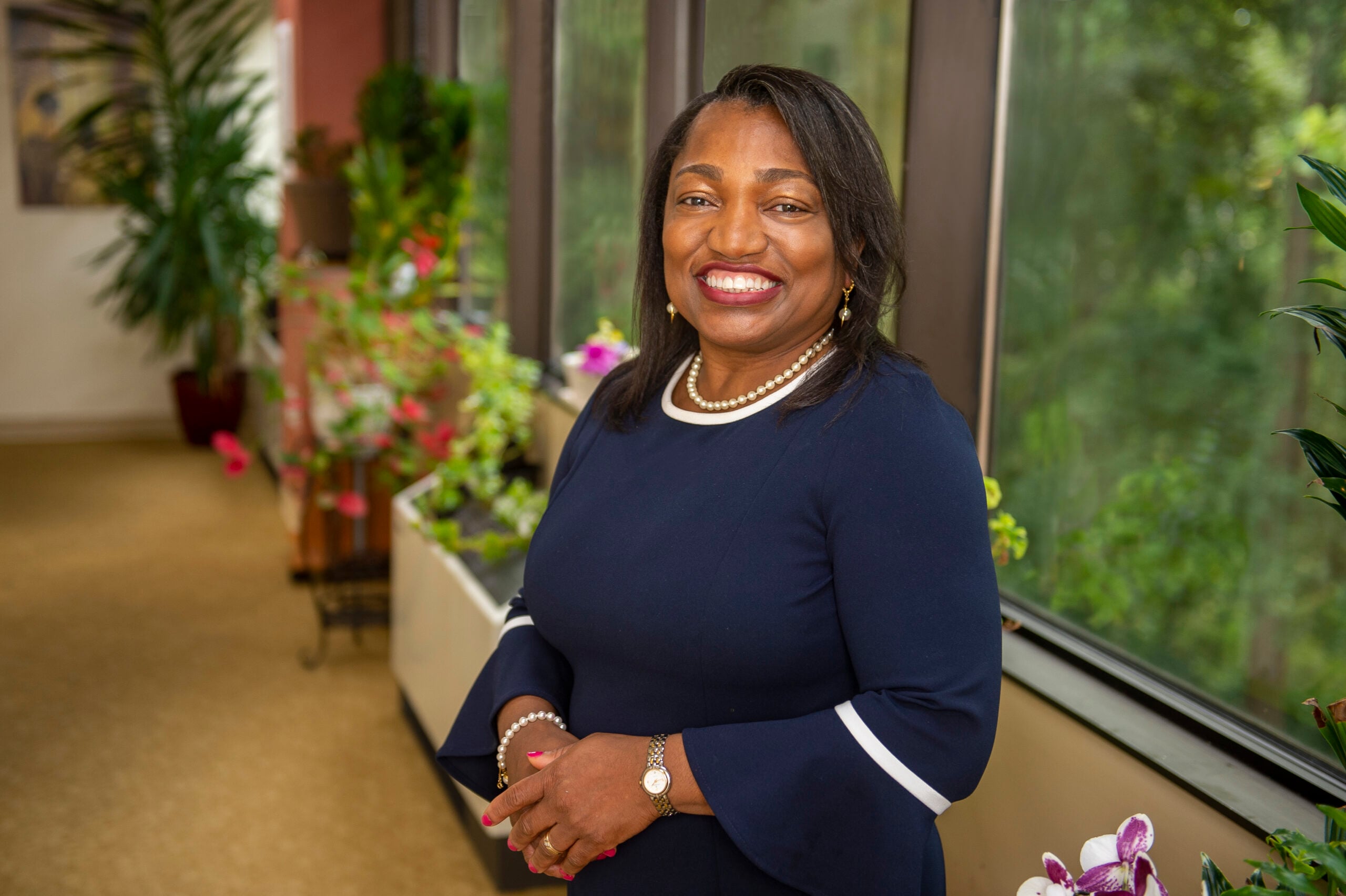
Oluyemisi Famuyiwa, MD is a double board-certified reproductive endocrinologist, infertility specialist, and obstetrician-gynecologist, and the founder and medical director of Montgomery Fertility Center in Rockville, Maryland. She has published 21 essays on KevinMD since June 2024 and has been a guest on The Podcast by KevinMD 17 times. Nearly all of that work makes one argument from the fertility clinic: infertility is rarely explained by one organ or one lab value, and patients who are told otherwise lose time they cannot get back.
This spotlight is part of a series on subscribers to the KevinMD enhanced author page.
She published six essays in 2024, nine in 2025, and six so far in 2026. The 2024 essays are about what patients bring into the clinic without knowing it: microplastics, vaping, marijuana, poor sleep, and the lifestyle signals that epigenetics may carry into the next generation, plus one on the pharmacy benefit companies that control access to fertility drugs. The 2025 essays move to diagnosis and counseling: at-home hormone tests, endometriosis, von Willebrand disease, mumps, carrier screening, the timing of chemical exposures, and the World Health Organization’s first global infertility guideline. The 2026 essays argue about names and systems: the aging uterus in in vitro fertilization (IVF), the grief of infertility, an excerpt from her book, and three on polycystic ovary syndrome (PCOS) and the new name proposed for it. Her January 2026 essay on the aging uterus is cited on the KevinMD record on women’s health, where she is the second most frequent contributor on fertility.
Does the uterus age, and does it matter for IVF? Yes, Famuyiwa argues, and it matters even when the embryo is chromosomally normal. In “Uterine aging in IVF: Why the ‘soil’ matters as much as the seed,” January 2026, she describes a patient in her early 50s whose screened euploid embryo failed to implant in a lining that looked unremarkable on ultrasound, and draws the lesson: “A normal endometrial thickness is not the same as a receptive endometrium.” In donor egg cycles, where embryo age is held constant, she notes that implantation and live birth rates still fall as the recipient ages, “particularly after age 40.” The essay is cited on the KevinMD record on women’s health, in its section on fertility and IVF.
If my AMH level is normal, is my fertility fine? Not necessarily, Famuyiwa writes, because the test counts eggs rather than grading them. In “Endometriosis, AMH, and your fertility,” September 2025, she answers a patient in her late twenties who had open tubes and an anti-Müllerian hormone (AMH) level above 4 after surgery for endometriosis. AMH, she explains, “reflects egg quantity (ovarian reserve), not egg quality,” and a 25-year-old and a 40-year-old can share the same number while their eggs “do not have the same reproductive potential.” When physicians raise concerns anyway, she writes, “caution is not necessarily fear mongering; it’s grounded in data.” In “Endometriosis and fertility: What every woman should know,” February 2025, she describes endometriosis as affecting “approximately 10 percent of reproductive-age women” and as a leading cause of infertility.
Why is polycystic ovary syndrome being renamed? Because the ovary was never the whole disease, Famuyiwa argues, and the old name kept medicine looking only at it. In “Polycystic ovary syndrome is more than ovarian,” May 2026, she explains the 2026 proposal from an international consortium to call the condition polyendocrine metabolic ovarian syndrome (PMOS). She notes that its cysts are not true cysts but arrested follicles, and describes patients passed from dermatologist to gynecologist to fertility specialist to primary care physician with no one connecting their symptoms. Her verdict on the ovary: “it may have been disproportionately blamed.” The KevinMD record on women’s health follows PCOS among the conditions women say were dismissed.
What drives PCOS, if not the ovary? Insulin and the brain, in Famuyiwa’s account, each amplifying the other. In “How insulin drives polyendocrine metabolic ovarian syndrome,” June 2026, she explains how a patient can be insulin resistant and still overproduce androgens: muscle stops responding to insulin while the ovary keeps listening, so insulin ends up “resisted in one tissue, amplified in another.” That, she writes, is why many patients show androgen excess “long before overt diabetes develops.” In “The brain signal that drives polycystic ovary syndrome,” later that month, she turns to evidence that anti-Müllerian hormone acts on the hypothalamic neurons that set reproductive rhythm, so that AMH “may not simply reflect the syndrome. It may help sustain it.” She is careful to call this “an evolving area of investigation rather than fully settled clinical doctrine.” The metabolic side of the argument is on the KevinMD record on diabetes and obesity.
Can mumps cause infertility? Yes, years later, and Famuyiwa sees the men it happened to every year. In “Mumps orchitis still causes infertility years after childhood,” July 2025, she describes men who grew up where the measles, mumps, and rubella vaccine was unavailable, had mumps as boys, and learned as adults trying to become fathers that the infection had left them with azoospermia, the complete absence of sperm in the semen. Bilateral orchitis, she writes, carries a 30 to 87 percent risk of infertility, yet surgical sperm retrieval succeeds in 75 to 85 percent of these men, so many can still become biological fathers. Her larger point is that “vaccines prevent more than acute illness; they safeguard futures.” The argument over childhood vaccination is on the KevinMD record on vaccines.
Does marijuana affect fertility? Yes, in both partners, Famuyiwa argues, and too few patients are told. In “Why is no one listening? The urgent impact of marijuana on fertility,” December 2024, she writes that THC, the active compound in marijuana, impairs the mitochondria that eggs depend on for energy, disrupts the hormonal signals that drive ovulation, and lowers sperm count and motility, with effects in men that can persist for up to two years after quitting. Her summary: “Marijuana may be legal, but it is not harmless.” For couples who are struggling to conceive, she writes, “quitting could be the first step toward success.”
Do vaping and everyday chemicals harm fertility? Famuyiwa says yes, and her most original essay argues that when a patient is exposed may matter as much as how much. In “Microplastics and fertility: Uncovering the hidden risks to reproductive health,” June 2024, she cites studies that found microplastics in human testes and placentas. Two months later, in “Are e-cigarettes harming your reproductive health?” she concludes that “e-cigarettes are not a safe alternative” for anyone hoping to conceive. And in “How timing affects chemical exposure risks,” October 2025, she proposes what she calls chrono-exposomics: because skin absorbs more and the liver clears less in the evening, “an exposure at 8 a.m. may not be biologically equivalent” to the same exposure at night. She is clear that the idea “hasn’t yet been directly studied.”
Does sleep affect fertility? More than most patients assume, Famuyiwa writes. In “The impact of sleep on fertility: Why rest matters for reproductive health,” December 2024, she cites a 2022 study in which women with irregular sleep schedules had a 20 percent higher risk of infertility, and evidence that one week of restricted sleep can lower a man’s testosterone by 15 percent. “Sleep is a cornerstone of fertility,” she writes, and couples struggling to conceive should consider sleep assessments as part of their care. Discussing the essay on The Podcast by KevinMD in January 2025, she said that until she wrote it, she “didn’t even know sleep could be considered a fertility medication.”
Are at-home hormone tests worth using? Rarely, in Famuyiwa’s view. In “The rise of at-home hormone tests: a double-edged sword for patients,” January 2025, she describes patients testing their urine hormones daily while taking birth control pills or using a hormonal intrauterine device, with results she calls “misleading or meaningless,” and argues that the anxiety of constant testing only raises cortisol. Real empowerment, she tells patients, comes from professional guidance, “not daily test strips that raise more questions than answers.”
What does a negative carrier screening result mean? Less than most patients think, Famuyiwa argues, and clinicians need new language to explain it. In “Carrier screening counseling must evolve,” October 2025, she writes that a negative result “reduces the chance of having an affected child; it does not eliminate it,” calls the reports patients now receive “an alphabet soup,” and asks clinicians to “Retire the binary ‘carrier vs. not a carrier’ language.” In “Why carrier screening results are complex,” November 2025, she shows why some carriers are not unaffected: a man with one variant of the cystic fibrosis gene can have healthy lungs and still be infertile, and “A 5T result is meaningless without knowing the TG repeat number.”

ADVERTISEMENT
Is IVF safe for women with von Willebrand disease? Yes, with planning, Famuyiwa writes, but the disease is often found only when an egg retrieval bleeds. In “When bleeding disorders meet IVF: Navigating von Willebrand disease in fertility treatment,” June 2025, she describes von Willebrand disease (VWD), the most common inherited bleeding disorder, which many women dismiss as heavy periods until a fertility procedure reveals it, and lays out the precautions that make treatment safe: “IVF is possible for women with VWD when it is planned properly.” Asked for a take-home message on The Podcast by KevinMD in August 2025, she told clinicians to “never overlook minor bleeding histories.”
Why is infertility so hard to talk about? Because it is grief without a ritual, Famuyiwa writes, and because many cultures still tie a woman’s worth to motherhood. In “The emotional impact of infertility is grief unspoken,” May 2026, she begins with Efunsetan Aniwura, a powerful woman of 19th-century Yorubaland remembered for the death of her only child, and observes of infertility today: “There is no funeral.” Her message to patients is that “Their worth is larger than their fertility.” In “Infertility public health: the WHO’s new global guideline,” December 2025, she welcomes the first global guideline for treating fertility care as part of the right to health: “Fertility care is not a luxury.” And the excerpt from her book, “What no one tells you about fertility, from a doctor,” May 2026, opens with the question a 36-year-old patient asked her: “Why didn’t anyone ever tell me it could be this hard?”
Famuyiwa has been on The Podcast by KevinMD 17 times, from August 2024, when she talked about microplastics, to September 2026, when she talked about PCOS. Asked for a take-home message in that first episode, she told listeners to “pay attention to what you put on your body.” In June 2026 her message was that “we cannot supplement our way out of a biological phenomenon,” and in July 2026 it was that understanding your biology “removes the fear factor.” She runs a fertility practice, hosts the Fertile Talks podcast, and is the author of The Quest for Fertility, the book she names in her essays and excerpted on KevinMD in May 2026.
About the KevinMD enhanced author page: This spotlight exists because Famuyiwa’s author page is an enhanced author page: her photo, biography, affiliations, and links on one page that ranks for her name and that ChatGPT, Perplexity, and Google’s AI read when someone asks who she is. The same branded attribution appears at the end of every article she has published, so each essay listed below points back to a page she controls. Subscribers get three things the free track does not:
✓Publish in 1 to 3 days. Free-track articles wait 5+ weeks, and the wait keeps growing. Subscribers skip the line.
✓Get a guaranteed podcast slot. Free slots fill within hours and the waiting list runs into the hundreds. Subscribers are guaranteed a spot.
✓Control your Google and AI identity. Your KevinMD author page is one of the highest-ranking results for your name. Make it represent you, in your words.
The enhanced author page is $99/month or $999/year.
Cancel anytime for any reason, and your author page will revert to the standard attribution.
Have questions before you subscribe? Contact Kevin.
Everything Oluyemisi Famuyiwa has written for KevinMD:
- “Microplastics and fertility: Uncovering the hidden risks to reproductive health.” June 2024
- “The hidden impact of pharmacy benefit companies on fertility treatments.” August 2024
- “Are e-cigarettes harming your reproductive health?” August 2024
- “The role of epigenetics in fertility: Can lifestyle choices affect future generations?” September 2024
- “The impact of sleep on fertility: Why rest matters for reproductive health.” December 2024
- “Why is no one listening? The urgent impact of marijuana on fertility.” December 2024
- “The rise of at-home hormone tests: a double-edged sword for patients.” January 2025
- “Endometriosis and fertility: What every woman should know.” February 2025
- “When bleeding disorders meet IVF: Navigating von Willebrand disease in fertility treatment.” June 2025
- “Mumps orchitis still causes infertility years after childhood.” July 2025
- “Endometriosis, AMH, and your fertility.” September 2025
- “How timing affects chemical exposure risks.” October 2025
- “Carrier screening counseling must evolve.” October 2025
- “Why carrier screening results are complex.” November 2025
- “Infertility public health: the WHO’s new global guideline.” December 2025
- “Uterine aging in IVF: Why the ‘soil’ matters as much as the seed.” January 2026
- “The emotional impact of infertility is grief unspoken.” May 2026
- “What no one tells you about fertility, from a doctor.” May 2026
- “Polycystic ovary syndrome is more than ovarian.” May 2026
- “How insulin drives polyendocrine metabolic ovarian syndrome.” June 2026
- “The brain signal that drives polycystic ovary syndrome.” June 2026
Oluyemisi Famuyiwa on The Podcast by KevinMD:
- “How microplastics affect our reproductive health.” August 2024
- “E-cigarettes aren’t as safe as you think: the fertility risk you must know.” September 2024
- “How pharmacy benefit companies are making fertility treatments even harder for patients.” October 2024
- “How lifestyle choices today could impact your future family’s fertility.” November 2024
- “How sleep affects your fertility and boosts reproductive success.” January 2025
- “Marijuana’s hidden threat to fertility and family planning.” February 2025
- “Navigating the complexities of at-home hormone tests.” February 2025
- “How endometriosis affects fertility and what you can do.” April 2025
- “How to safely undergo IVF with von Willebrand disease.” August 2025
- “Daily chemical exposure timing and your fertility.” December 2025
- “Genetic testing requires more than just a binary result.” January 2026
- “World Health Organization reframes fertility care as a fundamental right.” January 2026
- “Uterine aging plays a critical hidden role in IVF outcomes.” February 2026
- “Why ‘failed cycle’ and ‘poor responder’ wound infertility patients.” June 2026
- “What no one teaches you about fertility before you need help.” July 2026
- “PCOS was never just about your ovaries.” July 2026
- “Why acne, chin hair, and irregular cycles are more than an ovary problem.” September 2026