For decades, we have been told the stories of medicine through the eyes of the people who provide it. Medical dramas place doctors and nurses at the center of the narrative: the brilliant surgeon making impossible decisions, the exhausted emergency physician racing against time, the nurse carrying the emotional weight of caring for patients through crisis. Even in today’s most authentic medical dramas, including The Pitt, patients are often catalysts for the action rather than the storytellers. What we rarely see is the experience from the other side of the bedrail. After recently becoming a patient myself, I began to wonder why the person at the center of the medical story is so often standing in the background, the person whose body is being treated, who did not choose the diagnosis, illness, injury, or fear that brought them through the hospital doors, and who must surrender control, place their trust in strangers, and hope that the system built to protect them will remember one of the oldest principles of medicine: First, do no harm.
Health care professionals choose a career devoted to caring for vulnerable people, and that choice deserves respect. But the patient does not choose vulnerability. The patient is there because something has happened to them.
I know the response I will hear: Health care workers are overwhelmed, understaffed, and exhausted, and their jobs are difficult. I have tremendous empathy for the people who choose a profession devoted to caring for others during some of the most difficult moments of their lives. But I also believe we have become so focused on telling the story of caregiver hardship that we sometimes forget the person who is at the center of it all, the catalyst, the person receiving the care.
I understand exhaustion myself. As a funeral director, I have worked long hours, been called in the middle of the night, and carried the emotional weight of families experiencing unimaginable loss. But I could never walk into a grieving family’s home and make my exhaustion the focus of their experience. Their pain did not become secondary because my job was difficult. That was the responsibility I accepted when I chose that profession. Health care professionals accept a similar responsibility. The challenges of the profession are real, but the patient did not create those challenges. The patient did not choose the illness, injury, diagnosis, or fear that has put them at the mercy of those dedicated to caring for them.
Real physician voices, twice a week
Free, and one click to unsubscribe.
We are all familiar with the horror stories we hear from family members about care that was less than what is rightfully expected and required, but nothing prepares you for any of it until you are the one lying helpless in a bed, completely at the mercy of a system that is broken. And this is my personal story.
When the story became mine
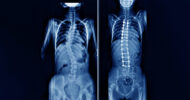
In 2017, while working as a funeral director, I was injured on the job. An MRI revealed an unexpected finding: a spinal tumor believed to be a schwannoma. Because it was small and not causing significant problems, my neurosurgeon recommended monitoring it rather than operating. For years, we watched it hoping it would remain stable. Then another MRI revealed that the tumor had grown significantly.
My neurosurgeon explained that, to prevent future complications, including the possibility of paralysis, it needed to be removed. He recommended a colleague, one of the most respected spinal surgeons in the area, to perform the operation while he assisted. I felt fortunate. I live in Connecticut and was entrusting my care to a nationally recognized medical institution. I believed I was in the best possible hands.
And technically, I was.
The surgery itself was a success. What happened afterward, however, changed the way I now view health care. I woke up in a pitch-black room. The only light came from the monitors beside me and the glow of a WOW (a Workstation on Wheels), the computer cart used by nurses and physicians moving from room to room. I had gone into surgery around noon. Now it was 10:30 at night.
My first question was simple: “How did it go?” The nurse did not know. I asked whether the tumor had been completely removed. She did not know. Were there complications? She did not know. Was the pathology concerning? She did not know.
Before surgery, I had been told that because of the complexity of the procedure, drains or even a spinal fusion might be necessary. When I woke up and saw drains beside me, my mind immediately went to the worst possibilities. Had something gone wrong? Did I have the fusion? Was I facing a complication no one had explained?
No one could answer, so I lay there in the darkness, frightened and exhausted, trying to understand what had happened to my own body. The surgical team knew the outcome. I did not. For them, the surgery was over. For me, it was the beginning of uncertainty.
Morning arrived, and I still had no answers. When my surgeon finally came to see me nearly twenty-four hours after my operation, I told him I was deeply disappointed. He explained that he had updated me after surgery and blamed the anesthesia for why I did not remember. I told him that if I was unable to understand or retain the information, then the conversation never truly happened from my perspective. A conversation is not complete simply because words were spoken. Communication only works when the patient receives the information.
He explained that a physician assistant should have followed up. I stopped him. “No,” I said. “The buck stops with you.” That statement was not about blame. It was about accountability.
Before becoming a funeral director, I spent more than twenty years as an executive in corporate communications in New York City. Throughout my career, one principle guided me: When you are responsible for an experience, you are responsible for the entire experience, not just the parts you directly control. You do not pass the problem down the line. You communicate. You take ownership.
When recovery became another battle
After five days in the hospital, I transferred to an inpatient physical therapy rehabilitation center. I assumed the hardest part was behind me.
I was wrong again.
Before surgery, my boss encouraged me to carefully consider rehabilitation facilities. A friend of hers who worked as a therapist knew the places to avoid, and I was surprised by how many facilities were immediately eliminated from consideration. The choices were far more limited than I expected. I eventually chose one that seemed acceptable and hoped for the best.
Insurance would not cover transportation to the facility, so I paid for it myself. Ironically, the person who became my first advocate there was the transport driver.
When we arrived, no one appeared to be expecting me. Eventually, someone came to the desk and asked why I was there. The questions that followed immediately concerned me. Had I fallen? Was I wheelchair-bound? It became clear that they did not understand why I had been admitted. They seemed unaware that I had just undergone major spinal surgery.
Again, I explained. I had not fallen. I had surgery. I was there to recover. But the story they had been given, and were repeating, was not my story.
The transport driver finally spoke up. “Can someone at least help her into bed?” Only then did someone assist me.
When the door closed, I was alone again. I remember feeling unsettled, although I could not fully explain why. Eventually, I realized what bothered me most: Important information had been lost somewhere between one person and the next, and I was now the person who had to fill in the blanks.
Later that evening, I pressed the call bell because I needed help getting to the bathroom. When the CNA arrived, she questioned why I wanted a walker. “Because I can walk with one,” I explained.
“But you are wheelchair-bound,” she responded. “I was told you had a bad fall.”
Again, I corrected the information. Again, I explained what had actually happened. Honestly, I cannot even recall how many times I was told I had a fall and was even wheelchair-bound before my fall. I realized that if I wanted my care to reflect reality, I was going to have to advocate for myself. I asked for the head nurse and requested my records. We went through them together, line by line, page by page, medication by medication, diagnosis by diagnosis.
My best friend Tim, a nurse, had once given me a nickname: “The Pit Bull.” Not because I am looking for a fight, but because when I see something that feels wrong, I do not stay silent.
The Pit Bull had arrived.
I was now in charge of caring for myself and ensuring those who were supposed to be caring for me understood who I was, what had happened to me, and what I needed. I reviewed medications, asked questions, pointed out blisters that had developed, and requested that they be properly documented and photographed. This was not advanced medical knowledge. It was basic patient care. And yet I found myself responsible for making sure basic steps happened.
I kept thinking about the patients who could not do what I was doing: the elderly patient who is afraid to speak up, the patient who does not understand medical terminology, the person who worries that asking too many questions will make them “difficult.” I had a voice. Many patients do not.
“You are not the only person here”
The following evening, I pressed the call bell because I needed help getting to the bathroom. I waited more than an hour before someone responded. When help finally arrived, I politely asked why it had taken so long. I was told no one had even informed the CNA.
Again, I asked to speak with the nurse who was on shift. She stood in the doorway, would not even enter my room, and said, “You are not the only person here.”
I more than understood that. I understood that staffing shortages and difficult working conditions are real. But then she told me that if I wanted more attention, I should hire a private nurse. That statement stayed with me because it reflected something deeper: the feeling that basic care was becoming something I needed to earn or pay extra for.
Voices were raised. Unpleasantries were exchanged. I had the nerve to challenge her, and then she said the unthinkable: “That is it. No medicine for you and no care,” and slammed the door.
I immediately called Tim. “You do not threaten care,” he told me. “You do not weaponize medication.”
The charge nurse eventually came in, helped de-escalate the situation, walked me to the bathroom, and ensured that I received the medication that was now more than an hour overdue. I reported what happened to the administrator. The next day, she arrived with the head of nursing. The response was typical corporate speak, but their backs were now against the wall. The nurse was suspended, a police report was filed, and the state nursing board was notified. They moved me to a better room, and for the remainder of my stay I had their top nurses render my care, the best of their CNA staff appointed to me, and my medication was administered in a timely fashion. I was treated the way every patient should be treated. I did not feel victorious. What I felt was something much more troubling: I was now being cared for by the best they had because I demanded it, not because that was the standard of treatment.
When silence becomes its own kind of harm
After rehabilitation, I faced one more reminder of how damaging communication failures can be. Like many patients today, I was expected to navigate my recovery through an online portal. I searched through surgical notes and medical language trying to understand my pathology report, a report I had been asking for over five weeks with little help from my surgeon. When I found it, I froze.
The tumor was not a schwannoma.
It was something much rarer, more concerning. The report appeared benign, but the unfamiliar terminology raised questions I did not know how to answer. Again, I pressured my surgeon’s office for clarity. Days went by. Eventually, I was told my surgeon would review everything after tumor board discussion, and he scheduled an appointment for me to meet him in person.
Four days before that appointment, I received a call from a neuro-oncology office that I was unknowingly referred to. I was blindsided. I asked what conditions they treated. “Brain tumors,” I was told.
Fear immediately took over. I called my surgeon. I sent messages. I cried out for clarity. There was silence.
That silence was devastating because I had no context for the referral. I did not know whether it represented a new concern, a precaution, or simply a standard step in the process. I only knew that I had recently undergone surgery for a tumor that was apparently not what I had originally been told it was, and now a neuro-oncology office was calling me.
Again, I had to take matters into my own hands. I reached the neurosurgeon who had followed me for years. He had always been kind, attentive, and compassionate, and he returned my call within the hour. Visibly upset that I had been left without answers, he apologized and took the time to carefully explain the pathology. He reassured me that although the tumor was rare, it was benign.
Then he explained something that should have been explained from the beginning: Referral to neuro-oncology after tumor removal was standard protocol, regardless of the pathology. Had I known that, the panic and fear I experienced could have been eased.
It wasn’t malpractice. The surgery had been successful. But it was a profound failure of patient communication, one that transformed a routine step in my care into days of unnecessary fear for a patient who was already vulnerable and trying to recover. That distinction matters.
In a health care system that often measures success by surgical outcomes, clean margins, complication rates, and technical achievements, there is rarely a metric for the psychological harm caused by preventable failures in communication. There is no box to check for the fear, confusion, and grief a patient carries when they are left to interpret frightening information alone. For the person living through it, that harm is every bit as real. I have since been diagnosed with PTSD, not because of the surgery, but because of the aftermath. Hypnosis has helped.
What patient-centered care should look like
Throughout this journey, I encountered extraordinary people who reminded me why so many choose careers in health care. I had nurses who cared deeply, physical therapists who encouraged me, and physicians who showed genuine compassion.
This experience also taught me something difficult: Not everyone who works in health care is equally equipped to provide care. Clinical knowledge and technical skill are essential, but they are not the same as compassion, empathy, or the ability to recognize the vulnerability of the person in front of you. Some breakdowns in care happen because of flawed systems, inadequate communication, or processes that fail patients. Others happen because the human connection, the very foundation of caregiving, is missing.
My neurosurgeon reminded me what patient-centered care should look like. When I reached out to him, he did more than explain my pathology. He listened. Rather than simply explaining what had been missed, he stepped forward. He is now leading my ongoing care, providing the guidance, communication, and reassurance I needed from the beginning.
I am continuing my recovery now. My body is getting stronger, but this experience changed me. I see vulnerability differently. When I see someone with a walker or a cane, I see more than the equipment. I see the person who may have fought battles I know nothing about. The cane I use today is temporary. For many people, it is not.
This experience taught me that patients cannot afford to be passive participants in their own care. We have to ask questions. We have to advocate for ourselves. We have to speak when something does not feel right. But it also taught me something about the health care system itself: The patient should never become invisible.
A patient is not a diagnosis. A patient is not a room number. A patient is a person, someone experiencing fear, uncertainty, hope, and healing. The patient is the reason the health care system exists. The patient is not a supporting character. The patient is not the burden. The patient is not an inconvenience.
The patient is the reason the story exists.
Diane Bruno is a patient advocate.