
















In 2023, 38 percent of U.S. physicians used AI in their practice. Most weeks since, another tool has arrived: a scribe, a summarizer, a risk score. By early 2026, the American Medical Association (AMA) put physician use at 72 percent, nearly double in three years. That’s fast for a profession that still faxes discharge summaries.
Then the AMA asked those physicians a better question than whether they use AI. Its 2026 Physician Survey on Augmented Intelligence surveyed 1,692 of them and asked what would earn their trust, and they answered in specifics. Eighty-eight percent rated validation of safety and efficacy as important. Eighty-six percent said the same about data privacy assurances. Eighty-five percent want to be consulted on, or responsible for, how AI is adopted where they work.
Read together, those three numbers look like a procurement checklist written by the people who will carry the liability.
I’m an emergency physician, and I also advise companies that build these tools. I’ve sat in the vendor meeting and I’ve worked the shift where the tool fires an alert at 3 a.m. Those two rooms rarely talk to each other. The AMA data gives hospital leaders a way to close that distance, if they act on it.
Real physician voices, twice a week
Free, and one click to unsubscribe.
Here is what I’d ask any chief medical officer (CMO) or chief medical information officer (CMIO) to do before signing the next AI contract:
- Put physicians on the selection committee: The 85 percent figure asks for a seat before the contract is signed, well ahead of any go-live webinar. The clinicians who will use the tool should help choose it, and their names should be on the decision.
- Demand validation in a population like yours: A vendor’s internal study isn’t enough. Physicians in the survey pointed to peer-reviewed literature as the evidence they want most. Ask for external validation, ask how the tool performed across age, sex, race, and language groups, and ask what happened when it was wrong.
- Publish where the data goes: Patient privacy was the one dimension in the survey where more physicians expected harm than benefit. A one-page explanation of where patient data travels, who can see it, and whether it trains anyone else’s model would answer more questions than any town hall.
- Build the feedback loop before launch: That means a button in the workflow to flag a bad output, and a named person who reads every flag and reports back on what changed.
- Fund the monitoring: Models drift. Patient mix shifts, documentation habits change, and a tool that worked in March can slip by September. Among regulatory actions, physicians ranked clear liability frameworks first and also weighed post-market surveillance. Hospitals don’t have to wait for regulators to do the second one.
There’s an encouraging signal in all of this. Seventy-six percent of physicians in the same survey said AI gives them an advantage in caring for patients, up from 65 percent in 2023. Physicians are asking for the same things they’d ask of a new colleague: show your work, protect the patient, take correction, and keep showing up.
I’ve started using a seven-letter test for this, TRUSTED, on every tool I evaluate. The letters matter less than the habit. Before a tool touches a patient, someone should be able to answer the questions physicians have already put in writing.
The survey is public, and the checklist is already in it. My ask is simple: No AI contract gets signed until the physicians who will use the tool can answer those questions.
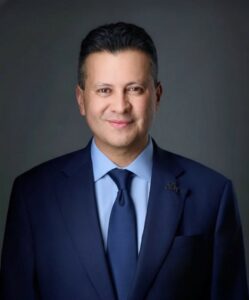
Harvey Castro, known as DR GPT™, is an emergency physician, author, keynote speaker, and physician futurist. He is advisor to the CEO of Phantom Space. He writes and speaks about artificial intelligence in health care, digital health, space medicine, and the future of human-centered care. Explore his speaking topics and availability.
He is the author of Bing Copilot and Other LLM: Revolutionizing Healthcare With AI, Solving Infamous Cases with Artificial Intelligence, The AI-Driven Entrepreneur: Unlocking Entrepreneurial Success with Artificial Intelligence Strategies and Insights, ChatGPT and Healthcare: The Key To The New Future of Medicine, ChatGPT and Healthcare: Unlocking The Potential Of Patient Empowerment, Revolutionize Your Health and Fitness with ChatGPT’s Modern Weight Loss Hacks, Success Reinvention, and Apple Vision Healthcare Pioneers: A Community for Professionals & Patients.
He shares updates on LinkedIn, YouTube, Facebook, Instagram, and X. #DRGPT