









For generations, medicine has attracted the academically highest-achieving students in society, and for good reason. Medicine demands extensive knowledge, scientific reasoning, and the ability to make consequential decisions under uncertainty.
But medicine is changing, and radiology offers a useful lens. Few specialties illustrate the relationship between scientific innovation and clinical practice as clearly. MRI didn’t emerge from clinical radiology; it came from physics, mathematics, and engineering. Modern medical AI draws on computer science and statistics. Radiology has often been the clinical environment where these advances get translated into patient care, rather than the source of the technologies themselves.
That raises an uncomfortable question: If the advances that most radically transform medicine often originate outside clinical medicine, is funneling our most exceptionally capable students into clinical careers really the best way to advance health care?
This isn’t an argument that medicine doesn’t create knowledge; it does. Clinicians identify unanswered questions, generate hypotheses, and develop new treatments. But medicine also depends on a wider ecosystem of knowledge created beyond the clinic. And AI may make that distinction matter more.
Real physician voices, twice a week
Free, and one click to unsubscribe.
Medicine has traditionally rewarded the ability to acquire, retain, and apply vast amounts of knowledge. That cognitive environment is shifting. Information once memorized is now retrieved instantly. Literature is searched and synthesized in seconds. AI increasingly assists with pattern recognition and aspects of clinical reasoning.
The point isn’t that doctors matter less. It’s that some cognitive work once done entirely by the individual clinician is now shared with machines. Which raises a different question: Where does exceptional human cognition create the greatest value for society?
There’s a fundamental difference between applying knowledge and creating it. Applying knowledge asks: What’s the most likely diagnosis? What do the guidelines recommend? Creating knowledge asks: Why doesn’t this patient fit the model? What haven’t we explained yet? What new principle could change everything we believe?
AI is getting good at the first set. The second is different, and may even grow harder. As AI searches enormous datasets and surfaces countless possible associations, we may face an unexpected problem: an abundance of possible discoveries. The bottleneck shifts from finding information to deciding which questions are worth pursuing. The scarce resource becomes the human ability to ask the right questions.
Now consider the talent pipeline. Medical schools select from a remarkably accomplished pool: Oxford’s 2025 admissions round drew 1,156 applicants for 175 places, with offer-holders averaging near-perfect exam scores. But these metrics measure academic performance, not where someone will ultimately contribute most. These same students could become physicists, engineers, mathematicians, or AI researchers. Society draws from one scarce pool of highly capable young people to fill many fields.
This matters as health systems push to expand medical school intake in response to physician shortages. More graduates may be necessary, but expanding places doesn’t expand the supply of exceptional talent. It intensifies the competition among professions for people who could excel anywhere. If medicine remains prestigious and AI increasingly handles the application of existing knowledge, a larger share of that scarce pool may choose medicine (people who might otherwise have built the physics, engineering, or AI that medicine will eventually depend on).
None of this argues against expanding medical education. Shortages are real. But we should distinguish opportunity from talent: New places don’t create new geniuses; they redirect existing ones.
There’s a strong counterargument, of course. The hardest clinical problems (novel diseases, atypical presentations, conflicting evidence, wrenching ethical decisions) don’t yield to guidelines. Exceptional physicians become physician-scientists, innovators, educators, leaders. And if machines absorb routine cognitive work, clinicians may be left with the unusual, the ambiguous, the genuinely novel, making medicine’s frontier more demanding, not less.
So perhaps the question isn’t whether academic excellence matters; it does. It’s whether it should remain such a dominant proxy for future contribution. An AI-supported system may prize judgment, adaptability, curiosity, communication, ethical reasoning, and intellectual humility just as highly. Meanwhile, a student with exceptional mathematical or computational gifts might create entirely new knowledge elsewhere, knowledge medicine may one day depend on.
There’s no reason to assume one path is inherently more valuable. But there’s also no reason to assume every brilliant student who could become a doctor creates the greatest value by doing so.
The issue isn’t whether these students can become doctors. It’s whether society benefits most when most of them do.
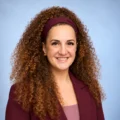
Ramy M. Mansour is a musculoskeletal radiologist.