













It is past 10 p.m., and the program director is still at their desk. The accreditation visit is months away, and the records they need sit in a system only one administrator can open. Down the hall, a resident drafts an email about a supervision problem, then deletes it, because the only person who could act on it is the person it concerns. An international resident has already decided to say nothing. Her visa depends on finishing. Across campus, a senior leader holds faculty resignation letters and wonders how to fill the posts before the site visit.
This scene is a composite of colleagues’ accounts across programs, regions, and years. It describes a pattern, not a place. None of these people are failing. Each is doing the right thing inside a structure that gives them nowhere safe to stand.
Every year, new orthodontic residency programs are approved. The applications count clinic chairs and map the curriculum. They rarely answer a simpler question: Who will teach here, and what happens when those people leave?
Strong on outcomes, silent on people
The Commission on Dental Accreditation (CODA) sets rigorous standards for what a residency must deliver: at least 3,700 scheduled hours, a long list of clinical competencies, and clear faculty-to-resident ratios. It names the right goals, including faculty retention and job satisfaction. The director must be full time, with “sufficient authority and time,” and staff must be “adequate,” but neither is quantified. Programs evaluate faculty and residents, yet nothing asks them to measure resident or faculty well-being. Clear minimums would keep flexibility and give every program a shared baseline.
Real physician voices, twice a week
Free, and one click to unsubscribe.
Growth without a pipeline
The shortage is not new. In a survey published in 2003, 35 percent of U.S. programs had a vacant faculty position, and departments were leaning more on part-time faculty. Most residents plan careers in private practice. Yet programs keep being added. When faculty numbers grow more slowly than programs, one program’s hire is usually another’s loss. Meanwhile, orthodontist fell from the best job in America in 2016 to No. 75 in 2026 on U.S. News & World Report’s list. In a small recent survey of 124 orthodontists, half showed signs of burnout, and in a 2024 study by one of us (S.P.), presented at the American Association of Orthodontists (AAO) Annual Session as “Burnout is REAL,” 27 percent of orthodontists were experiencing burnout and another 21 percent were on the verge of it, figures the AAO now cites in its wellness resources.
What fills the gap
Where the rules are silent, informal power takes over. Usually it is used well. But the same gap lets a few leaders keep records and access to themselves, and make disagreement costly. Residents must raise concerns with the people who grade them. Junior faculty depend on senior leaders for promotion. Surveyed orthodontic faculty linked their satisfaction to their time, their training, and their chair’s leadership. The system runs on goodwill, and when the right people leave, it fails quietly.
Medicine has already set the baseline
The Accreditation Council for Graduate Medical Education (ACGME), which accredits physician residencies, requires what CODA’s orthodontic standards leave out: a set minimum of dedicated time for program leadership, dedicated support for a program coordinator, a confidential way for residents to raise concerns without fear of retaliation, at least one resident on the committee that evaluates the program, limits on work hours, and a full section on well-being.
Five changes by design
Most of this needs little new money. It needs design!
- Institutional memory: Shared records and a written handover plan for every key role. A program that cannot survive one resignation is not really a program. It is a person.
- Checks and balances: Defined roles and open decisions. When one person holds multiple roles within a department, there are few natural checks. A confidential route outside the department lets anyone raise a concern without risking a career. Teams where people feel safe to speak up learn and perform better.
- Sustainable careers: Dedicated time, predictable schedules, administrative support, and succession plans, plus a short anonymous well-being survey each year.
- Residents as co-designers: Give residents a real voice: a resident council that helps shape schedules and policies, two-way feedback, and more control over time for research and study. Physicians with more control over their work are more engaged and less burned out. A program designed with residents, for residents, also grows the specialty’s future faculty: 80 percent of residents say they are interested in part-time academic work.
- Well-being in the curriculum: CODA already requires residents to learn ethics and to understand practice management. It should require well-being too. In 2026, Stanford’s business school taught AI for Human Flourishing, a course asking future leaders to define a flourishing life, including their health. Orthodontic residents deserve a required course on purpose, burnout, and sustainable practice, taught as seriously as biomechanics.
The AAO is already leading
The AAO deserves real credit. Its Full-Time Faculty Fellowship supports educators who commit to teaching, it created a Mental Wellness Task Force, and it helped shape CODA’s last major revision. It is well placed to help lead the next.
Ask who will teach
New programs receive initial accreditation based on their potential to meet the standards. This is an argument for growth that lasts, not against growth. Approval should require a credible faculty plan: who will teach, with how much dedicated time and support, and what happens when someone leaves. The specialty should ask how many programs it can staff well, not only how many it can approve.
This article is a first step. It draws on public data, colleagues’ experiences, and our background in orthodontic education, private practice, and organizational management. Our goal is to bring these questions into the open and answer them together with accreditors, educators, and well-being leaders. Next, we will confidentially survey faculty, directors, residents, and staff. To collaborate, reach out on LinkedIn. The specialty has spent decades defining what residents must learn. Now it can define how residents, and the people who teach them, are protected and trusted.
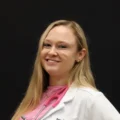
Soumya Padala is an orthodontist and dental sleep medicine dentist with many years of experience in patient care, teaching, and research. She was most recently program director of orthodontics at the Dental College of Georgia at Augusta University, and before that she founded and directed the Orthodontic and Dental Sleep Service Line at Rush University Medical Center in Chicago. She is board-certified by the American Board of Orthodontics and the American Board of Dental Sleep Medicine.
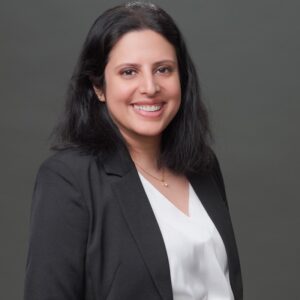
She serves on the editorial board of the World Federation of Orthodontists and is a peer reviewer for several journals. She has published peer-reviewed articles and a book chapter. She led the first survey to study burnout among North American orthodontists, and the American Association of Orthodontists used her findings in its mental wellness resources.
She speaks about burnout, loneliness, and resilience at national and international meetings. She believes in saying what needs to be said, even when it’s uncomfortable, if it makes things better for patients, students, and colleagues. She is a Public Voice Fellow of The OpEd Project, and her love for words grew from reading Arianna Huffington’s work.
Nikki Sangha is an orthodontist.
Shweta Padala Nallam is a management consultant.
Arati Sharma is a management consultant.