















As a psychiatrist, I’ve spent much of my career asking a question that has practical consequences for anyone who has ever sat on either side of an exam room. Can we teach clinicians to communicate empathy in ways patients can actually feel? I experienced, firsthand, the pain patients experienced when their concerns were dismissed, misunderstood, or even disparaged, and sought to find a solution. During a medical education fellowship at Harvard Medical School, I developed a brief, neuroscience-based training intervention, hoping to introduce training that would help clinicians deliver greater person-centered care. Subsequently, my research team in the Empathy and Relational Science Program at Massachusetts General Hospital tested the training in a randomized controlled trial. I had hoped this work would help patients feel heard and cared for in ways that improve their health and trust in their physicians and nurses. What excites me most now is the possibility that it might also help clinicians feel supported and rediscover the meaningful connections with patients that inspire them to stay in health care.
What we found was striking. Patients rated clinicians who completed the training as better listeners, more caring and compassionate, and better at explaining things in ways they understood. Years later, when a medical group expanded the training to more than a thousand employees, its leaders observed improvements in patient experience and burnout measures, along with markedly lower turnover among trained clinicians.
What patients can feel
A clinician can care deeply and still leave a patient feeling unheard. Picture a patient who says she understands the treatment plan, then falls quiet as you reach for the door. If you pause and ask what’s on her mind, you may learn that she’s worried about how she’ll manage the treatment at home. That brief exchange gives you information you need to make a workable plan together.
Our training drew on three capacities that neuroscience helped us understand. We can learn to notice emotional cues in ourselves and others, get curious about what those cues might mean, and regulate our own reactions so we can respond with care. Each of those skills can be practiced. When a patient is frustrated, for example, a clinician who notices their own impulse to defend a decision can learn to pause long enough to ask what the patient had hoped would happen. In our randomized trial, we used the validated Consultation and Relational Empathy (CARE) Measure to ask patients how they experienced their clinicians. The training significantly improved patient-rated empathy. For me, the most gratifying part was whose judgment counted. Patients themselves could feel a difference in how they were cared for.
Real physician voices, twice a week
Free, and one click to unsubscribe.
What happened when we scaled the training
I founded a company and built a solution and curriculum that made the approach available through short online courses, live workshops, and a mobile app. At Sutter Health Gould Medical Group, the initiative began in 2019 with 53 participants, which we then scaled for more than a thousand clinical and nonclinical staff. Our online lessons gave people a common foundation, and follow-up sessions gave them a place to rehearse difficult conversations. Brief refreshers helped them keep practicing after the initial training.
The medical group’s CEO had set out to improve patient experience. Early feedback showed that patients noticed changes in how well clinicians listened. In a later Press Ganey analysis covering 2024 through 2026, the percentile rank for “Likelihood to Recommend Care Provider” rose 13.8 points among 105 fully trained providers and 3.9 points among 59 untrained peers. The analysis only included providers with at least 30 patient ratings in each year.
As the initiative grew, leaders turned their attention to what clinicians were carrying. In 2021, we added a Self-Empathy workshop where clinicians could reflect on difficult experiences with peers and talk openly about seeking support. It gave them time to acknowledge the emotional demands of caring for others, something a busy clinical day rarely makes room for. After the workshops were introduced, the group score on the American Medical Association’s Mini-Z, a measure of the work environment and clinician well-being, rose from 3.68 to 3.80 on a five-point scale.
Then came a result that surprised us. In 2023, turnover was 0.5 percent among clinicians who participated in the training and 8.5 percent among those who hadn’t. The medical group estimated that the observed difference corresponded to about $18.9 million in recruiting, training, and onboarding costs. Behind those figures are colleagues who know their teams, and patients who get to see a clinician who knows them.
The rollout was an organizational initiative, and the groups differed in specialty mix. While these observations can’t tell us how much of the difference came from the training, they do give us a reason to suspect that the skills that help patients feel heard can also help clinicians feel supported enough to stay. Clinicians’ accounts reinforce this possibility: They describe greater satisfaction and joy in their work when they learn the tools for connection and practice self-empathy. They report feeling more connected to patients, more effective in providing care, and better equipped to respond calmly during difficult interactions.
What leaders can do with empathy
I’m especially interested in what happens when leaders practice the same skills. Imagine a physician telling a department chief that finishing notes every night has become unsustainable. The chief can ask what is driving the after-hours work, review the schedule and documentation demands with the team, and come back with a concrete change to test. Following up matters. It tells the physician that speaking up can improve how the work gets done. That is where empathy and accountability meet.
Leaders can round regularly, listen for patterns in what frontline teams tell them, and act on problems with staffing, scheduling, or workflow. They can also ask their teams whether they feel safe raising concerns and whether leaders follow through. Tracking those answers alongside patient experience, burnout, and turnover can show where people are seeing a difference and where more work is needed.
I began this research wondering whether a brief intervention could change what a patient felt in an exam room. Now I wonder what we could change if everyone in a health care organization, from the people answering the phones to the people deciding how clinics are staffed, had opportunities to practice these skills. A patient could feel comfortable saying what’s really worrying her. A nurse could raise a concern early and trust that someone will act on it. A physician who has been quietly considering leaving could see a future in the work again.
We built a program with patients and clinicians at the center. Now we have the opportunity to support health care leaders across the country to incorporate empathy into their daily practice and support why they chose medicine in the first place. And in this future, everyone feels heard.
Helen Riess is a clinical and research psychiatrist, a part-time associate professor of psychiatry at Harvard Medical School, and director of the Empathy and Relational Science Program in the Department of Psychiatry at Massachusetts General Hospital. Riess and her research team conducted studies to determine whether empathy in the patient-physician relationship could be taught and learned. This groundbreaking research showed that empathy can be learned through a novel training based on the neuroscience of empathy. Patient ratings of clinician empathy significantly improved with the brief training intervention she developed.
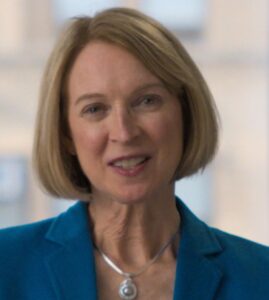
Riess founded Empathetics, an organization that delivers empathy training and leadership assessments online to improve physician, nurse, and staff empathy in health care organizations, where she serves as chief medical officer. Empathetics has delivered training to thousands of learners, with impact data showing improved patient experience scores, significant retention of health care workers, and improved wellness and staff engagement. Riess completed her psychiatry residency, chief residency, and research fellowship at Massachusetts General Hospital.
Her bestselling book, The Empathy Effect, has been licensed in twelve foreign countries, and her TEDx talk, “The Power of Empathy,” has reached nearly 1 million viewers.