
















As a prominent health care educator and patient advocate, I receive multiple pleas every month for help locating a doctor who is still accepting patients for pain care in the currently very hostile U.S. and Canadian regulatory environment. Many clinicians have left the field entirely, rather than put themselves at risk for enforcement raids on their offices, with records seized and staff and patients intimidated. And make no mistake: This description is by no means overly dramatic. I have heard similar words from multiple clinicians who have been subjected to such raids.
I personally make a practice of distributing such requests for referral to a private network of clinicians who are knowledgeable in several specialties helpful in pain management. In response to one such recent inquiry, I received an unexpectedly candid, wide-ranging, and authoritative response from Ellen N. Thompson, MBBS, FRCPC, which I incorporate below with minor editing for clarity to U.S. readers.
For those unfamiliar with Canadian education, MBBS is a Bachelor of Medicine, Bachelor of Surgery degree, roughly equivalent to an MD. FRCPC translates as “Fellow of the Royal College of Physicians of Canada (Division of Medicine).” This is a post-nominal designation (not an academic degree) awarded to certified medical specialists in Canada. It has similarities to our board certification process.
The following narrative is that of Dr. Thompson, used and attributed by name with her permission.
Real physician voices, twice a week
Free, and one click to unsubscribe.
“I’m sorry to be unable to help this lady. She is too far away, and at age 83 I am retired. After a long career in anesthesiology and pain medicine, I am distraught at the lack of progress in pain medicine. If anything, pain medicine has regressed.
“It is true that 50+ years ago we were taught very little of any value, even at Newcastle upon Tyne, England, in 1970, one of the top two medical schools in England (Birmingham was the other). I then spent four years in an anesthesiology fellowship. On entering general practice, the lack of teaching even in that fellowship became readily apparent. Fortunately, I personally had the genes predisposing one to musculoskeletal pain. So telling patients that their complaints were imaginary or psychological was not an option for me.
“I often mention that it was the pain patients who drove me out of general practice; they made me feel incompetent or inadequate.
“I soon joined the International Association for the Study of Pain and its Canadian national subsidiaries. I attended congresses. Pat Wall, Ron Melzack, and other world leaders became friends and mentors. I lectured to medical students to pass on what I learned. But note: In the 1970s, Ottawa medical students only received two lectures (75 minutes of formal teaching) in the second of four years during the early years of this century. This was more than some Canadian medical schools, some of which still had no formal teaching. Veterinary students received more instruction about managing pain in their clients.
“Disability due to musculoskeletal pain costs western societies as much or more than heart disease. Why then, this disparity in teaching students and trainees?
“Then came the opioid epidemic and the horrific mismanagement by powerful individuals who did not know (or care) what they did not know. Pain patients, who had had a reasonable quality of life with sensible/effective doses of opioids, had these taken away. Patients are still suffering, even as we know fentanyl powder brought in from India or China and made to look like OxyContin tabs was the real problem.
“How many generations will continue this needless suffering? When will some of the knowledge we have possessed since the days of Wall and Melzack be transferred? And from my own life, the knowledge of Janet Travell and David Simons about optimal management of myofascial pain, the most common and most readily treated form of pain.
“It seems that Travell and Simons’ treatment was far too simple, too cheap, and too effective. Big back operations repeated multiple times provided far greater incomes in the American ‘for profit’ system.
“Complex regional pain syndrome (reflex sympathetic dystrophy) could also be cured if the correct diagnosis was made in time, and simple local anesthetic blocks correctly administered. To do this, adequate teaching must be provided.”
Thank you, Dr. Thompson. The issues outlined above are measurably worse today than during Dr. Thompson’s clinical education over 50 years ago. This is true with regard to both clinical education and public health policy enforced by U.S. public health and law enforcement agencies.
As acknowledged by Nora Volkow, MD (director of the U.S. National Institute on Drug Abuse), veterinarians still receive more education in pain management than MD candidates in medical schools. A 2011 study in The Journal of Pain found that U.S. medical schools allotted a median of just 9 hours to pain education across the entire curriculum.
Pain is the number one reason why people contact a doctor. According to the U.S. Centers for Disease Control and Prevention (CDC), about 17 million U.S. adults suffer from “high-impact” chronic pain, and about 51.6 million from chronic pain overall. Other sources such as the Cleveland Clinic estimate the number of chronic sufferers at 50 million overall.
Contrast these numbers against the numbers of doctors being trained: Between 330 and 400 doctors are trained in specialized pain management fellowships each year in the United States. About 7,350 physicians now practice primarily in pain management overall, for a patient population of at least 20 million. Many of both have completed residencies in other specialties, notably anesthesiology, internal medicine, or emergency medicine.
There is wide consensus among clinical professionals and patients that this mismatch between patients in pain and clinicians who will treat them is a direct consequence of the hostile U.S. and Canadian regulatory environment. That environment is largely created by weaponization of U.S. public health agency clinical guidelines on opioid prescribing. Despite professional groups pointing out the need for individualized patient care based on clinical judgment rather than arbitrary dose levels, doctors continue to face state laws implementing limits on morphine milligram equivalent dose. Even when exceptions are identified in such laws, the administrative burden that they impose is a highly effective deterrent from treating patients as individuals.
So what’s to be done? In the author’s opinion and those of millions of pain patients, if the CDC, the Department of Veterans Affairs, the Food and Drug Administration (FDA), and the Drug Enforcement Administration are ever to be taken seriously again, these agencies must outright withdraw and repudiate existing, fatally flawed opioid prescribing guidelines and related FDA risk evaluation and mitigation strategies. Then the agencies need to advise all U.S. state boards and law enforcement authorities to do the same.
As we have seen from altogether too many current examples, political influence in all of its forms is absolute poison to good medical practice and evidence-based patient welfare.
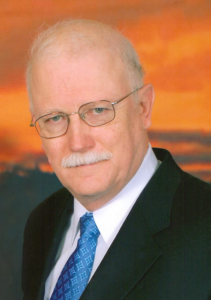
Richard A. Lawhern is a nationally recognized health care educator and patient advocate who has spent three decades researching pain management and addiction policy. His extensive body of work, including over 300 published papers and interviews, reflects a deep critique of U.S. health care agencies and their approaches to chronic pain treatment. Now retired from formal academic affiliations, Richard continues to engage with professional and public audiences through platforms such as The National Campaign to Protect People in Pain, LinkedIn, Facebook, and his contributions to KevinMD. His advocacy extends to online communities like Protect People in Pain, where he works to elevate the voices of patients navigating restrictive opioid policies. Among his many publications is a guideline on opioid use for chronic non-cancer pain, reflecting his commitment to evidence-based reform in pain medicine. He was recognized in Marquis Who’s Who in 2025 and named a Fellow of the European Society of Medicine in 2026.
Your KevinMD author page is one of the top results for your name. Turn it into a premium profile, publish in 1 to 3 days, and get a guaranteed podcast slot.