Physicians writing on KevinMD about the diseases they treat and the people who have them: cancer and its screening arguments, pain and the drugs that treat it, diabetes and the obesity argument, mental illness and who gets treated for it, and the decisions at the end of a life. Five maintained records draw on this archive: Cancer: what physicians say, in their own words, Opioids: what physicians and pain patients say, in their own words, End of life: what physicians say, in their own words, Diabetes and obesity: what physicians say, in their own words, and Mental health: what psychiatrists and physicians say, in their own words.
Last week, a former patient came back to see me after spending several months with another doctor at a practice where I once worked. During our visit, the patient seemed uneasy and told me that the other doctor had made disparaging comments about me. I did not believe the patient meant to hurt me by sharing this. Still, the words stung. More importantly, the patient had been placed in an …
Read more…
When criticizing another physician harms the patient
I have spent decades in health care. I know how much physicians rely on clinical judgment, pattern recognition, and experience. Those skills matter, and they also carry a risk: The human brain is constantly filling in gaps, and sometimes the story we create about a patient can become more powerful than the information the patient is trying to give us.
I experienced this recently during a telehealth visit with a physician …
Read more…
How does the halo effect in medicine harm patients?
Medicine has become remarkably sophisticated at measuring the human body. We measure blood pressure, heart rate, temperature, oxygen saturation, laboratory values, imaging findings, and increasingly complex biomarkers. Yet one of the richest sources of information about a patient’s functional health may pass directly in front of us every day without being systematically captured:
How the patient walks.
I believe a brief gait video deserves consideration as a functional vital sign. A 10- …
Read more…
Gait as a vital sign: What a 20-second video reveals
For nine months, I did not stand on a scale. I did not look at myself in a full-length mirror. I told myself I was busy. The truth was that I was frightened of what I might see.
I had reached my target weight, and my BMI had fallen below the range my prescriber and I intended. We discussed reducing my dose. Clinically, it was reasonable. Psychologically, it felt like a …
Read more…
When the food noise stops, the identity crisis begins
“Is there a doctor or medical professional on board?” Answer that call and you may be treating anaphylaxis in a cramped cabin, mid-turbulence, with no medical history, no weight, no records, and no emergency department nearby. You should be able to assume one thing: that the aircraft’s medical kit holds the right medication, in a usable form, at the right dose. Under a new Federal Aviation Administration (FAA) proposal, that …
Read more…
Epinephrine on airplanes should not depend on the airline
Artificial intelligence (AI) has rapidly reshaped cardiovascular imaging, particularly echocardiography, where machine learning algorithms now assist in image acquisition, chamber quantification, valvular assessment, strain analysis, and diagnostic interpretation. While these technologies promise enhanced efficiency and diagnostic accuracy, they also introduce an unresolved legal dilemma: When AI contributes to a missed diagnosis, who bears responsibility? Traditional malpractice principles designate the interpreting cardiologist as the primary legal decision-maker. Yet these doctrines evolved …
Read more…
When AI misses a diagnosis, the cardiologist signs alone
I vividly recall the expression on Tim’s face during his initial visit to my exam room. Rather than relief, he exhibited suspicion. After enduring years of chronic pain, Tim had been referred to me, an interventional physiatrist, and had come to perceive a referral to “pain management” not as an opportunity for assistance, but as a judgment. He feared I would regard him not as a patient in need, but …
Read more…
Why a pain management referral feels like an accusation
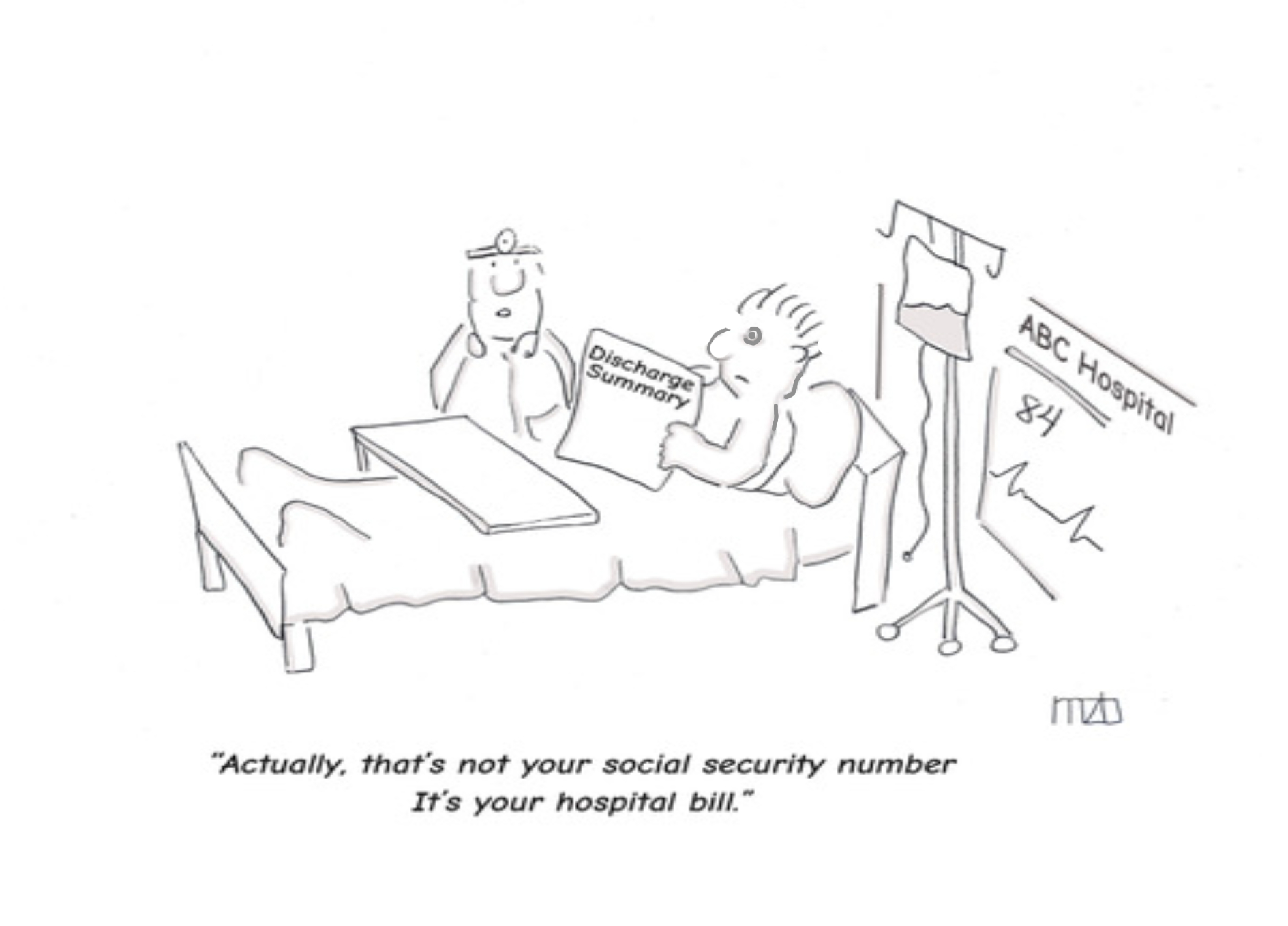
Last summer I received a $9,000 bill for an overnight hospital stay that I probably could have done without, medically speaking. It started two days earlier, when I went in for a prostate biopsy. Mind you, this was my third biopsy and each one, including this one, turned out to be negative. Nevertheless, my doctor keeps asking me to undergo these invasive …
Read more…
Not medically necessary: the three words that cost me $9,000
For decades, stroke survivors have been told the same thing: Whatever function you haven’t recovered in six months, you likely never will. That assumption is now being dismantled. The American Stroke Association estimates that 1 in 4 American adults will experience stroke in their lifetime, often with devastating consequences. The 2011-2018 National Health and Nutrition Examination Survey estimated approximately 5.7 million U.S. adults living with at least one disability due …
Read more…
Is chronic stroke recovery really capped at 6 months?
They met in the U.S. Army and fell in love instantly. Though they went their separate paths, they both had brief but failed marriages and then reunited. It was a second marriage for both of them as they muddled through their previous baggage from their first marriages.
He was a captain in the Army, 6 feet tall. She was a 5’2″ petite, bright, and smart medic. They clicked quickly and reconnected. …
Read more…
Alzheimer’s paranoia and the gun nobody locked up
I’d really like to talk with my fellow women.
There is a courtroom in Plymouth, Massachusetts where a jury is deciding whether a mother is criminally responsible for the deaths of her three children. This mother was a labor and delivery nurse. She had a five-year-old, a three-year-old, and an eight-month-old. Her defense says she was in the grip of postpartum psychosis. The prosecution says she knew exactly what she was …
Read more…
Maternal mental health and the myth of endurance
“Doc, your next patient is nonbinary.” I say some version of this to physicians when I teach about LGBTQ+ affirming care, then ask, “What is the first thought that comes to mind?” The responses come quickly: “I freeze.” “Oh, God. We were never taught that.” “I don’t know what to say.” “I don’t want to say the wrong thing.” Sometimes there is nervous laughter. Sometimes there is silence.
These are highly …
Read more…
Why do physicians freeze with LGBTQ+ patients?
The Lindsay Clancy trial has raised a popular concern surrounding the notion of mothers having “intrusive thoughts” after delivery, specifically dangerous ones that, as in this case, may even be related to the murders of Lindsay Clancy’s three young children. However, “intrusive thoughts” are common after delivery and show up in many different ways in psychiatry, most of which are not dangerous. For example, one common and very scary …
Read more…
Lindsay Clancy trial: intrusive thoughts versus psychosis
The most profound lessons in compassion did not come from textbooks or training. They came from the patients who invited me into their stories.
“Will you stay for a little while?”
A patient asked me this question after receiving news that would change the course of her life. I had no medical solution to offer. I could not take away her fear or change her diagnosis. All I could do was pull …
Read more…
The true meaning of compassion in health care
I’d asked whether she was eating a lot of salt. Third admission in a year, I was going down her med list, and the question wasn’t on the list. It came out sideways, the way things do at the end of a long afternoon.
Same as regular. Like everyone.
Two grams a day is what I’d told her. First visit, second visit, printed on both after-visit summaries. She nodded each time. I …
Read more…
Food is medicine programs need infrastructure to work
I fitted a 20-year-old for a full set of dentures last year.
Not implants. Not a partial. A complete set, top and bottom, the kind I was trained to expect on patients in their seventies. By the time he sat in my chair, there was nothing left to save. Years of untreated decay had worked through enamel, then dentin, then the roots themselves, one tooth at a time, until removal was …
Read more…
Why a 20-year-old needed a full set of dentures
After years of working with numerous health systems and my own experiences as a patient and caregiver, I have come to realize how challenging it can be to manage one’s own care. Care doesn’t stop when patients leave a health care facility. It is often just the beginning of a long journey for them. Most often, after a doctor visit or surgical procedure, a patient has an extensive to-do list: …
Read more…
Care orchestration should start in the patient portal
On August 3, a nineteen-year-old sailor went overboard from the aircraft carrier USS Abraham Lincoln. Rescuers pulled him from the water and took him for medical care. According to his wife, he was attempting to die by suicide. The Navy has not confirmed this, but news reports say charging documents accuse him of malingering under Article 83 of the Uniform Code of Military Justice and being absent without leave under …
Read more…
Punishing a suicide attempt teaches people to hide it
Somewhere tonight, a parent is managing a feeding tube and watching a monitor, deciding whether a small change in their child’s breathing is the start of something serious. Families of children with special health care needs do this around the clock. They run what amounts to an intensive care unit at home, handling medications and equipment that would test a trained nurse. They do it because they want their child …
Read more…
Family-centered care starts with the parent at 2 a.m.



















