














Listen and followApple PodcastsSpotifyYouTubeMore apps · Browse all episodes
“As a professional woman who most identifies as a physician more than any other title, I know that I run the risk of losing myself to this disease. I am not ignorant to the risk. I understand that my identity is supposed to be separate from my achievements and that my babies are supposed to make me value something greater than my career. But my oath runs through me in a way that I can only describe as visceral. And for this reason, the pain is that much worse. Because as much as I miss them. And as much as I miss me. I can’t not keep going. Because they deserve the best we have to offer. And those of us who have stood here on the front lines for over 10 months know more than anyone else, that if we don’t do it, then who will?”
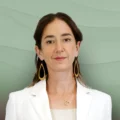
Nicole M. King is an anesthesiologist.
She shares her story and discusses her KevinMD article, “I keep going because I miss them. And I miss me.”
Did you enjoy today’s episode?
Please click here to leave a review for The Podcast by KevinMD. Subscribe on your favorite podcast app to get notified when a new episode comes out!
Do you know someone who might enjoy this episode? Share this episode to anyone who wants to hear health care stories filled with information, insight, and inspiration.

Hosted by Kevin Pho, MD, The Podcast by KevinMD shares the stories of the many who intersect with our health care system but are rarely heard from.


Transcript
Kevin Pho: Hi, and welcome to the show, where we share the stories of the many who intersect with our health care system but are rarely heard from. My name is Kevin Pho, founder and editor of KevinMD. Today we welcome back to the show Nicole King. She is an anesthesiologist, and she wrote the KevinMD article “I keep going because I miss them. And I miss me.” Nicole, welcome back to the show.
Nicole M. King: Thank you for having me back.
Kevin Pho: We’ll get into the article in a little bit, but for those who didn’t listen to your first podcast, can you briefly share your story and your journey to where you are today?
Nicole M. King: So, like you said, I’m Nicole King. I am an anesthesiologist who actually started in the Navy. I spent 10 years in the Navy before leaving active duty in 2018 and going back to fellowship. I did a critical care fellowship at Vanderbilt and have spent the last two and a half years, I guess, trying to find my footing in civilian medicine. Now I spend the majority of my time in the ICU, though I do spend time in the operating room occasionally, and I have spent the majority of the past year mainly just fighting COVID, along with the rest of the intensivists across the country.
Real physician voices, twice a week
Free, and one click to unsubscribe.
Kevin Pho: So we’re speaking towards the end of February, and the numbers seem to be getting a little bit better. So through your lens as an anesthesiologist, and what you see both in the OR and the ICU, tell us what you see.
Nicole M. King: I think that where I’m at as of right now, which is February 17th, is a far cry from where I was a month and a half ago. The numbers are definitely decreasing. I think we see that in the statistics, not only nationwide but locally, within the hospital and within the regional numbers. The numbers of cases as well as the numbers of deaths from COVID are decreasing, though I think most of us will also acknowledge that the number of deaths is not coming down as quickly as it did after the past surges. But I think that’s just the result of the sheer number of people who were diagnosed over the past two and a half months.
So I do think we are hitting a reprieve, and I think we feel relief from that reprieve. But I think those of us who have been in this since the beginning also recognize that this reprieve is still a lot busier than last summer. So the numbers that we’re dealing with on a daily basis may be better than they were two months ago, but they’re still double what they were last summer. So we’re still definitely in it, but maybe seeing a tiny little light at the end of the tunnel. But it is still very small.
Kevin Pho: So from your perspective, tell us what worries you. What keeps you up at night in the coming months?
Nicole M. King: The focus on vaccination, because vaccinations are the way we get through this, but the number of people who have been vaccinated does not justify the change in behavior I’m seeing because of vaccination. I see this in both medical and non-medical communities: this assumption that because the vaccines are here, and we’re rolling them out and getting them into people’s arms, which is absolutely a scientific miracle, there’s this big push, I think, to just get to the other side of the vaccines, and then we’ll be able to get back to normal. But the problem is there are months between now and that reality, and in those months we really shouldn’t be changing our behavior.
I think because we are changing our behavior, and because of other things that are concerning to all of us in this world, such as the variants, and such as the massive power outages across the country right now causing people to huddle together and depend on each other to survive, we will unfortunately not really see the benefits of vaccination before we see another, smaller, but I think another surge. That is kind of where I am at right now.
Kevin Pho: So in your community, tell us what kind of behaviors you’re seeing that worry you.
Nicole M. King: Well, I’ll be honest: In my community, I live in the Midwest, and there has always been a little bit of a pushback against state involvement or government involvement in regulations. So I’m not necessarily sure there’s been a huge change just in my environment. But just in general, it seems that people are starting. I keep seeing the comment, “I haven’t done this in a year, and I’m so excited. I’m finally doing XYZ.” And I’m thinking, “But why now?”
And I get it. We are all so tired. I’m tired. I would like to get rid of my gray hair and do things to make myself feel normal. At the same time, I kind of feel stuck, in that I haven’t done it for a year; I can hold on a few more months. But I think just overall, in general, people are done holding on. So you see a lot more vacations, a lot more dinners, a lot more congregating with groups of people, some of whom may be vaccinated, but not everyone is vaccinated, and just kind of pushing those boundaries, expanding your circle slowly but surely, which is what concerns me.
Kevin Pho: All right, so we’re approaching one year of doing this, and it’s changed you. It has changed everyone around you, and you wrote about that in your KevinMD article. It’s titled “I keep going because I miss them. And I miss me.” Now, for those who didn’t read the article, can you just walk my audience through it and share the story of why you decided to write it?
Nicole M. King: So I wrote this piece about halfway through January. The end of December into the beginning of January, as most physicians, and intensivists specifically, will tell you, was bleak. Though the intensity of the bleakness was not as crazy as it was when I was in New York last April, it was much crazier than it has ever been in most other places in the United States, including where I’m at currently. I felt kind of this despair, and I’m thinking, “What is it about this time that is making it so different from the previous times?” Even though I know a lot of it has to do with the fact that it just keeps happening and we’re just so tired.
But I realized that, as an intensivist, I spend the majority of my time communicating with and caring for patients’ families, and that’s actually the part of my job I enjoy the most, and I can’t do it right now. Any time I do have a relationship or a communication with a family member right now, it’s usually an end-of-life scenario, and it is something that you would normally do maybe on a weekly basis, but not on a daily basis. So it’s just the heaviness of carrying around this burden of other people’s pain, but not being able to really have a relationship with them the way I normally do. So I carry their pain, but we can’t comfort each other. I know that sounds crazy, that a family member of somebody in the ICU would be comforting me, but it’s the relationship that comforts me, and that’s what gives me so much joy in my job, and I am missing that right now, in addition to missing life: missing my kids; my husband has worked in the home by himself, half taking care of kids and working remotely, for a year; missing my family, who lives out in a different state. So all of that in general, but more specifically, missing the part of my job that is why I keep going.
Kevin Pho: So can you put us in a room with you and give us a story or an anecdote of some of these difficult conversations that you’re having now, you said, daily with patients?
Nicole M. King: So we all know that COVID, for lack of a better word, doesn’t kill quick. It is a slow and painful death, especially for those of us who see this repeatedly in the ICU. We go through about two to three weeks with these patients where we’re talking to the family members almost daily, usually over the phone, occasionally in the hospital, one family member at a time, as they stand outside the patient’s room looking at their loved one but not being able to touch their loved one. You enter into this phase where there’s really not any improvement, but there’s really nothing getting drastically worse. So you’re just waiting. You’re kind of waiting for the other shoe to drop.
It’s in that waiting that you feel like, when you talk with the family members, you almost don’t even know what to say anymore. You tell them this is a long-term process, not only in the critical times, but also if we get through the critical times, and, “I can tell you right now that we will likely be having the same conversation tomorrow, and next week, and maybe even a couple of weeks from now.” But the vast majority of patients I’m taking care of right now, and granted, I see the most critically ill, because I mainly do ECMO for COVID patients, is that we will do all of this for two to six weeks, and then they die. I can’t just tell family members that.
So I have to be able to communicate with the family members that we have hope, and that we’re going to keep fighting, and we’re going to hope and pray that we can get to the other side of this, but also knowing and carrying the burden of all the death we’ve seen over the last couple of months, and knowing that the likelihood is that no matter what we do, and how hard we try, and how great the care we provide these patients, we likely won’t be able to get their family member through that. But I also have to give them hope. That in and of itself is something that really kind of weighs you down and burdens you, and burdens the nurse practitioners and the residents that also work with me on my team.
Kevin Pho: You talk about that burden of doing this for months, and these patients’ weeks in the ICU, their status changing very slowly. Professionally, how does that change you as a physician going forward?
Nicole M. King: I think if you would have asked me that a month after returning from New York City, I would have said it would have motivated me and put me back in the fight. But a year in, it really does make you think, “How much longer can I do this?” And it’s not that I want to leave medicine, because I said the last time I was here, “Don’t leave medicine. Stay, help me move us forward, help me fix this.” And I don’t even know what that means, but I just don’t want people to walk away from medicine, because I feel like we have a future here.
But this many more months into it since the last time we spoke, I do understand that that burden becomes harder and harder to carry. I think the only way we get through it is by being able to eventually get back to where we value and honor those personal connections we have with our patients and with the people that we work with, and we treat each other with kindness and grace, and we really focus on what we can offer each other as humans, and not so much offer each other as professionals, if that makes sense. It’s incredible what a small hand on the back, a hug, a handshake, or just looking in somebody’s eyes without PPE on can do for the soul. I think right now I recognize more than ever that that is what’s going to have to sustain us, because that’s what’s missing right now.
Kevin Pho: So not only do you have the burden of dealing with these tremendously difficult cases with a family, but you also have to lead a medical team as well, of interns, residents, and people with less experience than you. Now, how do you do that? How do you lead a team of less experienced physicians through such a difficult ordeal?
Nicole M. King: The one thing I will say for my team is you lead with passion, or you lead by example. My corpsman in the Navy used to always say, “You lead by example, and you motivate by example.” So every day that I come to work, I just try to show the people on my team how much I care, and how much I am trying to take all of the knowledge and wisdom that I have from prior to reaching my current destination, and I pour that into how I care for these patients. I try not to just accept things at face value. I try to always dig down and figure out what’s really going on, and really dig in to understanding what’s happening with this patient, but also what’s happening with the patient’s family, because a lot of family dynamics have become very important to how we take care of these patients right now, in this very interesting and weird world that we’re living in.
So I think I just show up and try to do my job and do my best for the patients, and also give understanding to those residents, interns, and medical students if they don’t maybe perform at their top abilities, because how can you, this far into this sort of pandemic? Again, not excusing anything, but understanding where people are coming from, and trying to just have a few more conversations where you say, “How are you today? Tell me what’s going on. Is there anything I can help you with, either personally or professionally?” Just trying to add that little human touch to what we do on a daily basis, because I think that’s the only thing that’ll get us through and be able to help us create kind of a foundation for where medicine needs to go from here.
Kevin Pho: We’re talking to Nicole King. She’s an anesthesiologist, and she wrote the KevinMD article “I keep going because I miss them. And I miss me.” Nicole, thank you so much for painting such a visceral picture of what’s going on now, one year into the pandemic, in the critical care unit. Now, for those other critical care physicians across the country who may be going through a similar ordeal like you’re describing, what’s something that you’ve learned over the last few months that you could share? What kind of advice can you give the other critical care physicians undergoing a similar scenario?
Nicole M. King: For a long time, in the first six months, I felt like focusing on the things that were getting me through at that point in time: innovation, advocacy, and listening, as we were going through the upheavals of last summer. I think I am starting to slowly uncover the fact that all of us in the ICU tend to deal with things by really getting into our heads and being very cerebral about things, because that’s how we get through life. But it’s understanding that every day when we go to work, if something happens, or somebody says something or does something that doesn’t sit with you quite right, instead of immediately responding back with frustration and anger or hurt or pride, sitting with it, understanding where that person is coming from, and understanding that we’ve all been through this in the past year, and just extending a little bit of understanding that we all are carrying these burdens, and in order to unburden ourselves, we’re going to have to reach out to each other and not judge each other, and just support each other.
Kevin Pho: And my final question: What is your take-home message that you want to leave with the KevinMD audience?
Nicole M. King: That it’s OK to not be OK. I have done a good job of always being very transparent in everything that I do, but I also am very good at just always getting through it and moving on to the next thing. But right now, it’s OK to not be OK in this moment, and to lean on the people who are offering their support.
Kevin Pho: Nicole, thanks again for coming back on the show. Thanks for your insight and time, and best wishes going forward.
Nicole M. King: Thank you again.
Listen and followApple PodcastsSpotifyYouTubeMore apps · Browse all episodes