






Listen and followApple PodcastsSpotifyYouTubeMore apps · Browse all episodes
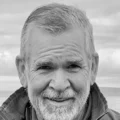
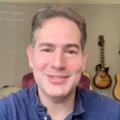
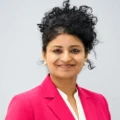
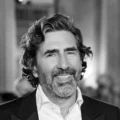
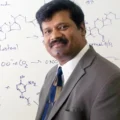
Orthopedic surgeon Yoshihiro Katsuura discusses his KevinMD article, “It’s not a normal job, folks: How 3 elemental forces of reality shape the profession of medicine.” In this episode, Yoshihiro, along with premedical students Andrew Roos and Rebecca Hu, explores the cultural, economic, and natural forces that uniquely burden physicians, leading to high rates of burnout and workforce attrition. Together, they analyze how these elemental forces exacerbate the demands on medical professionals and discuss the resulting impact on patient care and the health care system. Yoshihiro also offers innovative training approaches designed to equip the next generation of doctors with the skills needed to navigate these challenges, aiming to mitigate burnout and enhance physician well-being. Listeners will gain a deeper understanding of the systemic issues in the medical profession and discover actionable strategies for fostering a more sustainable and fulfilling career in medicine.

Our presenting sponsor is DAX Copilot by Microsoft.
DAX Copilot, by Microsoft, is your AI assistant for automated clinical documentation and workflows. DAX Copilot allows physicians to do more with less and turn their words into a powerful productivity tool. DAX Copilot automates clinical documentation—making it available in the EHR within minutes—and clinical workflows, including referral letters, after-visit summaries, style and formatting customizations, and more.
70 percent of physicians who use DAX Copilot say it improves their work-life balance while reducing feelings of burnout and fatigue. Patients love it too! 93 percent of patients say their physician is more personable and conversational, and 75 percent of physicians say it improves patient experiences.
Discover AI-powered solutions for clinical documentation and workflows. Click here to see a 12-minute DAX Copilot demo.
VISIT SPONSOR → https://aka.ms/kevinmd
SUBSCRIBE TO THE PODCAST → https://www.kevinmd.com/podcast
RECOMMENDED BY KEVINMD → https://www.kevinmd.com/recommended
GET CME FOR THIS EPISODE → https://www.kevinmd.com/cme
I’m partnering with Learner+ to offer clinicians access to an AI-powered reflective portfolio that rewards CME/CE credits from meaningful reflections. Find out more: https://www.kevinmd.com/learnerplus
Transcript
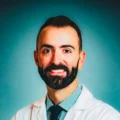
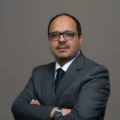
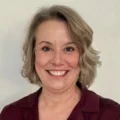
Kevin Pho: Hi, and welcome to the show. Subscribe at KevinMD.com/podcast. Today we welcome back Yoshi Katsuura, and we also have Andrew Roos and Rebecca Hu. Yoshi is an orthopedic surgeon, and Andrew and Rebecca are premedical students. They are the co-authors of the KevinMD article “It’s not a normal job, folks: How 3 elemental forces of reality shape the profession of medicine.” Everybody, welcome to the show.
Yoshihiro Katsuura: Hi, Kevin. Thanks so much for having us back on the show.
Kevin Pho: Perfect. OK, Yoshi, start with you. Tell us what this article is about.
Yoshihiro Katsuura: Yeah, thanks so much, Kevin. First off, let me introduce myself. My name is Yoshi Katsuura. I’m an orthopedic surgeon. I practice in Northern California. I was formerly on the faculty at Weill Cornell Medical College and at the Hospital for Special Surgery in New York, practicing spine surgery, but now I’m in private practice in Marin, California, which is just north of San Francisco. And not only do I run my own practice, but I also run my own research group, and we have a couple of my students on with me today.
So one of the things that I’m really interested in is giving the tools and tactics that are, I think, very useful and not necessarily taught in medical school to the young doctors in training, not only so that they can nurture these skills and practice things, but also have a realistic understanding of what the job entails. That was really the motivation for why I wrote this article.
And one of the things that I’m interested in is physician burnout. We know that physicians play a vital role in society. We care for you, your parents, your kids, and we do it during your most vulnerable moments. So I think it’s one of the most critical, if not the most critical, roles in society, and we need to protect and nurture the people who are going into that role as much as possible. But burnout among doctors is kind of at an all-time high right now, and there’s been a ton written on the subject. The purpose of this article was really for me to just share my own personal experiences, some of the challenges that I think we face on a day-to-day basis, and what can be done to help support those who dedicate their lives to healing other people.
So the way I think about it is trying to boil it down into its most basic concept: What makes the job difficult? Hence the title of the article. And thinking about this, I boil it down to what I call the forces of reality. I call them forces because these are forces that I feel as I go through my day-to-day. I come in and interact with these various types of forces, and they shape how I practice. They’re fundamental because they’re really constant and they’re irrevocable. There’s not a lot that I can do to change these things in my practice or how I navigate my day-to-day.
There are three main forces that I think we contend with. The first are the forces of culture. The way that I define this is basically trends in social acceptance, inclusion, or organizational politics that we face, administrative politics, and also medical-legal conventions. I’ll give a little bit of an example of that in a moment. The next force is the forces of the market, so market forces. I talk about these as basically economic forces of compensation rates for physicians, supply and demand, and factors that are driven by things such as governmental regulation, value and productivity measures. So that’s hopefully pretty self-explanatory. The next and last force is the forces of nature. Now, these are probably the most visceral, the most difficult ones that we deal with. These are the powerful elements of disease and sort of the unknowns in treatment and how prognosis works, and some of these things are really out of human control. I think that’s what all three of these forces really have in common: There is some element of, you just can’t control how these things work. They’re too powerful.
So an illustration that I’d like to give is just an example from my day yesterday and how I dealt with and felt all these various forces. Yesterday was an operating day for me. I spent about twelve hours in the operating room, and in the operating room, I was dealing with the unique anatomy of the patient and the pressures of performing surgery on a human being. I dealt with the forces of nature, so the fundamental forces of physiology, the physics of actually inserting orthopedic instrumentation into the human body. I dealt with my own physiology, becoming fatigued and exhausted through the course of this very grueling day. My hands became blistered and painful as I was doing this, and I had to deal with mental fatigue.
And not only that, but surgery is a team effort, and it requires collaboration not just between me and the patient, but also I have to orchestrate an entire team around me to effectively complete the surgery. That involves really dedicated nurses, techs, and people who are in the game with you, boots on the ground, and who I think share a lot of the same goals as physicians. But then there are other, more abstract people that I have to deal with, including administrators that may have some different priorities than what my priorities are in the given moment. And navigating these logistical challenges, securing the necessary resources to actually complete these surgeries, really falls entirely on the shoulders of the surgeon as their responsibility. If a given resource is not available, that pressure is really put on you rather than the hospital system as a whole. So you have to navigate all these cultural forces to ensure proper staffing and really safe and excellent patient care. It’s a huge responsibility.
And during the whole time, I’m dealing with the market forces as well. As a private practice physician, I’m always thinking, “OK, what’s the hourly reimbursement rate for what I’m doing?” If the surgery is more difficult, if it takes longer, then the hourly compensation for that case obviously goes down, because you have a set fee for that case. So if the case is taking longer, that means not only am I getting paid less, but also I have less time to spend with my family. So you really do face those visceral market forces.
So I invited a couple of my premedical students on. We talk about these things a lot, and I try to arm them with the tools to deal with these forces. I have a couple of ideas for how we can do this, which I’m happy to share, but I’ll open it up at this point.
Real physician voices, twice a week
Free, and one click to unsubscribe.
Kevin Pho: Yeah, so let me follow that up, Yoshi. You talk about your day yesterday. You talk about, of course, all these forces, and I’m sure physicians across the country are dealing with the same things that you’re describing. So, Yoshi, how does that wear on you mentally, day after day after day of this, especially in private practice, where you have to deal acutely with the market forces? How does that affect your mental wellness?
Yoshihiro Katsuura: Well, it’s a huge responsibility to shoulder, and so at times you feel like the world is just on your back, so to speak. It’s a pretty incredible pressure when you think about it, and if you actually break it down into its components, you’re like, “Whoo, on any given day, I have to deal with a lot.” You don’t necessarily think about it when you’re in the heat of the moment, but sometimes, especially when things cool off, you realize, “Whoa, there was a lot going on there.”
Kevin Pho: All right, so Andrew and Rebecca, both of you are premedical students. I have a daughter who’s a sophomore, also on a premedical path, so I’m very familiar with the path that both of you are going through. I’m sure both of you have shadowed, volunteered, of course observed Dr. Katsuura in terms of what he’s talking about. So let me ask each of you. Andrew, why don’t you go first? Tell us the impression that you’re getting from the various people that you’re shadowing, the doctors that you’re observing. Do you get a sense of these forces that Yoshi is talking about that may lead them to potential burnout? Tell us what you’re seeing.
Andrew Roos: Absolutely. So I think, in general, in premedical training, at least in terms of school, and even into medical school, you learn about science and medicine. That’s your core focus, right? No one really exposes you to these other ideas of the pressures that you have to deal with, those being the cultural forces and economic forces. Over this last year, I’ve really spent a lot of time with Dr. Katsuura in his practice, and I’ve seen how so much of his time and mental effort and energy is dedicated towards not the science part, not the medicine part, but dealing with administrators, marketing his private practice, spending time making sure that his clinic is running well.
And I think that it’s really valuable as a premedical student to be exposed to these kinds of private practices, because you get to see behind the scenes, which you normally wouldn’t see with just standard premedical training. You get to be exposed to all these different forces that a doctor really has to deal with on a day-to-day basis. I’ve seen Dr. Katsuura, and a lot of his free time is spent thinking about, say, the business aspect of medicine rather than just strictly the orthopedic medicine part. So I do think there’s a lot of value in being exposed to a private clinic setting before, let’s say, medical school.
Kevin Pho: And Rebecca, tell us what you’ve observed from your various shadowing and volunteer experiences about some of these non-medicine forces that are affecting physicians today. What are your impressions?
Rebecca Hu: Yeah, for sure. First of all, thank you for having me on the show. I definitely echo a lot of the ideas that Andrew brought up. I personally have shadowed doctors in both a private practice and a hospital setting, and I will definitely agree that in a private practice setting, you definitely see a lot of the other non-natural forces of reality come into play. For example, one big one is the economic forces of reality. Especially in a private practice, doctors are constantly needing to deal with the administrative issues like scheduling, and when they need to go into the hospital to perform a surgery, managing their bookings, working with their team, like all the nurses and all the receptionists that are helping them out. So those forces are really, really prominent when you’re looking at the private practice setting.
It does happen in the hospital setting, but with doctors having such a well-structured and organized system, I see that they have to focus less of their energy on specifically dealing with these economic forces of reality and these administrative forces. So I think that’s what makes it really unique about being a premedical student and getting to see the private practice setting. I think that in a hospital setting, I wouldn’t have been able to see how these non-natural forces play such a big role in what doctors have to deal with every day. And so I think that, as premedical students, trying to get exposed to a variety of clinical settings and different roles within the health care space really enriches the experiences that you get.
Kevin Pho: So I’m glad that you have that opportunity, of course, to kind of see what goes on behind the scenes of medicine, because, like both of you said, Andrew and Rebecca, you don’t get to see that in your premedical training, and for that matter, during medical school training as well. A lot of medical students don’t get to see what goes on behind the scenes. I think that one of the things that you’re absolutely learning is that there are a lot of forces outside of the exam room, outside of the hospital, that influence the professional lives of physicians and the care that we give to patients. So, Yoshi, you mentioned that we have some paths forward that you would want to talk about in terms of addressing these potential causes of burnout. So talk about those.
Yoshihiro Katsuura: Yeah, well, the first is recognizing that these forces exist. I think that, as Andrew and Rebecca alluded to, you go through these rigorous undergraduate programs focused primarily on learning science and dealing with the natural component of practicing medicine. I think that’s what most people are passionate about, and that’s what drives most people into medicine. They’re very interested in the science, in the clinical care, and the technical aspects of doing their job. That was why I went into medicine. That’s what I was really passionate about at the time. But these other hidden forces, I was basically totally oblivious to, and it was not until I had to face them head-on, in this sort of brutal market that is medical practice, that I realized how important they are.
So that’s one of the things that I like to share with the students in my research group: These other forces exist, and you have to at least know that they are going to be a major part of what makes up your day as a physician, whether you’re in private practice or part of an academic group or part of a large hospital group. You’re still going to contend with these three vital forces. I don’t think that’s necessarily unique to private practice, although I do think it’s in its most visceral form in private practice, but it’s something that all physicians are going to be exposed to, which I think you might agree with.
So for me, dealing with these forces, and it’s like you asked me, how do you deal with that pressure of not only caring for the patient and dealing with the natural forces, which you think are the most important, but also these other things that could potentially have a dramatic impact on your practice, your livelihood, and your overall happiness? It’s a lot to contend with. For me personally, I think about channeling unlimited love for what I do and why I do what I do. What is it about it that I really like? I mean, obviously, going into the operating room and taking disease out of the body and fixing things is really rewarding, and it’s something that I have an unlimited love for.
Obviously, one of the problems, I think, with a lot of physicians is that they enjoy their job so much that they would probably do it for free. You go through your training, you’re not getting paid, and you’re doing it for free. You’re really doing it for the love of the craft and the love of the science and the job. I think remembering that is really important for getting through your day: that you love what you do and that you really have an unlimited love for it, not only dealing with the patients and the natural forces, but also dealing with medical students, dealing with the people in your office that you really care about, your staff and the people who are around you, and that you have this basic curiosity for how things work. I think not only being passionate about educating but also being passionate about learning, and having that passion throughout your career, is how you deal with these things.
So every time you come into contact with a natural force, you’re trying to navigate it, you’re trying to beat it, you’re trying to learn from it, and then pass that on to the next generation. I think that is very rewarding, and that’s how I deal with a lot of these issues. And you have to have an insatiable hunger for improvement. I think a lot of physicians are always trying to do better. They’re always trying to optimize and figure out new ways of doing things better. They’re doing research. They’re trying to improve their clinical skills or their business skills or their skills in dealing with administrative forces, cultural forces. I think you have to have this insatiable hunger to do that, and really this desire to improve and be better from day to day, and that’s what allows you to keep coming back into the arena and doing it over and over again.
And finally, I would say just never give up. I tell the students in my group, “You guys are critical for society. You don’t feel like it right now, and no one really cares about you, but you guys are the small crystals that will grow over the next ten years of training to become the frontline workers that take care of the sick, that take care of the ill, and really shoulder this massive responsibility for society.” So all the people, all the premedical students out there, you guys are absolutely critical for society, even though it may not feel like that and no one will ever tell you that you are important, but you are. Even the people who are deciding to go into medicine but may not go into medicine, but are still kind of part of that arena, they’re all part of the societal force that is absolutely critical for society. My passion is trying to give these tools so that the people who are going to be exposed to these forces are able to contend with them and be as protected and as safe as possible, not only for their patients but for themselves.
Kevin Pho: So, Yoshi, to follow up on that, you mentioned that when you were training, you were not exposed to a lot of these economic forces and forces outside of medicine, like Andrew and Rebecca are, working with you. If you were to do this all over again, is there anything that you would have done differently during your medical journey?
Yoshihiro Katsuura: Absolutely, Kevin. I think, and this is one of the things that I tell Rebecca and Andrew, you have to have some kind of business knowledge. Rebecca didn’t talk about it, and maybe she’ll want to say something about this, but she’s actually double-majoring in not only premedical school but also business. I think that’s phenomenal, and that was one of the reasons why I was interested in working and collaborating with her, because medicine ultimately is a business. If you don’t understand the business components of it, you will be left in the dust, or other people will take advantage of you, because you will ultimately harness this incredible knowledge and power once you complete your training, and you can either use it or you can let other people use it. So having this business knowledge, which I by no means think that I have right now, but I’m actively trying to gain, is critical. I think you have to understand that and at least be interested in the business side of medicine.
And then also realizing that the cultural forces, the administrative forces, are so powerful, and that your interactions with other human beings are incredibly nuanced, and you have to approach them as you would approach doing a surgery, with very, very careful steps and focus. Dealing with other human beings, I think, can be riddled with potential pitfalls and dangers that you may not be aware of, and so you just have to have that kind of mindfulness going through, and you have to cultivate it from a young age. So those are the things that I think I would focus on, Kevin.
Kevin Pho: Right. We’re talking to Yoshi Katsuura, Andrew Roos, and Rebecca Hu. Yoshi is an orthopedic surgeon, Andrew and Rebecca are premedical students, and we’re talking about their KevinMD article, “It’s not a normal job, folks: How 3 elemental forces of reality shape the profession of medicine.” Now, I’ll just ask for some take-home messages from all of you. Andrew and Rebecca, I’m going to ask both of you the same question. In addition to your take-home messages, talk about your work with Dr. Katsuura and writing his paper. How has that altered your feelings about medicine? Has that changed what you thought medicine would be like, and did it alter your trajectory in terms of your passion and going into medical school? So Rebecca, I’m going to start with you: take-home messages, and talk about how your trajectory was potentially altered by working with Dr. Katsuura.
Rebecca Hu: Yeah, for sure. As Dr. Katsuura mentioned, I am also studying business, and I think my biggest take-home message would just be the importance of, as an undergrad, even though you’re on the premedical track, exploring some form of interdisciplinary studies. I think that my business degree, in addition to my biology degree, has really enriched my understanding of the world and how I view the medical field. I think it’s also equipped me better to deal with the forces that we’ve talked about today in this podcast, especially the economic forces but also the cultural forces. So I think that as premedical students, we’re going into the medical field, and we’re trying to tackle some of today’s challenges. I think that if we premedical students explore different fields, get different viewpoints, that’s going to really enrich and help us be able to better tackle these challenges.
I think that from working with Dr. Katsuura, he’s really done a really good job of trying to equip us with these tools and help us start thinking about these questions. As you mentioned before, we’re all entering the medical field with a noble pursuit of helping patients, trying to deliver better care. However, as the world is evolving, AI is advancing. There are going to be lots of different challenges and a very different environment that we’re going to face. So I think with Dr. Katsuura’s work on trying to develop better fitness, develop better tools for surgeons, for physicians, and also asking us some of these critical questions, like, “Oh, what are we going to do if these economic forces come into play, if hospital structures are different?” I think that just having us start to think about some of these things and just helping us better understand all the nuances of the medical field are super helpful in helping us prepare for that.
And I also think that it’s actually making me want to become a physician and enter private practice more, just because, seeing in the private practice setting how this team works together, how we all tackle these challenges, how Dr. Katsuura is really able to handle his patient cases, work with his team, I think that’s encouraging me to enter private practice.
Kevin Pho: All right, Andrew, so tell me your take-home messages and perhaps how your work with Dr. Katsuura has influenced your lens of how you see medicine.
Andrew Roos: Yeah, I’ll kind of echo a lot of what Rebecca said. I think, to any other premedical students, really just expose yourself to as many different facets of medicine as you can, because you really don’t know what you don’t know. Before I started working here and working with Dr. Katsuura, I had really no clue what private practice was like. I think just having that exposure and seeing what the day-to-day life of a private practice physician is like is very different than seeing a physician who’s employed in the hospital or employed in a different aspect of medicine. So I think just having that exposure and seeing what it’s like on a day-to-day basis is really, really valuable and really changes your perception of how you think of medicine and your future career trajectory.
I would also echo what Rebecca said. I think that working in this private practice clinic setting has really increased my interest in potentially working in private practice as a physician later on in my career, because I do see the benefits you have from autonomy and the way that you’re able to kind of shape your practice to exactly your personality and what your goals are as a physician. I see a lot of benefits from that.
Kevin Pho: And Yoshi, we’ll give you the last word. Your take-home messages.
Yoshihiro Katsuura: All right. Well, first, thanks again for having us on, Kevin. It’s always a pleasure speaking with you, and I really enjoy your podcast. I have to give props to all the people who have boots on the ground with me in the day-to-day, and we fight these battles trying to take care of these people. It’s a huge army of people that goes into this. You have the preoperative nurses. You have the nurses in the operating room who are running around making it all work. You have the techs, who are also very highly trained and a critical portion of the surgery. You have the other people, like the Cell Saver, the blood management people, who are there in the operating room with you, the neuromonitoring people, the reps who bring in the equipment. There’s this huge orchestra of people that go in and, I think, have an amazing passion for what they do, and it’s always interesting and fun to work with those people.
And then again, what I said before, which is to the premedical students and the medical students out there: Never give up. You guys are critical for society. You guys are the small crystals that will grow into large crystals in the future. You won’t recognize the skills that you will acquire over the decade of your training, but when you’re done, you will be an amazing instrument from which people will get healed, and you’ll take care of society. So it all starts in this stage right now, where you are thinking about medicine and trying to figure out your careers. Just remember that you’re incredibly important for society. And if there are any premedical students out there who are interested in learning about surgical fitness and potentially being involved in research, I would welcome you to email me and follow up with me to discuss that.
Kevin Pho: Yoshi, Andrew, and Rebecca, thank you so much for sharing your perspective and insight. Thank you all for coming on the show.
Yoshihiro Katsuura: Thanks so much, Kevin.
Andrew Roos: Thank you.
Rebecca Hu: Thank you.
Listen and followApple PodcastsSpotifyYouTubeMore apps · Browse all episodes