I have practiced medicine for 45 years. In that time I have learned that the biggest threat to a patient is not a missed diagnosis. It is a missed owner. Every patient has a story. Most of them have a complicated one. Multiple doctors, multiple medications, multiple specialists, multiple systems. And in all of that complexity, nobody steps forward and says: I own this patient. I will follow the thread from beginning to end. I will make sure nothing falls through. That is the arm no one measured.
Let me explain.
The danger of the unmeasured arm
A 62-year-old woman came to me after seeing four specialists in three months. She had been to cardiology for palpitations, endocrinology for fatigue, gastroenterology for bloating, and rheumatology for joint pain. Each one ran their own tests. Each one found something minor. Each one told her she was fine. Nobody measured her arm. Not literally. But nobody looked at her as a whole person. Nobody asked: What ties all of this together?
I checked her red blood cell (RBC) magnesium. It was in the basement. Magnesium deficiency causes palpitations, fatigue, bloating, and joint pain. One mineral. Four specialists. Zero answers until someone owned the whole picture.
Real physician voices, twice a week
Free, and one click to unsubscribe.
A 48-year-old man came in with a testosterone of 187. His primary care doctor told him it was normal because the lab reference range starts at 164. He was depressed, gaining weight, losing muscle, and could not sleep. His doctor prescribed an antidepressant and a sleep aid. Nobody measured the arm. Nobody looked at the actual number and said: This is a 48-year-old man with the testosterone of an 85-year-old, and we are treating his symptoms instead of his cause. One lab value. Two prescriptions that treated nothing. Because nobody owned the question.
The crisis of uncoordinated care
A 71-year-old woman was on 14 medications from five different doctors. She came to me because she felt terrible. I lined up all 14 bottles on my desk and asked her one question: Does anyone know you are taking all of these at the same time? She started crying. No one had ever asked.
Three of the medications were prescribed to treat the side effects of three other medications. Two were duplicates from two different specialists who did not communicate. One was a medication she had been on for nine years that was originally prescribed for a condition she no longer had. I called each doctor. Two of them did not call back. One told me it was not his responsibility. That is the arm no one measured. Not the drug interactions. Not the duplicate prescriptions. The fact that nobody in the system considered it their job to look at the whole patient.
A 55-year-old construction worker came to me after a workers’ compensation injury. He had been through physical therapy, two orthopedic surgeons, a pain management clinic, and a functional capacity evaluation. He was still in pain. He was still unable to work. And he was about to lose his house. I looked at his records. Not one provider had checked his vitamin D level, his inflammatory markers, or his sleep quality. They had scanned his shoulder six times. They had injected it three times. They had debated surgery for four months. But nobody asked: Why is this man not healing?
His vitamin D was 11. His C-reactive protein (CRP) was 14. He was sleeping three hours a night because of pain. His body could not repair itself because nobody gave it what it needed to repair. That is the arm no one measured.
Reclaiming patient ownership
We have more data than any generation in the history of medicine. We have imaging that can see a single millimeter of tissue. We have lab panels that measure hundreds of biomarkers. We have electronic health records that store every vital sign, every medication, every encounter. And somehow, in the middle of all that information, a woman with low magnesium sees four specialists and gets no answers. A man with the testosterone of an elderly patient gets an antidepressant. A woman on 14 medications has nobody coordinating her care. A worker with a vitamin D of 11 gets his shoulder injected three times instead of his deficiency corrected.
The crisis in American medicine is not a lack of data. It is that no one owns the patient’s story. Every patient deserves one person who says: I see the whole picture. I will follow this thread. I will not let you fall through.
That person used to be called a family doctor. Somewhere along the way, we decided that was not efficient enough. We built a system of specialists and referrals and prior authorizations and 15-minute visits. We optimized for billing. We forgot to optimize for the patient.
In the long run, it is cheaper to own the patient. It is faster to own the patient. It produces better outcomes. It reduces readmissions, reduces polypharmacy, reduces unnecessary imaging, reduces specialist visits that go nowhere. But it requires one thing the system does not incentivize: someone who is willing to sit down, look at the whole picture, and take responsibility. Measure the arm nobody else is measuring. Own the patient nobody else is owning. That is not old-fashioned medicine. That is the only medicine that works.
Steven E. Warren is a triple board-certified physician with more than 45 years of clinical experience spanning frontier medicine, occupational health, and regenerative longevity. Over the course of his career, he has delivered hundreds of babies, performed surgeries in rural counties larger than Rhode Island, and served in roles ranging from county coroner to rodeo doctor.
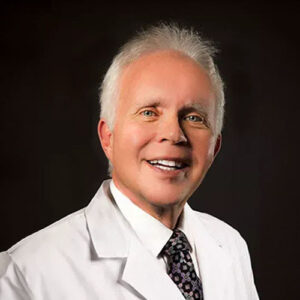
Now practicing in the Salt Lake City area, Dr. Warren specializes in cellular optimization and longevity medicine at Regenerative Wellness Center and serves as medical director of Best 365 Labs. He is also associated with Get Happy MD.
Dr. Warren is the author of ten books, including The Living Chip, The Owner’s Living Chip Manual, How It All Works, Elephants in the Exam Room, The Rigged Game, No Bull Money, Shape Up or Ship Out, and No Bull Nursing Home. His published research includes a Cureus study examining a nonhormonal testosterone booster in 15 patients.