Skip to content
  • About
  • Contact
  • Contribute
  • Book
  • Careers
  • Podcast
  • Recommended
  • Speaking
KevinMD
  • All
  • Physician
  • Practice
  • Policy
  • Finance
  • Conditions
  • .edu
  • Patient
  • Meds
  • Tech
  • Social
  • Video
  • All
  • Physician
  • Practice
  • Policy
  • Finance
  • Conditions
  • .edu
  • Patient
  • Meds
  • Tech
  • Social
  • Video
    • All
    • Physician
    • Practice
    • Policy
    • Finance
    • Conditions
    • .edu
    • Patient
    • Meds
    • Tech
    • Social
    • Video
    • About
    • Contact
    • Contribute
    • Book
    • Careers
    • Podcast
    • Recommended
    • Speaking
KevinMD
  • All
  • Physician
  • Practice
  • Policy
  • Finance
  • Conditions
  • .edu
  • Patient
  • Meds
  • Tech
  • Social
  • Video
    • All
    • Physician
    • Practice
    • Policy
    • Finance
    • Conditions
    • .edu
    • Patient
    • Meds
    • Tech
    • Social
    • Video
    • About
    • Contact
    • Contribute
    • Book
    • Careers
    • Podcast
    • Recommended
    • Speaking
  • About KevinMD | Kevin Pho, MD
  • Be heard on social media’s leading physician voice
  • Contact Kevin
  • Discounted enhanced author page
  • DMCA Policy
  • Establishing, Managing, and Protecting Your Online Reputation: A Social Media Guide for Physicians and Medical Practices
  • Group vs. individual disability insurance for doctors: pros and cons
  • KevinMD influencer opportunities
  • Opinion and commentary by KevinMD
  • Physician burnout speakers to keynote your conference
  • Physician Coaching by KevinMD
  • Physician keynote speaker: Kevin Pho, MD
  • Physician Speaking by KevinMD: a boutique speakers bureau
  • Primary care physician in Nashua, NH | Kevin Pho, MD
  • Privacy Policy
  • Recommended services by KevinMD
  • Terms of Use Agreement
  • Thank you for subscribing to KevinMD
  • Thank you for upgrading to the KevinMD enhanced author page
  • The biggest mistake doctors make when purchasing disability insurance
  • The doctor’s guide to disability insurance: short-term vs. long-term
  • The KevinMD ToolKit
  • Upgrade to the KevinMD enhanced author page
  • Why own-occupation disability insurance is a must for doctors

Bedside medicine and the meaning of physician presence

Gus W. Krucke, MD
Physician
May 26, 2026
Share
Tweet
Share

Transitioning from one part of the country to another can be daunting, though for me it has become a fascinating lesson in both what differentiates us and what remains remarkably the same. Geography changes. Accents shift. Customs vary. Yet suffering, fear, hope, and love seem to speak a language of their own.

I have continued to practice medicine much as I always have, in person, at the bedside, and in patients’ homes. I have long believed that I cannot truly know people unless I see their lives where they unfold, unless I understand their living and suffering at the foundation from which they arise. Particularly at the end of life, when possible, I have encouraged patients to surround themselves with the familiar: photographs, routines, pets, family members, and the ordinary objects that quietly constitute a life.

Doing so has offered me a keen education, especially among those with less, because over the years many of those with the least have come to me. I have entered small homes, apartments, trailers, and places difficult even to categorize, not simply to perform my craft, but more importantly to be with people in their space rather than mine. There is something almost sacramental in being invited across that threshold. The physician enters as a stranger carrying instruments and authority but often leaves having been entrusted with something far more intimate. I have watched fear soften in those moments. I have seen shoulders relax as a stethoscope glides quietly across a chest and conversation slowly replaces apprehension. At times the room itself seems to recognize that medicine has arrived not as an intrusion, but as company.

Few of us know this kind of medicine anymore, and some of the most profound moments of my life have occurred in these sacred spaces. Over time they taught me something I did not expect. Anyone can love. Anyone can sit beside suffering, offer tenderness, and remain present with another human being in pain. These capacities belong not to medicine, but to humanity itself.

Yet years of medical formation travel with us. The science does, certainly, but so do remembered faces, difficult judgments, failures, moments of uncertainty, and acts of witness. We carry not merely information but formation. Patients often recognize this before we do. Not because they seek authority for its own sake, but because vulnerability has a way of detecting depth. They ask more of us than companionship alone. In ways large and small, they invite us not only into their homes but into uncertainty itself.

Perhaps this is why I occasionally wonder whether medicine risks becoming efficient at the wrong things. We have built extraordinary systems: faster systems, measurable systems, systems capable of things once unimaginable. Few of us would willingly surrender modern medicine. Yet systems, necessary though they are, can become poor custodians of meaning. Meaning has always lived elsewhere: in judgment, responsibility, presence, and in the willingness to remain with another human being a few moments longer even when no metric can capture the value of staying.

The future of medicine does not depend upon becoming what it once was. Nostalgia is an unreliable historian. There was no perfect age and no lost Eden awaiting our return. Yet perhaps there remains a future worth pursuing: a medicine in which systems serve judgment rather than displace it; a medicine that values formation as much as information; a medicine that remembers patients do not experience themselves as metrics; a medicine willing to enter another person’s world before asking them to enter ours.

Perhaps I find myself thinking more about younger physicians these days, not because I want them to become who we once were. Every generation inherits burdens and possibilities uniquely its own, and medicine should move forward. Yet I do wonder whether there are things still worth preserving.

Perhaps medicine was never meant to be carried alone. Perhaps we need spaces where younger physicians and older physicians sit together, not to argue over what has been gained or lost, but to share stories, burdens, failures, grief, and hope. Those further along the road may remember things worth preserving. Those just beginning may see possibilities invisible to us. Both are needed, because the future of medicine may depend less upon choosing between generations than inviting them into the same room.

As I have grown older, I have become less interested in whether medicine returns to what it once was. I find myself asking a different question now:

Not what medicine used to be.

What it still might become.

Gus W. Krucke is board-certified in internal medicine and emergency medicine and certified as a hospice medical director. After decades in academic medicine and physician education in Texas, he now serves as core faculty in internal medicine at Northeast Georgia Health System in Gainesville, Georgia. He is also medical director of Omega House HIV/AIDS Hospice in Houston, Texas.
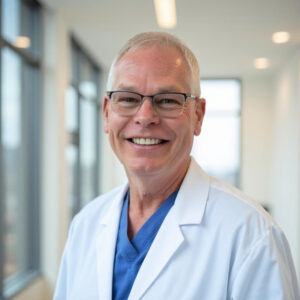
Dr. Krucke writes on physician identity, moral courage, medical education, the corporatization of health care, and the preservation of professional judgment in modern medicine. His essays explore the tension between metrics and meaning, the human consequences of diffuse accountability, and the enduring importance of bedside presence, integrity, and fortitude in patient care.

His scholarly work includes publications in MedEdPublish, Proceedings of Baylor University Medical Center, Texas Heart Institute Journal, World Journal of AIDS, Consultant, The Breast Journal, The American Journal of Emergency Medicine, and Critical Care Medicine. His writing and research have addressed scholarly productivity in residency education, complex infectious disease cases, HIV-related dermatologic disease, diagnostic challenges, migraine treatment, critical care monitoring, and the central role of the individual patient in medical education. More information is available through Krucke’s Medicine, Doximity, LinkedIn, and X.

Prev

The residency personal statement is an identity problem

May 26, 2026 Kevin 1
…

Kevin

Tagged as: Primary Care

< Previous Post
The residency personal statement is an identity problem

ADVERTISEMENT

More by Gus W. Krucke, MD

  • Continuity of care in HIV/AIDS lives in the people who stay

    Gus W. Krucke, MD
  • Moral injury in medicine goes beyond simple burnout

    Gus W. Krucke, MD
  • Physician autonomy and the hidden curriculum of medicine

    Gus W. Krucke, MD

Related Posts

  • More physician responsibility for patient care

    Michael R. McGuire
  • The physician-nurse hierarchy in medicine

    Jennifer Carraher, RNC-OB
  • The health care system will cause its own physician shortage

    Advait Suvarnakar and Aashka Suvarnakar
  • Medicine rewards self-sacrifice often at the cost of physician happiness

    Daniella Klebaner
  • In the absence of physician mentorship, who will train the next generation of primary care clinicians?

    Kenneth Botelho, DMSc, PA-C
  • Physician autonomy and the hidden curriculum of medicine

    Gus W. Krucke, MD

More in Physician

  • Spirituality is a remedy for physician burnout

    Jessica Singh, MD
  • The quiet loss of dignity in medicine

    Ronald L. Lindsay, MD
  • Anesthesiologist bedside manner matters more than skill

    Britney Bowling, MD
  • Doctor patient trust cannot be automated

    Archan Khandekar, MD
  • Physician burnout is quietly costing doctors themselves

    Jerina Gani, MD, MPH
  • Overcoming physician burnout during medical residency

    Jillian Rigert, MD, DMD
  • Most Popular

  • Past Week

    • Polycystic ovary syndrome is more than ovarian

      Oluyemisi Famuyiwa, MD | Conditions
    • How to improve protein absorption after gastric bypass

      Kevin Huffman, DO | Conditions
    • DOT ruling protects peanut allergies but not eggs, sesame, or milk [PODCAST]

      The Podcast by KevinMD | Podcast
    • Telemedicine as a career, not a side gig

      AIR Physician Academy | Physician
    • Social media told her to abort her Turner syndrome baby

      Stephanie Waggel, MD | Conditions
    • Why physicians miss business owner stress in patients

      Timothy Lesaca, MD | Physician
  • Past 6 Months

    • I Googled my own name and a corporate clinic I’ve never worked at appeared [PODCAST]

      The Podcast by KevinMD | Podcast
    • Primary care crisis requires new training and skills

      Justin Oldfield, MD | Physician
    • Polycystic ovary syndrome is more than ovarian

      Oluyemisi Famuyiwa, MD | Conditions
    • How corporate health care ruined the medical profession

      Edmond Cabbabe, MD | Physician
    • Why nursing home regulations must address mental illness

      Amanda M. Buster and J. Wesley Boyd, MD, PhD | Conditions
    • Why our health care system is failing chronic disease patients

      Beata Pasek, EdD | Conditions
  • Recent Posts

    • Bedside medicine and the meaning of physician presence

      Gus W. Krucke, MD | Physician
    • The residency personal statement is an identity problem

      Kathleen Muldoon, PhD | Education
    • Doctors using AI are not being replaced by it

      Neha Pathak, MD | Tech
    • GLP-1s, weight loss, and the inflammation tests your patient needs [PODCAST]

      The Podcast by KevinMD | Podcast
    • Spirituality is a remedy for physician burnout

      Jessica Singh, MD | Physician
    • Philanthropy for scientific research is underused

      Rao M. Uppu, PhD | Conditions

Subscribe to KevinMD and never miss a story!

Get free updates delivered free to your inbox.


Find jobs at
Careers by KevinMD.com

Search thousands of physician, PA, NP, and CRNA jobs now.

Learn more

Leave a Comment

Founded in 2004 by Kevin Pho, MD, KevinMD.com is the web’s leading platform where physicians, advanced practitioners, nurses, medical students, and patients share their insight and tell their stories.

Social

  • Like on Facebook
  • Follow on Twitter
  • Connect on Linkedin
  • Subscribe on Youtube
  • Instagram

ADVERTISEMENT

  • Most Popular

  • Past Week

    • Polycystic ovary syndrome is more than ovarian

      Oluyemisi Famuyiwa, MD | Conditions
    • How to improve protein absorption after gastric bypass

      Kevin Huffman, DO | Conditions
    • DOT ruling protects peanut allergies but not eggs, sesame, or milk [PODCAST]

      The Podcast by KevinMD | Podcast
    • Telemedicine as a career, not a side gig

      AIR Physician Academy | Physician
    • Social media told her to abort her Turner syndrome baby

      Stephanie Waggel, MD | Conditions
    • Why physicians miss business owner stress in patients

      Timothy Lesaca, MD | Physician
  • Past 6 Months

    • I Googled my own name and a corporate clinic I’ve never worked at appeared [PODCAST]

      The Podcast by KevinMD | Podcast
    • Primary care crisis requires new training and skills

      Justin Oldfield, MD | Physician
    • Polycystic ovary syndrome is more than ovarian

      Oluyemisi Famuyiwa, MD | Conditions
    • How corporate health care ruined the medical profession

      Edmond Cabbabe, MD | Physician
    • Why nursing home regulations must address mental illness

      Amanda M. Buster and J. Wesley Boyd, MD, PhD | Conditions
    • Why our health care system is failing chronic disease patients

      Beata Pasek, EdD | Conditions
  • Recent Posts

    • Bedside medicine and the meaning of physician presence

      Gus W. Krucke, MD | Physician
    • The residency personal statement is an identity problem

      Kathleen Muldoon, PhD | Education
    • Doctors using AI are not being replaced by it

      Neha Pathak, MD | Tech
    • GLP-1s, weight loss, and the inflammation tests your patient needs [PODCAST]

      The Podcast by KevinMD | Podcast
    • Spirituality is a remedy for physician burnout

      Jessica Singh, MD | Physician
    • Philanthropy for scientific research is underused

      Rao M. Uppu, PhD | Conditions

MedPage Today Professional

An Everyday Health Property Medpage Today

Copyright © 2026 KevinMD.com | Powered by Astra WordPress Theme

  • Terms of Use | Disclaimer
  • Privacy Policy
  • DMCA Policy
All Content © KevinMD, LLC
Site by Outthink Group

Leave a Comment

Comments are moderated before they are published. Please read the comment policy.

Loading Comments...