Skip to content
  • About
  • Contact
  • Contribute
  • My Book
  • Careers
  • Podcast
  • Transcripts
  • Speaking
KevinMD
  • All
  • Physician
  • Burnout
  • Practice
  • Policy
  • Finance
  • Conditions
  • .edu
  • Patient
  • Meds
  • Tech
  • Social
  • All
  • Physician
  • Burnout
  • Practice
  • Policy
  • Finance
  • Conditions
  • .edu
  • Patient
  • Meds
  • Tech
  • Social
    • All
    • Physician
    • Burnout
    • Practice
    • Policy
    • Finance
    • Conditions
    • .edu
    • Patient
    • Meds
    • Tech
    • Social
    • About
    • Contact
    • Contribute
    • My Book
    • Careers
    • Podcast
    • Transcripts
    • Speaking
KevinMD
  • All
  • Physician
  • Burnout
  • Practice
  • Policy
  • Finance
  • Conditions
  • .edu
  • Patient
  • Meds
  • Tech
  • Social
    • All
    • Physician
    • Burnout
    • Practice
    • Policy
    • Finance
    • Conditions
    • .edu
    • Patient
    • Meds
    • Tech
    • Social
    • About
    • Contact
    • Contribute
    • My Book
    • Careers
    • Podcast
    • Transcripts
    • Speaking
  • About Kevin Pho, MD, Founder of KevinMD
  • Be heard on social media’s leading physician voice
  • Contact Kevin
  • Custom enhanced author page pricing
  • DMCA Policy
  • Establishing, Managing, and Protecting Your Online Reputation: A Social Media Guide for Physicians and Medical Practices
  • KevinMD influencer opportunities
  • Opinion and commentary by KevinMD
  • Physician burnout speakers to keynote your conference
  • Physician Coaching by KevinMD
  • Physician keynote speaker: Kevin Pho, MD
  • Physician Speaking by KevinMD: a boutique speakers bureau
  • Primary care physician in Nashua, NH | Kevin Pho, MD
  • Privacy Policy
  • Recommended services by KevinMD
  • Terms of Use Agreement
  • Thank you for subscribing to KevinMD
  • Thank you for upgrading to the KevinMD enhanced author page
  • Upgrade to the KevinMD enhanced author page

Narrative medicine is what AI in medicine cannot replace

Muhammad Mohsin Fareed, MD
Physician
June 9, 2026
Share
Tweet
Share

Something that I had been resisting tacitly for a while, eventually happened last week. As I was supposed to be all ears towards a patient, my concentration drifted towards the screen. The cursor blinked, translating his words into codes the system would accept as symptoms, durations, and checkboxes. When I looked back at him, he ebbed. The story had been interrupted, and I wasn’t sure I could retrieve it.

Modern medicine takes gratification on its precision. We can measure, record, and reclaim clinical information with astounding adeptness. Electronic records catalog every lab value, prescription, and diagnosis with splendid fidelity. Artificial intelligence promises to make sense of it all at a scale no human mind ever fathomed, with algorithms offering probabilities, flags, and recommendations. Yet something quieter is being lost in this upheaval, not data but memory.

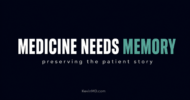
Memory in medicine is not merely the storage of information. It is the continuum of a human narrative, the slow accumulation of context, relationships, and meaning that allows a physician to understand not just what a patient has, but who a patient is. A diagnosis written in a chart is static; a story carried across time is alive. This kind of memory cannot be reduced to entries in a chart but is the reflection of connecting past suffering with present decisions and future discussions.

For all its fortitude, the electronic record fragments this narrative. It recompenses what can be counted over what can be remembered. It prods us to document dexterously rather than listen deeply. The patient becomes an assemblage of problems to be managed rather than a person whose illness is shaped by society, fear, and hope. In sequestering illness into data fields, we risk misconstruing documentation for understanding.

AI promises to sharpen the tendency of automation. By aggregating big datasets, AI systems can identify patterns and recognize interactions beyond human perception and storytelling. Though robust and pragmatic, it is not akin to compassion. An algorithm can predict deterioration, suggest treatment, even draft clinical notes, but cannot inform us who the individual patient is, or why this spatial integrity matters to him.

Healing is not only a technical feat, but also a narrative act. Patients not only seek correction of biological errors, but they also pursue coherence in the face of disruption. Illness disrupts identity, raising questions that no algorithm can answer: Why me? What next? How will this disease transform me? A physician who recounts the patient’s fears, values, and past struggles helps reconstruct that continuity of care. Without such memory, care becomes efficient but impersonal.

Medicine has always been an act of remembering at its core. We remember not just facts, but people, their preferences, their histories, their uncertainties. This memory allows care to be personal, allowing us to recognize when something does not fit the pattern, interceding when a patient’s silence implies more than their words.

When medicine loses memory, it loses accountability to the individual. Decisions become guided by population-driven data, optimized for averages rather than being attuned to peculiar lives. The “typical patient” begins to replace the actual one. In this shift, the uniqueness of suffering is quietly expunged. Patients notice this, even if they cannot always articulate it. They can tell when they are being processed and when they are being understood.

None of this is an argument against technology. Electronic records and AI can complement care in meaningful ways. They can reduce errors, improve coordination, and extend the scope of medical knowledge. The menace lies not in their use, but in their dominance, when they begin to construe what counts as knowledge.

The task is not to abandon these tools but to resist the tunnel vision of medicine they can produce. We must design systems that support memory rather than usurp it. Clinical encounters should retain spaces for stories to be heard, not merely extracted. Notes should reflect narratives, not just checklists. And physicians must cultivate the discipline of attention, the willingness to remember beyond what is required.

Medicine without memory risks becoming a science of surfaces. It may excel at pinpointing diseases yet falter at understanding the person who bears it. In such a system, care is delivered but not truly administered. The challenge before us is subtle but urgent, to ensure that as medicine becomes more resourceful, it does not become forgetful. For in forgetting the patient’s story, we risk obliterating the very purpose of medicine itself.

Muhammad Mohsin Fareed is a radiation oncologist.

Prev

20 years inside a Medicare Advantage insurer, and who actually pays [PODCAST]

June 8, 2026 Kevin 0
…

Kevin

Tagged as: Health IT and AI in Medicine

< Previous Post
20 years inside a Medicare Advantage insurer, and who actually pays [PODCAST]

ADVERTISEMENT

More by Muhammad Mohsin Fareed, MD

  • How automation threatens medical ethics principles

    Muhammad Mohsin Fareed, MD

Related Posts

  • The physician-nurse hierarchy in medicine

    Jennifer Carraher, RNC-OB
  • Medicine rewards self-sacrifice often at the cost of physician happiness

    Daniella Klebaner
  • Physician autonomy and the hidden curriculum of medicine

    Gus W. Krucke, MD
  • From penicillin to digital health: the impact of social media on medicine

    Homer Moutran, MD, MBA, Caline El-Khoury, PhD, and Danielle Wilson
  • Medicine won’t keep you warm at night

    Anonymous
  • Delivering unpalatable truths in medicine

    Samantha Cheng

More in Physician

  • The attention economy is starving public health

    Paul Dranichnikov, MD, PhD
  • Physician burnout is not the whole diagnosis

    Gus W. Krucke, MD
  • Physician advocacy can close the gap between appointments

    Samantha Jackson Dilts, MD
  • Medical hierarchy is silencing young doctors who want to write

    Dr. Buga Charles George Kenyi
  • Why military patients carry pain a chart can’t explain

    Ann Lebeck, MD
  • Leaving medicine is a translation problem, not a loss

    Shveta Gupta, MD, MBA
  • Most Popular

  • Past Week

    • The MCAT requirement persists as a norm, not as a tool

      Aniruth Ananthanarayanan | Medical Education
    • DEA fear is reshaping how doctors prescribe

      Ronald L. Lindsay, MD | Physician
    • The double standard at the heart of chronic pain treatment

      Joshua Saylor | Conditions and Diseases
    • Your sinus infection may not be an infection

      Franklyn R. Gergits, DO, MBA | Conditions and Diseases
    • Why scientific medicine alone is not making us healthier

      Narinder Singh Parhar, MD | Physician
    • Narrative medicine is what AI in medicine cannot replace

      Muhammad Mohsin Fareed, MD | Physician
  • Past 6 Months

    • Primary care crisis requires new training and skills

      Justin Oldfield, MD | Physician
    • The MCAT requirement persists as a norm, not as a tool

      Aniruth Ananthanarayanan | Medical Education
    • Polycystic ovary syndrome is more than ovarian

      Oluyemisi Famuyiwa, MD | Conditions and Diseases
    • DEA fear is reshaping how doctors prescribe

      Ronald L. Lindsay, MD | Physician
    • Physician retirement is a myth for the ripening doctor

      Farid Sabet-Sharghi, MD | Physician
    • Primary care access is the real problem, not the system

      Payam Zamani, MD | Physician
  • Recent Posts

    • Narrative medicine is what AI in medicine cannot replace

      Muhammad Mohsin Fareed, MD | Physician
    • 20 years inside a Medicare Advantage insurer, and who actually pays [PODCAST]

      The Podcast by KevinMD | Podcast
    • Fear of cancer recurrence is a human response, not a flaw

      Jae L. Ross, PsyD | Conditions and Diseases
    • The attention economy is starving public health

      Paul Dranichnikov, MD, PhD | Physician
    • Mental health ghost networks are badly hurting patients

      Steve Cohen, JD | Conditions and Diseases
    • 3 changes physicians on social media need from institutions

      Trisha Majumdar | Social Media in Medicine

Subscribe to KevinMD and never miss a story!

Get free updates delivered free to your inbox.


Find jobs at
Careers by KevinMD.com

Search thousands of physician, PA, NP, and CRNA jobs now.

Learn more

Leave a Comment

Founded in 2004 by Kevin Pho, MD, KevinMD.com is the web’s leading platform where physicians, advanced practitioners, nurses, medical students, and patients share their insight and tell their stories.

Social

  • Like on Facebook
  • Follow on Twitter
  • Connect on Linkedin
  • Subscribe on Youtube
  • Instagram

ADVERTISEMENT

  • Most Popular

  • Past Week

    • The MCAT requirement persists as a norm, not as a tool

      Aniruth Ananthanarayanan | Medical Education
    • DEA fear is reshaping how doctors prescribe

      Ronald L. Lindsay, MD | Physician
    • The double standard at the heart of chronic pain treatment

      Joshua Saylor | Conditions and Diseases
    • Your sinus infection may not be an infection

      Franklyn R. Gergits, DO, MBA | Conditions and Diseases
    • Why scientific medicine alone is not making us healthier

      Narinder Singh Parhar, MD | Physician
    • Narrative medicine is what AI in medicine cannot replace

      Muhammad Mohsin Fareed, MD | Physician
  • Past 6 Months

    • Primary care crisis requires new training and skills

      Justin Oldfield, MD | Physician
    • The MCAT requirement persists as a norm, not as a tool

      Aniruth Ananthanarayanan | Medical Education
    • Polycystic ovary syndrome is more than ovarian

      Oluyemisi Famuyiwa, MD | Conditions and Diseases
    • DEA fear is reshaping how doctors prescribe

      Ronald L. Lindsay, MD | Physician
    • Physician retirement is a myth for the ripening doctor

      Farid Sabet-Sharghi, MD | Physician
    • Primary care access is the real problem, not the system

      Payam Zamani, MD | Physician
  • Recent Posts

    • Narrative medicine is what AI in medicine cannot replace

      Muhammad Mohsin Fareed, MD | Physician
    • 20 years inside a Medicare Advantage insurer, and who actually pays [PODCAST]

      The Podcast by KevinMD | Podcast
    • Fear of cancer recurrence is a human response, not a flaw

      Jae L. Ross, PsyD | Conditions and Diseases
    • The attention economy is starving public health

      Paul Dranichnikov, MD, PhD | Physician
    • Mental health ghost networks are badly hurting patients

      Steve Cohen, JD | Conditions and Diseases
    • 3 changes physicians on social media need from institutions

      Trisha Majumdar | Social Media in Medicine

MedPage Today Professional

An Everyday Health Property Medpage Today

Copyright © 2026 KevinMD.com | Powered by Astra WordPress Theme

  • Terms of Use | Disclaimer
  • Privacy Policy
  • DMCA Policy
All Content © KevinMD, LLC
Site by Outthink Group

Leave a Comment

Comments are moderated before they are published. Please read the comment policy.

Loading Comments...