The child is already well by the time the virus settles in.
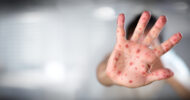
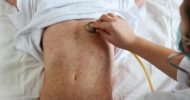
The fever broke. The rash faded. The parents exhaled. Life moved forward: first steps, first words, first day of school. In a small number of children, though, the measles virus does not leave. It retreats inward, past the bloodstream, past the immune system’s reach, and takes up residence in the brain. Quietly. Without announcement. It waits there, sometimes for years, sometimes for a decade.
There is a name for what happens next: subacute sclerosing panencephalitis, SSPE. The first signs are subtle enough that parents blame other things: a dip in grades, an unusual mood, a new clumsiness. Then come the seizures. Then the progressive unraveling of everything the brain had built: language, recognition, movement, identity. The child who beat measles years ago does not recover from this. There is no cure.
I am a second-year medical student with a growing interest in child neurology. I spend a lot of time thinking about timing: about how much of who we become depends on what happens to our brains between birth and adolescence. Synapses forming and pruning. Myelin wrapping nerve fibers with insulation that will carry signals for a lifetime. The architecture of attention, language, and memory assembled on a schedule that cannot be paused and restarted. What interrupts that architecture does not always announce itself immediately.
Real physician voices, twice a week
Free, and one click to unsubscribe.
Sometimes it waits.
SSPE is rare. But it is not as rare as most people assume.
A California study of children infected during a large measles outbreak found the SSPE rate to be approximately 1 in 1,367 for those infected before age five, and 1 in 609 for infants infected before their first birthday. That is not a footnote. That is a meaningful probability running silently in the background of every outbreak.
And measles does not simply threaten the children it infects directly. A landmark 2019 study published in Science found that measles erases up to 73 percent of a child’s existing immune memory: antibodies accumulated over years against entirely unrelated pathogens, gone. The immune system resets toward something closer to infancy, vulnerable again to infections the child had already learned to fight. Researchers called it immune amnesia. The MMR vaccine causes none of this. Only the infection does.
The virus takes the future with it on the way out. In some children, it does not leave at all.
For most of the late twentieth century, widespread vaccination made all of this theoretical in the United States, something physicians read about rather than witnessed. That success may have quietly become a liability.
When a disease disappears, memory of what it does disappears faster. A parent today who hesitates over the MMR vaccine has, in most cases, never watched a child seize from measles encephalitis. Never sat with a family as a doctor explains that the virus hiding in their child’s brain is waking up. That absence of experience is a gift, bought by decades of public health work, that can, perversely, erode the will to sustain it.
The fear that took hold, that the MMR vaccine caused neurological harm, attached itself to something real: the terror of anything threatening a child’s developing brain. That terror is not irrational. The developing brain deserves to be protected fiercely. The fear simply found the wrong address. The neurological injury falsely attributed to the vaccine is, in many documented cases, precisely the kind of injury the vaccine was designed to prevent.
Measles is no longer theoretical.
From January 2025 through June 2026, more than 4,300 confirmed cases have been reported across 48 states, with 93 percent in people who were unvaccinated or had unknown vaccination status. Three people died, including 2 unvaccinated children in Texas. Kindergarten MMR vaccination rates have slipped from 95 percent in 2019-2020 to 92.5 percent today, just below the 95 percent threshold needed for community protection, leaving roughly 286,000 kindergartners unshielded nationwide. 39 states now fall below that threshold, and 16 are below 90 percent.
Every case in this outbreak is also a delayed probability. If even a fraction of infected young children develop SSPE, the damage will not appear for about ten years. There will be no headline connecting it to 2025. There will only be a family, somewhere, trying to understand why their child is changing.
The children at highest risk are often those without a choice: infants too young to be vaccinated, immunocompromised children already navigating other illnesses, children in communities where coverage has collapsed. They did not make a decision about vaccines. They simply exist within range of one.
The waiting virus does not check records.
Measles is the loudest alarm, but it is not the only one sounding. Pertussis, “whooping cough,” saw a fivefold rise in U.S. cases from 2023 to 2024, driven by declining vaccine coverage and waning immunity. Poliovirus was detected in New York state wastewater in 2022, following a case of paralytic polio in an unvaccinated 20-year-old, the first in nearly a decade. These are not coincidences. They are the same story, wearing different faces.
The logic of vaccination does not change by disease. Every pathogen that has been brought to heel, polio, smallpox, diphtheria, rubella, pertussis, followed the same pattern: Scientists found the feature the pathogen could not abandon, built a way to train the immune system to recognize it before damage arrived, and eliminated suffering that previous generations had accepted as inevitable. Over the past fifty years, that strategy has saved an estimated 154 million lives globally: the equivalent of six lives every minute, every year. More than 20 million people walk today who would otherwise have been paralyzed by poliovirus.
These are not modest achievements. They are among the most consequential things human beings have ever done for one another. And they are held in place not by the memory of suffering that fades, but by the ongoing, collective decision to keep vaccinating.
When that decision frays, the pathogens do not wait politely. They return to exactly what they were always capable of doing.
I have read about SSPE in textbooks. I have not yet seen it in a patient. That absence is not luck. It is the outcome of a decades-long commitment to vaccination that is now, for the first time in my lifetime, visibly fraying.
The MMR vaccine reduces the risk of SSPE to near zero because SSPE cannot occur without measles infection. The same principle holds across every vaccine-preventable disease: The protection is not in treating damage after it arrives. It is in ensuring the damage never gets the chance.
I understand that a parent’s instinct to protect their child’s brain from harm is not a flaw to be corrected. It is a form of love that medicine should meet with honesty rather than condescension. But honesty requires saying this plainly: Vaccines are not a gamble against unknown risk. They are the reason so many of the risks we vaccinate against have become unknown to us in the first place. The diseases have not become less dangerous. We have simply, generation by generation, kept them from reaching our children.
The brain parents are trying to protect is precisely what the virus, given the chance, takes. Quietly. Without announcement. Sometimes for years before anyone knows.
The protection exists. It has always existed. The question is only whether we choose to use it.
Shaan R. Mody is a medical student.