
















She had the card in a plastic sleeve. It had gone yellow and soft where it folded. Her mother had written one line, and there was a clinic stamp next to it. “Measles vaccine, 1965.”
She’s in her early sixties and flying to Delhi in January for her niece’s wedding. She came in for a typhoid shot. (She’s a composite of patients I see in my San Antonio practice, with details changed.) Measles only came up because the news had broken that morning.
“I’m covered,” she said. “My mom kept everything.” Not long ago I’d have taken her word for it. Honestly, I wouldn’t have asked.
On November 17, the Pan American Health Organization (PAHO) said what anybody following the case counts could’ve told you. The United States has lost its measles elimination status, twenty-six years after earning it.
Real physician voices, twice a week
Free, and one click to unsubscribe.
The same lineage of the virus had circulated here uninterrupted for 12 months or more, in a chain PAHO dates to January 2025. That was also the month the West Texas outbreak began, in Seminole, out in Gaines County. By the time the state called that outbreak over in August 2025, there were 762 confirmed cases. Ninety-nine people had been hospitalized, and two school-aged children had died. This year is worse. The Centers for Disease Control and Prevention (CDC) counted 5,412 confirmed cases nationally as of November 12, more than double the 2025 total.
Most of what’s been written this week is about policy and about what it’ll take to win the status back. That matters. Mine’s smaller. It’s about my own exam room, and something I got wrong.
For most of my career, measles was a pediatric problem. I’m an internist. My job with MMR, as I understood it, was to stay out of the way. If a grown patient told me, “I’m sure I had all my shots,” I wrote it down and moved on to the A1c. And the screening advice backed me up. CDC’s own guidance for clinicians says we generally don’t need to actively screen adult patients for measles immunity in areas without an outbreak. I keep coming back to that last bit, the part about areas without an outbreak.
Underneath that advice, I’d always just assumed elimination. It’s why a fuzzy history in a sixty-year-old never felt like much of a question. That history was like the spare in the trunk. You don’t check it, because you’ve never had a flat on I-10 at five o’clock. Measles was something that came in on a plane and got contained. It didn’t live here. Now it does, and that ought to change what I do on a plain Tuesday in clinic.
So, back to the card. “Measles vaccine, 1965.” No brand, no type. I had to look the next part up again, and I’m a little embarrassed I needed to. From 1963 to 1967, some children got an inactivated measles vaccine that didn’t hold up. CDC says people vaccinated before 1968 with the killed vaccine, or with a vaccine of unknown type, should get at least one dose of live vaccine. So the card proved she got a shot in 1965. It didn’t prove she was protected.
She’s also traveling. CDC wants international travelers to have two doses unless they have other evidence of immunity. On paper, she had none that counted.
She was a little annoyed with me. That’s fair. She came in for typhoid and left with MMR in her arm and a second dose on the calendar four weeks out, well before the flight. I told her what I now tell anyone with a hazy record. If you were already immune, another dose doesn’t hurt you. CDC says that plainly. A titer is fine too, but a shot today usually beats a lab draw and a callback next week.
So I’m doing a few things differently now, and I’d ask other internists to think about them. I’m asking again, at new-patient visits and before anybody travels abroad. Birth before 1957 counts as presumptive evidence of immunity. For everyone younger, I want proof on paper or in a lab result, and if neither turns up, a dose. Two if they’re leaving the country. And “I think so” doesn’t count. CDC tells us not to accept verbal reports of vaccination without written documentation. I used to accept them all the time.
I’m also treating the 1963 to 1967 group as its own category. Those kids are in their sixties now. The pediatricians handed them off a long time ago. They’re ours. Plenty of them babysit grandchildren who are too young for a first dose.
And I’m done thinking of this as somebody else’s lane. One dose of MMR is about 93 percent effective against measles, and two doses about 97 percent. For most adults, one documented dose of live vaccine is enough. Her 1965 card is why I say live.
I don’t think one internist checking cards in San Antonio wins anything back. Pediatricians and stretched-thin health departments are carrying most of this. But measles goes looking for people who aren’t immune, and some of them are in my waiting room right now scrolling their phones, sure they’re covered because their mothers kept good records.
PAHO’s director, Dr. Jarbas Barbosa, said it this week: “Elimination is not a trophy that we win once and put on a shelf.” For twenty-six years, a lot of us in adult medicine treated it like one. I was one of them.
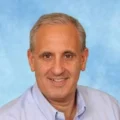
Shiv Kumar Goel is an internal medicine and functional medicine physician in San Antonio, Texas, with twenty-five years in hospital medicine, the ICU, and functional medicine. He is the founder and medical director of Prime Vitality Care, where his clinical work centers on hormone optimization, metabolic health and medical weight loss, peptide therapy, and telehealth, and of Vitality Health at Your Door, which provides visiting-physician and wound care services. He also founded TimeVitality.ai, an AI-driven platform for advanced health analysis.

Dr. Goel serves on the editorial committee of the Bexar County Medical Society, and his writing has appeared on KevinMD, in San Antonio Medicine, in the San Antonio Express-News, on Op-Med, and in Elephant Journal. He shares his clinical and educational work at drshivgoel.com, publishes on Substack and across several Medium publications, and hosts the Vitality Matrix with Dr. Goel channel on YouTube. He is the author of the forthcoming book Healing the Split: When Your Biology Is Fighting Your Biography.
Your KevinMD author page is one of the top results for your name. Turn it into a premium profile, publish in 1 to 3 days, and get a guaranteed podcast slot.