










Listen and followApple PodcastsSpotifyYouTubeMore apps · Browse all episodes
“Neurodiverse individuals enhance our lives. Without neurodiverse people, we wouldn’t have Ghostbusters (Dan Akroyd has Asperger’s syndrome, which is on the autism spectrum), the theory of relativity (Einstein likely had dyslexia), or Microsoft (Bill Gates does have dyslexia). Who are the neurodiverse people in your life? How do their gifts enrich your life? Let’s move away from the terms disorder and disability and see the true diversity.”
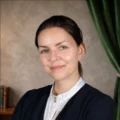
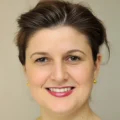
Krystal Sodaitis is a pediatrician and life coach.
She shares her story and discusses her KevinMD article, “Who are the neurodiverse people in your life?”

This episode is sponsored by the Nuance Dragon Ambient eXperience.
With so many demands on their time, physicians today report record levels of burnout. Burnout is caused by many factors, one of which is clinical documentation. Studies indicate physicians spend two hours documenting care for every hour spent with patients.
At Nuance, we are committed to helping physicians do what you love – care for patients – and spend less time on clinical documentation. The Nuance Dragon Ambient eXperience, or DAX for short, is an AI-powered, ambient clinical intelligence solution that automatically captures patient encounters securely and accurately at the point of care. Physicians who use DAX have reported a 50 percent decrease in documentation time and a 70 percent reduction in feelings of burnout, and 83 percent of patients say their physician is more personable and conversational.
Rediscover the joy of medicine with clinical documentation that writes itself, all within the EHR.
VISIT SPONSOR → https://nuance.com/daxinaction
SUBSCRIBE TO THE PODCAST → https://kevinmd.com/podcast
RATE AND REVIEW → https://kevinmd.com/rate
FOLLOW ON INSTAGRAM → https://www.instagram.com/kevinphomd
FOLLOW ON TIKTOK → https://www.tiktok.com/@kevinphomd
GET CME FOR THIS EPISODE → https://earnc.me/k7fbG4
Powered by CMEfy – a seamless way for busy clinician learners to discover Internet Point-of-Care Learning opportunities that reward AMA PRA Category 1 Credit(s)™. Learn more at about.cmefy.com/cme-info
Transcript
Kevin Pho: Welcome to the show, where we share the stories of the many who intersect with our health care system but are rarely heard from. My name is Kevin Pho, founder and editor of KevinMD. Rate and review the show at KevinMD.com/rate. Subscribe at KevinMD.com/follow. Today on the show we have Krystal Sodaitis. She’s a pediatrician and life coach. Her KevinMD article is titled “Who are the neurodiverse people in your life?” Krystal, welcome to the show.
Krystal Sodaitis: Hi, Kevin. Thanks for having me.
Kevin Pho: We’ll get into your article in a little bit. First off, briefly share your story and journey to where you are today.
Krystal Sodaitis: Yeah, I trained as a pediatrician. I actually did three years of an academic general pediatrics fellowship, super sexy. During my fellowship, I got hit with the managed care bug. I actually found it to be a really interesting part of our health care delivery system, and I got an MPH. Fast-forward about eight years, 10 years, and I transitioned to work for a managed care company, and that is when I discovered coaching. During that time, I wasn’t unhappy, but I wanted to move up. I wanted to excel, and I thought that coaching would be an excellent tool in my leadership toolbox. So I started following The Life Coach School coaches’ podcasts, and eventually I realized that in order to really be able to apply those tools, I needed to get certified.
So in March of 2019, I was certified as a Life Coach School coach, and I thought that I would coach gifted young adults and adolescents. That’s because most of us as physicians have children who are academically gifted, and if you Google “how to help my gifted child,” there are a zillion different hits that come up. But once those gifted children become adolescents or young adults, there’s really nothing, and the rates of school failure, dropout, and substance abuse in that population are astonishing. So I really thought that was a population I wanted to help, and within that are gifted residents and junior faculty.
As I continued to coach, I found myself continually drawn to what some term the twice-exceptional community, which are people who are gifted in some way but also have another diagnosis, another disability, or not have a disability. So finally, I decided I really just want to pivot to coaching neurodiverse physicians, mostly physicians who have an official diagnosis, or at least sense that they have a diagnosis. But as I continue to learn, as physicians, we probably are all neurodiverse, just by the nature of our cognitive ability, and with that comes a lot of its own intrinsic challenges.
So that’s why I chose to focus my coaching, now currently pivoting to coach neurodiverse docs. I really wanted to start to introduce this term to the physician community, because there are so many of us, and that was my impetus for writing the article.
Real physician voices, twice a week
Free, and one click to unsubscribe.
Kevin Pho: All right, so let’s get right into that. Before we do, I just want to give a little bit of context. You talk about neurodiversity among physicians, so just give us some context, give us some definitions, and then go straight to your article.
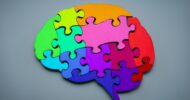
Krystal Sodaitis: Neurodiversity is a term that really just implies that all of our brains are on the spectrum of normal. Especially as a pediatrician, I look at a lot of growth curves. I look at a lot of curves, and I would constantly have a conversation with parents whose children maybe were at the upper or lower part of the growth curve. I would tell them, especially if their children were at the third or second percentile, “Somebody has to be there and still be considered normal.”
So now let’s think of it in terms of our physician brains. Most of us are probably on the right-hand side of the bell curve. Our IQs land squarely above the 90th, 95th percentile. We’re still normal, but we are not what has been coined neurotypical. We’re neurodiverse. So put in there also other conditions that have been termed disabilities or disorders: attention deficit hyperactivity disorder, autism spectrum disorder, or dyslexia, which is considered a learning disorder.
Are there traits of those diagnoses that may be more significant, or that may lead to more of a struggle than for someone who, let’s say, doesn’t have dyslexia? Yes. But there are also considerable strengths that we know tend to be more common in people with those particular diagnoses. So it’s all on the spectrum. That’s why neurodiversity really is intended to highlight that this is all on the spectrum of normal.
Kevin Pho: So tell us, why is it important to have that framework, that neurodiversity framework, where all these conditions that you mentioned are on a spectrum of normal? Why is that important?
Krystal Sodaitis: We have typically pathologized those issues. So, for example, for someone with hyperactivity, or ADHD, as it’s commonly known, it’s, “You need to sit still. You need to learn to focus. You need to, and, and.” But what we don’t see are the amazing strengths that come with some of those diagnoses, right? People with ADHD also tend to be able to hyperfocus. They can really get in deep. They tend to be extraordinarily creative. We don’t see that.
But we don’t call someone who, honestly, is like me, and I consider myself to be less than creative. I don’t think of myself as disordered because I’m not as creative as some of the amazing people with ADHD that I know.
Kevin Pho: So your coaching practice is focused on neurodiverse physicians. Give us an example of some scenarios, some physicians that you see in your practice that would utilize this neurodiverse framework that you mentioned.
Krystal Sodaitis: It’s the way that they have talked to themselves, right? Thinking, “I just need to be more organized. I just need to,” that there’s a problem with the way they are. As a coach, I’m not treating their ADHD. But if, for example, they want help with organization or executive functioning, which is our ability to plan something out and execute on that plan, then we work on how you can set your goals, or how you can reach your goals, knowing that there are some areas where you might struggle. Let’s come up with some strategies to help you, so that you’re going to maximize being successful, and not beat yourself up, and not continue to tell yourself, “Oh, there’s something wrong with me.”
A big example is people with ADHD, and I know I keep using that term, but it is one of the most common neurodevelopmental diagnoses. They’re always told, “Make a list. Write down your to-do list. Make a list and then check things off.” What if you can’t? You can make a list, but then you need to remember to look at that list, which can be a considerable challenge.
So we work a lot on the shame that comes with having a diagnosis. For a lot of people, it impacts their imposter syndrome. We know how prevalent imposter syndrome is, especially within the physician community, and if they have a diagnosis of anything, ADHD, dyslexia, they’re concerned that if it gets out, then what will people think? Some people think that they got into medical school by accident, or that they were lucky, and the basis of a lot of that is around their diagnosis. We coach a lot about that.
Kevin Pho: So give us an example of how applying a neurodiverse framework to a physician has moved the needle in that particular physician’s life, if you have a case study or a scenario where you’ve made a difference.
Krystal Sodaitis: This one stands out. I think that she has talked about her story. I’m not going to say the name, but I think that she has talked about it. There is a particular physician who I worked with who had been told, as an adult, she had been diagnosed, like many of us, later in her life. I think it was either in medical school or residency. When she went to seek medication to help with focus, she was told, “You’re an adult. You don’t really need this. You’ve done fine all this time.”
She turned that around to make it mean that there was something wrong with her for seeking help and for seeking pharmacological treatment for her struggles. So we worked a lot on, “What does that actually mean?” Like, “Why are you making what this one physician said define this for you?” We were able to turn it around, and now she really just embraces her diagnosis, knows where she needs some scaffolding and some help, and goes along with that.
Kevin Pho: Tell us about the historical context of this neurodiverse framework.
Krystal Sodaitis: It is a relatively recent phenomenon. The term neurodiverse was used within a publication, which is the PhD dissertation of Dr. Judy Singer. She had been diagnosed with autism, and she was studying this framework. From there, it was adopted by the autism community as a way of normalizing many of the behaviors and characteristics of people with autism, and from there, it has just spread out into the neurodiverse community.
Kevin Pho: So you mentioned earlier that one of the ways that we can utilize this framework is, instead of looking at things like ADHD as a pathology, you can use it as part of this framework to accentuate strengths. This seems like an idea that we can use not only in the exam room, but as parents as well. What are some of the ways that we can accentuate strengths?
Krystal Sodaitis: Yeah, absolutely. So, for example, for some of our kids, if they have dyslexia, we know that often, not universally, and I’ll use the caveat I’ve heard many times, that what I’m talking about are generalities that happen to be common within a particular diagnosis, but this isn’t intended to mean that every single person falls into this. But in general, people with dyslexia tend to have very good memories. It is because they can’t rely on being able to go back and read something over and over again that they quickly incorporate that information into their minds, and then they’re able to recall it.
So if you have noticed that your child with dyslexia has an incredible memory, don’t force them to continue to read and go back. Utilize that. Maybe help them to develop their memory skills, right? Make sure that they’re doing everything that they need for good memory, getting plenty of rest, good nutrition, etc. But don’t pigeonhole them into, “Oh, no, we have to make sure that you can read and do your reading 30 minutes a day.” Perhaps, instead of reading 30 minutes a day, they listen to an audiobook, and if they are able to recount that information, and not memorize it, but just be able to incorporate it and let you know, that’s perfectly fine.
Kevin Pho: We’re talking to Krystal Sodaitis. She’s a pediatrician and life coach. Her KevinMD article is titled “Who are the neurodiverse people in your life?” So, Krystal, in terms of this framework being a relatively recent phenomenon, what’s the general acceptance of this framework? Are you encountering some pushback or resistance when you try to recategorize or reframe something that used to be a pathology?
Krystal Sodaitis: I really encounter very little resistance. I think that for so many people, it’s an aha moment. It’s one of those things where it was like, “Wow, I knew this, but I couldn’t articulate it.” But now that they hear it, they’re like, “Absolutely, I totally understand.”
Kevin Pho: And my final question: What are some of the take-home messages that you want to leave with the KevinMD audience?
Krystal Sodaitis: I think the take-home would be that we are all neurodivergent. Again, I will say, just by requisite. There’s no IQ check at the door of medical school, but I think, just as a prerequisite, most of us fall into that neurodivergent category. If we happen to also have a diagnosis that goes along with that, look to your strengths. Are there places where maybe you need a little bit of scaffolding? Sure, we all have that. But look to your strengths. Your diagnosis doesn’t define you. You get to decide what you want to do with it.
Kevin Pho: Krystal, thank you so much for sharing your time and insight. Thanks again for coming on the show.
Listen and followApple PodcastsSpotifyYouTubeMore apps · Browse all episodes