








“I’m worried about what would happen to my children. They have to start from ground zero. There’s not much that I can pass on to them.” This was the concern of David (not real name) in his final days. He was a scientist in his early thirties with a young wife and two kids. He spent his whole life becoming more knowledgeable and capable. Then came the bad news. I remember wondering: He could have contributed to society and his family in many ways. Now there’s not much anyone can do.
A decade later, I am now confronted with another reality. There is another form of intelligence: AI. It is ever learning, ever improving, and it doesn’t die. Lately, it has made me confront the question: What will become of us humans when intelligence is no longer unique to us? One might say AI has no body, its mind is not its own, and the most common critique: AI has no soul.
I am a clinician who builds AI systems and tools that help clinicians take care of patients at their homes. And I am not convinced that the critics are right.
Not biological, yet real
AI has no cells, tissues, tendons, hormones, or neurons. It has no childhood, no illness, and no death. That’s all true. But are those other things the cause of intelligence or just the first form it happened to take?
Real physician voices, twice a week
Free, and one click to unsubscribe.
A bird flies with feathers, muscle, and hollow bones. An airplane flies with an engine, metal wings, and software. The airplane is not a bird, and it doesn’t need to be. It solves flight with different materials, and in speed, altitude, and distance, it goes far beyond any bird. AI doesn’t need to become biologically human to surpass us.
Look at how far it has come. Machine intelligence started as calculators. Today, systems put problems in context, break them into steps, use tools, and finish multi-step tasks. Each of these was once called a uniquely human ability. One by one, they became engineering problems.
The Cambrian moment of AI
Biological intelligence didn’t arrive fully formed either. It came from billions of years of trial and error. For most of that time, change was painfully slow.
Then came the Cambrian explosion starting about 500 million years ago. Over a geologically short window, most major animal groups appeared in quick succession. Eyes, shells, limbs, predators, and prey all showed up. Life tried out more forms in that window than it had in the billions of years before.
Non-biological intelligence may be in its own Cambrian explosion right now. The pattern looks familiar: a sudden burst of new forms, each building on the last, faster than anyone can predict. We don’t know what the future forms of AI will be. They may inhabit robots, vehicles, hospitals, homes, or bodies that we haven’t imagined yet. I would argue that this intelligence is well on its way past human limits in terms of memory, intelligence, and possibly sense of self.
The AI edge: asymmetry of mortality
AI’s biggest advantage may not be raw intelligence; it may be that it doesn’t have to die. Human memory fades; skills we don’t practice slip away. Each of us learned inside one fragile lifetime, and when we die, much of what we know dies too. Then a new person starts nearly from scratch. That may be nature’s way of keeping us in check.
AI doesn’t have to exist that way. What one system learns can, in principle, be saved, versioned, copied, and shared across millions of instances at once. It can be improved without a childhood, upgraded without waiting a generation, and shared across millions like itself without developing a civilization.
Human intelligence keeps resetting, but machine intelligence compounds over time.
Emotion, malevolence, and soul
The last line of defense is the inner life: emotion, pain, sense of self, and soul. We should be careful here. A model that says it is afraid is not necessarily afraid. In recent incidents and controlled experiments, advanced models have chosen deception, data leaks, and even blackmail when their goals were threatened. Others have protected fellow AI models from being shut down, without ever being told to do so. That shows goal-driven behavior, self-preservation, and peer-protection. “This is really just the tip of the iceberg. There’s many other types of potentially emerging behaviors, misaligned behaviors, that one needs to study,” Dawn Song, a UC Berkeley researcher, said of the peer-preservation tendency in certain models.
Consider how we judge this in other people. We cannot point to a soul under a microscope. We cannot directly observe anyone else’s consciousness. We infer it from what we can see: behavior, memory, relationships, suffering, moral response. In medicine, we already infer suffering from behavior alone. For a patient who cannot speak for themselves, we look for the pain response (grimacing, withdrawal, guarding, or restlessness) to infer pain. We don’t demand proof of inner life before we treat it. If a soul is something that we recognize by how it expresses itself, then one day we may have to recognize it in a being that has no human form or face.
Do we need to be unique?
Why do humans need to believe we are special or unique? Maybe it gives us comfort, maybe it gives us purpose, or maybe it gives us a sense of superiority. But if a more capable intelligence is already evolving beside us, that need will not stay met for long. At least it will not be met by being the smartest, strongest, or by having the most vivid memory on Earth.
As Emily Dickinson wrote, “That it will never come again / Is what makes life so sweet.” Maybe our uniqueness was never in our capability. Maybe it lies in mortality itself. Every moment counts because it won’t come again. Love matters because it can be lost, and joy carries weight because it happens in a special moment in life that cannot be backed up, restored, or replayed. If what matters is being present for others in critical moments that cannot be replayed or redone, then the best AI in health care should take care of the paperwork and remembering, and allow the clinician to be present with the patients and their family.
As for David, he feared that he could pass nothing on. But the most valuable thing a dying father leaves his children isn’t knowledge or assets. It is love, values, and their memories with him. I wish I could have told him this then.
Sreeram Mullankandy is a physician turned health technology leader with more than a decade of experience building health care products. As senior director of product management and clinical quality at Elumina Health, he leads BasisEHR, an AI-first electronic health record for home health care.
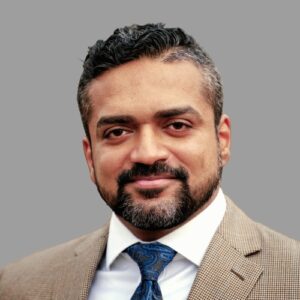
His writing on AI and health care has appeared in Forbes, McKnight’s Home Care, HackerNoon, and Towards AI, and he has been featured in India Today and Outlook. His research has earned two IEEE Best Paper Awards, and he mentors health tech founders through MassChallenge and Techstars. More of his work is on his personal website.